

Yes, upright vacuums can clean deep-pile carpets, but only the right models do it well.
Today's Exclusive Deals
Limited-time Exclusive Deals. Check current discount on Amazon.
Check Price on Amazon As an Amazon Associate I earn from qualifying purchases.If you’ve ever pushed a vacuum across a thick carpet and felt it slow down like it’s fighting for its life, you already know the issue. Deep-pile carpet can be beautiful and cozy, but it also hides dust, pet hair, and grit deep in the fibers. With the right upright vacuum, the job gets much easier, and in many homes, it can be one of the best tools for the task.
Can upright vacuums clean deep-pile carpets?
Yes, upright vacuums can clean deep-pile carpets, but not every upright is a good match. The main difference comes down to suction control, brush roll design, height adjustment, and how well the vacuum glides without sinking into the fibers. A well-designed upright vacuum can lift dirt from deep carpet much better than a weak or fixed-height model.
I’ve tested vacuums on plush area rugs and high-pile wall-to-wall carpet, and the pattern is pretty consistent. The machines that do best have strong suction, an adjustable nozzle, and a brush roll that can be turned off or lowered when needed. The ones that struggle usually bog down, scatter debris, or feel too aggressive on the carpet surface.
Today's Exclusive Deals
Limited-time Exclusive Deals. Check current discount on Amazon.
Check Price on Amazon As an Amazon Associate I earn from qualifying purchases.
What deep-pile carpet actually needs from a vacuum
Deep-pile carpet is thicker than low-pile carpet, so dirt does not stay near the surface. Tiny particles settle into the dense fibers, where simple suction alone may not be enough. That is why cleaning deep-pile carpet often needs a mix of airflow, brush agitation, and height control.
A vacuum for this kind of flooring should do a few things well:
- Reach into the fibers without getting stuck
- Remove embedded dust and pet hair
- Protect delicate carpet fibers from damage
- Keep airflow strong even when the carpet is thick
- Adjust easily for different room surfaces
When a vacuum lacks those features, it can still clean, but not deeply. That is where many people feel disappointed and assume upright vacuums cannot handle plush carpet at all. In reality, the vacuum type is not the whole story. The design matters more than the shape.
Today's Exclusive Deals
Limited-time Exclusive Deals. Check current discount on Amazon.
Check Price on Amazon As an Amazon Associate I earn from qualifying purchases.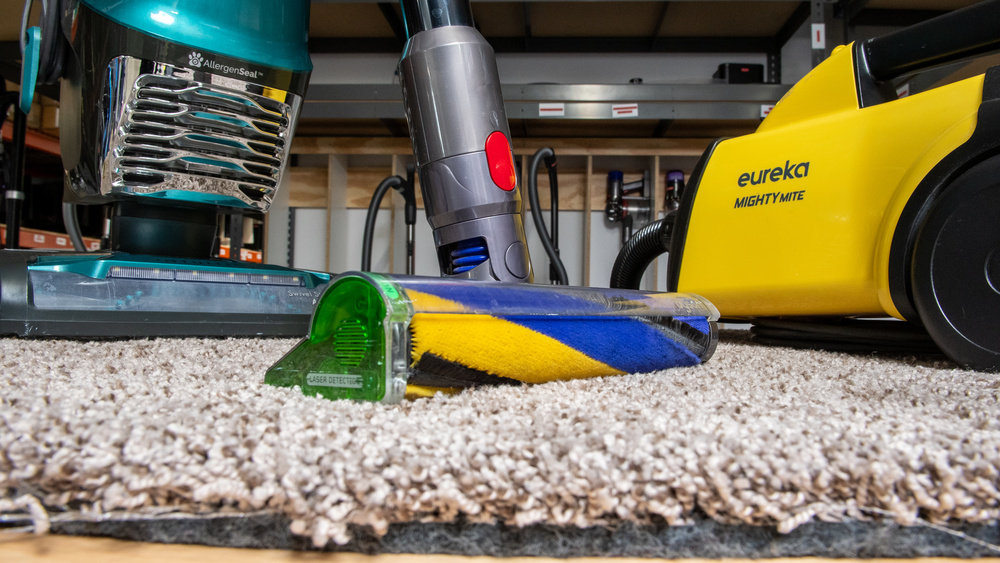
Why some upright vacuums work better than others
Not all upright vacuums are built the same. Some are made for mixed floors, while others are tuned for carpet-heavy homes. On deep-pile carpet, the wrong vacuum can feel like pushing a sled through sand.
Here are the biggest factors that affect performance:
- Suction power. Strong suction helps pull dirt up from deeper layers.
- Brush roll control. A spinning brush can lift debris, but too much agitation can make the vacuum hard to push.
- Carpet height adjustment. This helps the cleaner head sit at the right level.
- Weight and steering. Heavy models can be tiring on plush carpet.
- Seal and airflow. A tight seal helps maintain suction where it matters.
I once used an upright with a very aggressive brush roll on a thick shag rug, and it practically glued itself to the floor. It cleaned well in theory, but it was so hard to move that I spent more energy wrestling with it than actually cleaning. That experience taught me a simple lesson: power is useful, but control matters just as much.
Signs an upright vacuum is good for deep-pile carpet
If you are shopping for a vacuum, a few features should catch your eye right away. These are the traits that usually separate a decent machine from one that truly handles thick carpet.
Look for these features:
- Manual carpet height adjustment
- Brush roll on and off control
- Strong suction with sealed airflow
- A motorized brush designed for thick fibers
- Soft wheels or smooth glide support
- Good edge cleaning for corners and baseboards
- A hose and attachments for stairs and upholstery
Many vacuum brands now design uprights for multi-surface homes, and that helps a lot. Still, it is smart to check whether the model specifically mentions plush, high-pile, or deep carpet. If it only talks about hard floors and low-pile rugs, it may not be the best fit.
When upright vacuums may struggle on deep-pile carpet
Even a good upright vacuum has limits. Deep-pile carpet can be more demanding than most people expect, especially if the carpet is very fluffy or densely woven. In some cases, a canister vacuum or a vacuum with specialized carpet settings may be easier to use.
Common problems include:
- Too much suction, which makes the vacuum hard to push
- Brush rolls that catch and tangle long fibers
- Short battery life on cordless upright models
- Loss of airflow when the head sinks too far into the pile
- Wear on delicate carpet if the brush is too aggressive
If your carpet is very plush, thick, or shag-like, test the vacuum before buying if possible. What looks powerful on paper may not feel practical in a real room. I have seen people blame the carpet when the real problem was a vacuum with poor height control.
How to vacuum deep-pile carpet the right way
Using the right technique can make a big difference. Even a strong upright vacuum can underperform if it is used too fast or with the wrong setting.
Try this approach:
- Start with the highest height setting if the vacuum has one.
- Turn the brush roll on only if the vacuum is designed for deep carpet.
- Move slowly so the vacuum has time to lift dirt.
- Make overlapping passes to catch hidden debris.
- Use attachments for stairs, corners, and furniture edges.
- Check the dust bin or bag often, since deep carpet can fill it fast.
A slow pass is usually better than a rushed one. Think of it like combing thick hair. If you rush through it, you miss tangles. If you go slowly and gently, the result is much cleaner.
Upright vacuum features that matter most for deep-pile carpet
Some specs sound fancy, but a few are especially important for thick carpet cleaning. If you want real performance, these are worth paying attention to.
Adjustable height settings
This is one of the most important features. It lets the vacuum cleaner head sit properly on thick carpet instead of dragging or sinking. Without it, suction and brush movement can be inefficient.
Brush roll shutoff
This helps when you switch from carpet to delicate rugs or want to avoid excess friction. It also makes the vacuum more flexible for homes with mixed flooring.
Strong sealed suction
A sealed system keeps more air moving through the cleaner head instead of leaking out. That means better pickup of dust and debris from deep within the pile.
Anti-tangle design
Pet hair and long fibers can wrap around the brush roll. Anti-tangle features save time and reduce maintenance.
Lighter body or better steering
A vacuum can be powerful and still easy to use. Smooth steering helps a lot when the carpet is thick and resistance is high.
Are uprights better than other vacuum types for deep-pile carpet?
Sometimes yes, sometimes no. Upright vacuums are often a strong choice for whole-home carpet cleaning because they combine suction and brush agitation in one machine. That makes them especially useful in bedrooms, living rooms, and family spaces with wall-to-wall carpet.
But other vacuum types have strengths too:
- Canister vacuums often glide more easily and can be gentler on thick carpet
- Stick vacuums are lighter, but many lack the power for deep-pile carpet
- Handheld vacuums are great for spot cleaning, not full carpet cleaning
- Carpet-specific vacuums can be excellent but may cost more
If your home is mostly carpet, a good upright vacuum is often the most practical option. If your carpets are very plush or your house has lots of stairs, a canister vacuum may feel easier over time. The best choice depends on your flooring, your habits, and how much effort you want to spend.
Common mistakes people make with upright vacuums on deep-pile carpet
I see the same mistakes come up again and again. They are easy to fix once you know what to watch for.
- Using the wrong height setting
- Choosing a vacuum made mainly for hard floors
- Pushing too fast
- Ignoring brush roll maintenance
- Letting the bin or bag get too full
- Assuming more suction always means better cleaning
One of the biggest surprises for many people is that too much suction can be a problem. On thick carpet, a vacuum can almost seal itself to the surface, which makes it harder to move and less efficient overall. Clean power is useful, but balanced power is better.
Best practices for keeping deep-pile carpet cleaner longer
Vacuuming is only part of the story. Deep-pile carpet holds onto dust and grit, so the cleaner you keep it, the easier it is to maintain.
Helpful habits include:
- Vacuum high-traffic areas two to three times a week
- Vacuum slowly and in different directions
- Use a vacuum with a bag or bin that is emptied regularly
- Deep clean the carpet seasonally if needed
- Remove spills quickly before they settle into the fibers
- Keep shoes off indoor carpet when possible
These habits reduce wear and help the carpet stay fluffy longer. That matters because dirt trapped in thick carpet can act like sandpaper over time. The more often you remove it, the better your carpet holds up.
What experts and industry testing generally show
Consumer testing groups and flooring guidance often point to the same idea: carpet thickness changes how a vacuum should perform. A vacuum that works well on low-pile carpet may struggle on plush carpet unless it has adjustable settings and enough airflow. Flooring manufacturers also tend to recommend regular vacuuming with equipment suited to the carpet type to protect the pile and remove grit.
That lines up with what I’ve seen in real homes. The upright vacuum that wins on deep-pile carpet is usually not the fanciest one. It is the one that balances suction, brush control, and easy movement without fighting the carpet.
Frequently Asked Questions of Can upright vacuums clean deep-pile carpets?
Do upright vacuums damage deep-pile carpet?
They can if the brush roll is too aggressive or the height is set wrong. A well-adjusted vacuum with carpet-friendly settings should clean without harming the fibers.
Is suction or brush roll more important for deep-pile carpet?
Both matter, but balance is key. Suction lifts dirt, while the brush roll loosens debris trapped deep in the fibers.
Can a cordless upright vacuum clean deep-pile carpet?
Some can, but many cordless models are better for light to medium carpet. For very thick carpet, corded uprights usually deliver more consistent power.
How often should I vacuum deep-pile carpet?
Most homes benefit from vacuuming at least once or twice a week. High-traffic areas or homes with pets may need more frequent cleaning.
What if my upright vacuum is hard to push on deep carpet?
Try raising the height setting or lowering brush agitation if the model allows it. If it still feels stuck, the vacuum may not be well suited for thick carpet.
Conclusion
Upright vacuums can clean deep-pile carpets very well when they are built for the job. The best models combine strong suction, adjustable height, and brush control so they can lift dirt without dragging or damaging the fibers. If you choose carefully and vacuum with the right technique, deep carpet cleaning becomes much easier and more effective.
The main takeaway is simple: do not judge all upright vacuums by the same standard. Test the settings, look for carpet-specific features, and think about how your home actually feels to clean. If you want, explore more vacuum buying tips, compare models before you buy, and share your own deep-carpet cleaning experience in the comments.


1 Comment
Pingback: Can Upright Vacuums Clean Low-Pile Carpets: Best Answer - Vacuum Cleaner Tips