

An upright vacuum usually weighs 10 to 20 pounds, with some models lighter or much heavier.
If you have ever tried to carry a vacuum up the stairs, you already know that weight matters. I’ve tested enough upright vacuums to see how much weight changes everything, from ease of use to cleaning comfort and storage. In this guide, I’ll break down how much an upright vacuum weighs, what affects that weight, and how to choose the right one for your home.
How much does an upright vacuum weigh?
The average upright vacuum weighs about 10 to 20 pounds. Many standard corded models fall in the middle of that range, while lightweight upright vacuums can come in under 12 pounds.
Heavier upright vacuums can weigh 20 to 25 pounds or more. These are often full-size models with strong motors, larger dust bins, and extra attachments. The answer to how much does an upright vacuum weigh depends on the design, features, and whether it is built for deep carpet cleaning or easier everyday use.
From my own experience, the weight is one of the first things people notice after the suction power. A vacuum that feels solid on the floor can feel much heavier when you are carrying it from room to room.

What affects the weight of an upright vacuum?
Several parts add to the total weight of an upright vacuum. Some are necessary for performance, while others are there for convenience.
Common factors include:
- Motor size: Bigger motors usually mean more suction, but also more weight.
- Brush roll system: A stronger brush roll assembly can add pounds.
- Dust capacity: Larger bins or bags increase the total weight.
- Corded vs. cordless design: Cordless upright vacuums may be lighter, though the battery adds weight too.
- Extra features: LED lights, self-cleaning brush rolls, and lift-away pods can all change the final number.
- Build materials: Plastic housings are lighter than metal parts, but cheaper plastics may not feel as durable.
In practice, how much does an upright vacuum weigh is not just about the number on the box. It is also about how that weight is balanced. A well-balanced 15-pound vacuum can feel easier to push than a poorly designed 12-pound one.
Typical upright vacuum weight ranges
Upright vacuums are not all built the same. Here is a simple breakdown of the usual weight ranges.
Lightweight upright vacuums
These usually weigh 8 to 12 pounds. They are a good fit for small homes, apartments, and anyone who wants easier carrying.
They are often easier to move on stairs and around furniture. The tradeoff is that some lightweight models may have smaller bins or less deep-cleaning power.
Standard upright vacuums
These usually weigh 12 to 18 pounds. This is the most common range for regular household use.
They often offer a good balance of suction, cleaning reach, and durability. For many families, this is the sweet spot when asking how much does an upright vacuum weigh and what weight feels practical.
Heavy-duty upright vacuums
These can weigh 18 to 25 pounds or more. They are often designed for thick carpet, pet hair, and larger floor areas.
These models can clean very well, but they are harder to carry and store. I usually recommend them only when the extra power is worth the extra effort.

Why vacuum weight matters in daily use
Weight affects more than comfort. It changes how you clean your home from start to finish.
Here is why it matters:
- Stair cleaning: A lighter vacuum is easier to carry up and down stairs.
- Storage: Heavier models are harder to lift into closets or utility spaces.
- Everyday pushing: If the vacuum is too heavy, it can feel tiring during longer cleaning sessions.
- Maneuverability: Lighter models often turn more easily around chairs and tables.
- User comfort: People with back pain, joint pain, or limited strength may prefer a lighter option.
When I first started comparing vacuums, I made the mistake of focusing only on suction. Later, I learned that weight can matter just as much, especially if you clean often. A vacuum should help you save energy, not use it up.
Is a lighter upright vacuum always better?
Not always. A lighter vacuum can be easier to lift and move, but it may not always clean as deeply as a heavier model.
A heavier upright vacuum may provide:
- Stronger suction
- Larger dirt capacity
- Better performance on thick carpet
- More durable parts
A lighter upright vacuum may provide:
- Easier carrying
- Better comfort on stairs
- Less fatigue during long cleaning sessions
- Simpler storage
The best choice depends on your home and your habits. If you have mostly hard floors and a few rugs, a lighter vacuum may be enough. If you have wall-to-wall carpet and pets, you may want the extra power of a heavier unit.
How much does an upright vacuum weigh compared with other vacuum types?
Upright vacuums are usually heavier than stick vacuums and some canister models, but lighter than large commercial machines.
Here is a general comparison:
- Stick vacuums: often 5 to 10 pounds
- Upright vacuums: often 10 to 20 pounds
- Canister vacuums: often 8 to 20 pounds, depending on design
- Shop vacs: often 15 to 30 pounds or more
This is one reason many shoppers ask how much does an upright vacuum weigh before buying. Weight affects portability, and portability affects how often you will actually use the machine.
How to choose the right vacuum weight for your home
Choosing the right weight is easier when you think about your floor plan and daily routine.
Use these tips:
- Choose a lighter model if you have stairs or need to carry the vacuum often.
- Choose a midweight model if you want a balance of power and comfort.
- Choose a heavier model if you need deep carpet cleaning and have large open areas.
- Check the handle design and wheel quality, not just the scale weight.
- Try lifting the vacuum in the store if possible, because balance matters.
I always tell people to imagine a normal cleaning day, not just a one-minute test. Ask yourself how often you will move the vacuum, how far you will carry it, and whether your home has more carpet or hard flooring. That answer usually points you toward the right weight range.
Tips for making an upright vacuum feel lighter
Even if a vacuum is not the lightest model, it can still feel easier to use. Small details can make a big difference.
Try these practical tips:
- Empty the bin often so the vacuum does not get heavier during use.
- Keep filters clean so the vacuum does not lose suction and force you to push harder.
- Use the right height setting for your floor type.
- Pick a model with swivel steering for easier turns.
- Store attachments separately if they make the unit bulky.
One lesson I learned the hard way is that a clogged vacuum feels heavier than it is. When airflow drops, you push harder and tire out faster. Good maintenance can make the same vacuum feel much easier to handle.
What is the best weight for an upright vacuum?
There is no single best weight for everyone. For most households, a vacuum between 12 and 16 pounds offers a strong mix of power, control, and portability.
That range is often a smart choice because:
- It is light enough for regular use
- It is still sturdy enough for deep cleaning
- It works well for many floor types
- It is usually easier to store and lift than heavier models
If you want maximum convenience, aim for the lighter end. If you want more cleaning strength, a slightly heavier upright may be worth it.
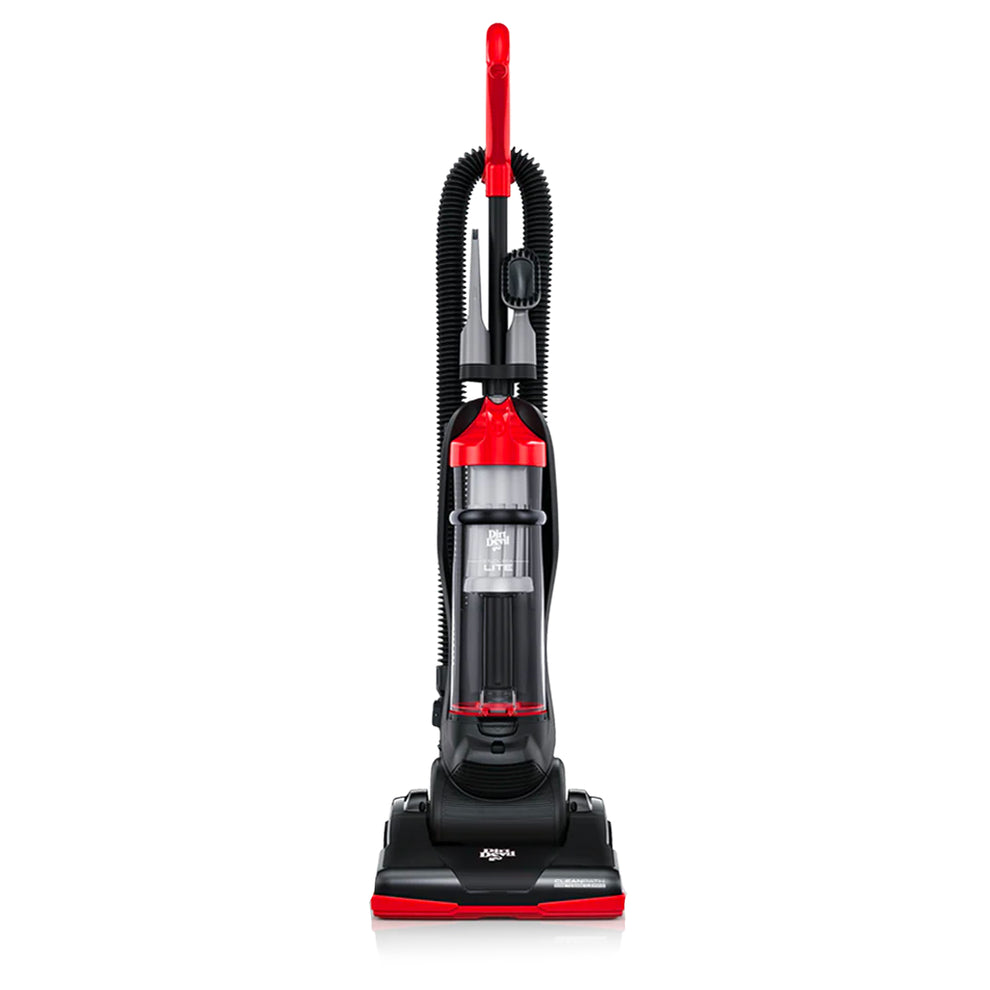
Frequently Asked Questions of How much does an upright vacuum weigh?
How much does a Shark upright vacuum weigh?
Many Shark upright vacuums weigh around 12 to 17 pounds, though some models are lighter or heavier. The exact weight depends on the series and whether the vacuum has a lift-away pod or extra features.
How much does a Dyson upright vacuum weigh?
Dyson upright models are often around 16 to 18 pounds, depending on the design. Some are built for stronger suction and larger dirt capacity, which can increase the total weight.
Is a 15-pound upright vacuum heavy?
A 15-pound upright vacuum is considered a normal, midweight model. Most adults can use it comfortably, but stairs and long cleaning sessions may still feel tiring for some users.
What is the lightest upright vacuum?
The lightest upright vacuums usually weigh around 8 to 10 pounds. These models are often best for small homes, quick cleanups, and anyone who wants easier carrying.
Does vacuum weight affect suction?
Not directly, but heavier vacuums often have room for larger motors and stronger components. Still, a lighter vacuum can have excellent suction if it is well designed, so weight alone does not tell the full story.
Conclusion
So, how much does an upright vacuum weigh? Most models fall between 10 and 20 pounds, with lighter versions for easy handling and heavier ones for stronger cleaning power. The right choice depends on your home, your floors, and how often you plan to move the vacuum around.
If you want the easiest day-to-day use, focus on comfort, balance, and carry weight, not just suction. Take a close look at your cleaning habits, compare a few models, and choose the one that feels right for your space. If this guide helped, explore more vacuum buying tips and share your own experience in the comments.


1 Comment
Pingback: How Long Do Upright Vacuum Cleaners Last: 2026 Guide - Vacuum Cleaner Tips