

A Hoover vacuum belt keeps breaking when there’s friction, misalignment, clogging, or the wrong belt type.
Today's Exclusive Deals
Limited-time Exclusive Deals. Check current discount on Amazon.
Check Price on Amazon As an Amazon Associate I earn from qualifying purchases.If your Hoover vacuum belt keeps breaking, you are probably dealing with a fixable problem, not a bad machine. I’ve seen this happen many times in vacuum repair work, and the cause is usually something simple: a jammed brush roll, worn bearings, stretched belts, or a belt that does not match the model. The good news is that once you find the real reason, you can usually stop the cycle of constant belt failures and get your vacuum running like it should.

Why a Hoover vacuum belt keeps breaking
A vacuum belt is meant to transfer power from the motor to the brush roll. When that system gets stressed, the belt becomes the weakest link. It may snap, slip, burn, or stretch too fast.
Today's Exclusive Deals
Limited-time Exclusive Deals. Check current discount on Amazon.
Check Price on Amazon As an Amazon Associate I earn from qualifying purchases.In plain terms, the belt is telling you that something else is wrong. Replacing the belt without checking the rest of the vacuum is like changing a fuse without fixing the short. If your Hoover vacuum belt keeps breaking again and again, the real issue is usually mechanical, not just the belt itself.
Common reasons include:
- A clogged brush roll or nozzle
- Hair, string, or carpet fibers wrapped around the brush
- A seized or stiff brush roll
- A belt that is too tight or the wrong size
- Worn motor bearings
- Poor assembly after maintenance
- Vacuuming debris that overloads the drive system
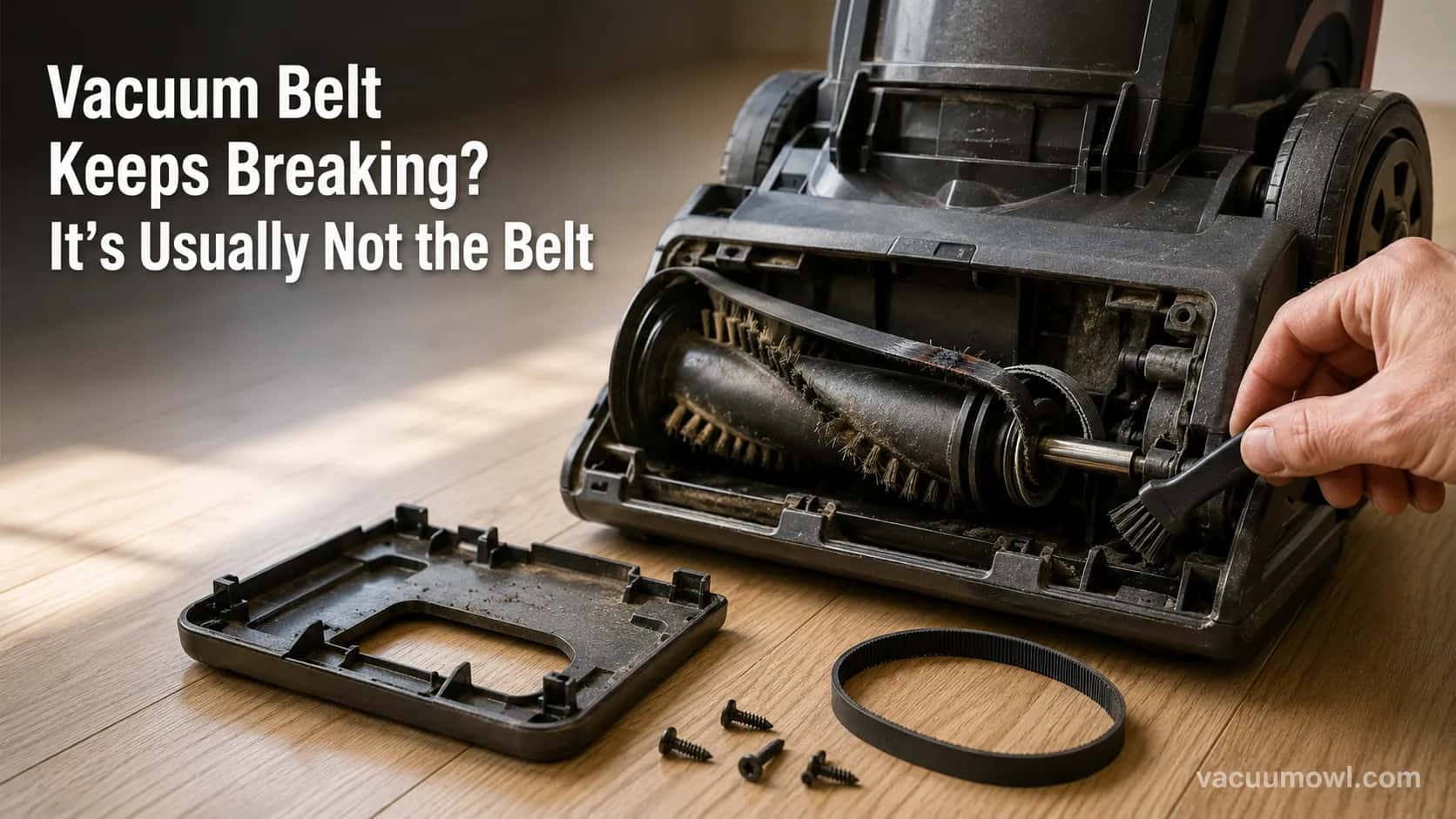
The most common causes of repeated belt failure
When a Hoover vacuum belt keeps breaking, I always start with the brush roll. In my experience, that is the most common trouble spot. A brush roll that cannot spin freely forces the belt to work harder until it gives out.
Today's Exclusive Deals
Limited-time Exclusive Deals. Check current discount on Amazon.
Check Price on Amazon As an Amazon Associate I earn from qualifying purchases.1. The brush roll is jammed
Hair, threads, and pet fur can wrap around the brush bar like fishing line around a reel. That extra drag creates heat and strain. Over time, the belt gets hot and weak, then snaps.
Check the ends of the brush roll too. Sometimes the brush spins in the middle, but the end caps or bearings are tight. That tiny bit of resistance is enough to cause repeat belt breaks.
2. The belt is the wrong model
Hoover vacuums are picky about belt fit. A belt that is even slightly off in size or style can sit too tight or too loose. Both problems can make the Hoover vacuum belt keeps breaking issue come back fast.
Always match the belt to the exact Hoover model number. Generic belts may work for a while, but the wrong tension can shorten belt life and reduce brush performance.
3. The brush roll bearings are worn
If the brush roll feels rough when you turn it by hand, the bearings may be worn. That creates drag and heat, which the belt does not handle well. I’ve seen cases where the customer changed three belts in a month, and the brush roll was the real culprit.
A worn bearing can also create a squealing sound. If you hear that before the belt breaks, pay attention. That sound is often your warning sign.
4. The vacuum has a clog
A blocked hose, dirty airway, or full dirt path can raise the load on the motor. When airflow drops, the system works harder, and the belt may take the hit. This is especially common after vacuuming pet hair, fine dust, or carpet lint.
Check the hose, wand, base, and filters. Even a partial clog can create extra resistance and lead to belt failure.
5. The belt is installed incorrectly
A belt that is twisted, pinched, or routed wrong can fail early. This happens a lot after a quick DIY repair. The belt may look fine at first, but once the brush starts turning, it wears unevenly.
Make sure the belt sits flat, is seated correctly, and is not rubbing against plastic edges or housing parts. Small installation mistakes can become big repair bills.

How to diagnose the problem step by step
If your Hoover vacuum belt keeps breaking, use a simple process instead of guessing. I like to check the whole drive path from motor to brush roll. That saves time and prevents repeat failures.
Step 1: Unplug the vacuum
Always unplug it first. Even a quick inspection can turn risky if the machine is live. Safety comes first, especially around the brush roll and motor area.
Step 2: Remove the bottom plate
Open the brush roll cover and inspect the belt area. Look for melted rubber, black dust, or shiny wear marks. Those signs often show where the belt is rubbing too hard.
Step 3: Spin the brush roll by hand
The brush should spin smoothly and keep moving a little after you flick it. If it stops right away or feels gritty, the bearings may be bad. If it barely moves, that is a strong clue.
Step 4: Inspect for wrapped debris
Remove hair, string, and carpet fibers from the brush roll ends and bristles. Check the end caps as well. I’ve fixed many vacuums just by cleaning out a hidden wad of hair near one side of the brush.
Step 5: Check the belt size and condition
If the belt looks stretched, cracked, shiny, or thin, replace it. But also compare it with the recommended Hoover part number. If you have the wrong belt, it may keep breaking no matter how many times you change it.
Step 6: Look for airflow problems
Check the hose, filters, canister, and air path for clogs. Poor airflow can increase strain across the whole machine. Once the airflow is restored, belt life often improves right away.

What I’ve learned from repeated Hoover belt failures
One lesson I learned early is that a broken belt is often a symptom, not the disease. People usually buy a pack of replacement belts and hope the issue goes away. Sometimes it does, but if the brush roll is stiff or the belt is mismatched, the new belt fails just as fast.
I once worked on a Hoover upright that kept chewing through belts every few weeks. The owner was frustrated and thought the motor was dying. The real problem was a brush roll packed with pet hair and a bearing that had gone dry. After cleaning, replacing the brush roll, and fitting the correct belt, the vacuum ran normally again.
That experience taught me to trust the basics. Clean parts, correct fit, and free movement matter more than people think. A vacuum is a simple machine, but simple machines hate resistance.
Best fixes when your Hoover vacuum belt keeps breaking
The right fix depends on the cause. Still, there are a few solutions that solve most cases.
Replace the belt with the correct Hoover part
Use the exact belt made for your model. If your Hoover vacuum belt keeps breaking, do not assume all belts are equal. Correct tension and material make a big difference.
Clean and free the brush roll
Remove hair, thread, and debris from the brush roll. Make sure the brush spins easily in the housing. If the end caps or bearings are worn, replace the whole brush roll if needed.
Clear all clogs
Check the hose, nozzle, filters, and dust path. Wash or replace filters according to the manual. A clean airflow path reduces stress on the belt and motor.
Replace worn parts
If the brush roll is rough or the motor shaft is damaged, the belt may never last. Replacing a worn brush roll or damaged part is often cheaper than buying belt after belt. It also protects the motor.
Reassemble the vacuum carefully
After maintenance, make sure the belt sits correctly and the cover closes without forcing it. A slightly misaligned part can rub the belt until it fails. Take your time here.

How to make Hoover vacuum belts last longer
A little maintenance goes a long way. If you want to avoid the problem of a Hoover vacuum belt keeps breaking, build a regular care routine.
Helpful habits include:
- Clean the brush roll every few uses if you have pets
- Check for hair and threads around the end caps
- Replace filters on schedule
- Empty the bin or bag before it gets too full
- Inspect the belt during routine cleaning
- Use the correct replacement parts only
- Avoid vacuuming large debris that can jam the brush
These small steps can save money and prevent frustration. Think of the belt like a bicycle chain. It works best when the whole system is smooth and clean.
When to replace the belt and when to replace more than that
If a belt breaks once in a while, replacing it may be enough. But if the Hoover vacuum belt keeps breaking every few weeks, something deeper is wrong. That is the point where more than a belt swap is needed.
Replace only the belt if:
- The brush roll spins freely
- There are no clogs
- The belt was clearly worn out
- The replacement belt matches the model exactly
Replace the brush roll, bearings, or other parts if:
- The roll feels stiff or rough
- The vacuum makes squealing or grinding sounds
- The belt overheats or smells burnt
- The belt fails soon after installation
- The brush no longer spins well under load

Why belt problems can affect cleaning performance
A failing belt does more than stop the brush. It also cuts cleaning power. The brush roll helps lift dirt from carpets, especially embedded debris. When the belt slips or breaks, suction alone may not be enough.
That means you may notice:
- Poor pickup on carpet
- More dust left behind
- Pet hair staying deep in fibers
- A burning smell
- Reduced brush roll motion
If your Hoover vacuum belt keeps breaking, the vacuum may still turn on, but it will not clean as well. Fixing the belt issue restores both brush action and performance.
Frequently Asked Questions of Hoover vacuum belt keeps breaking
Why does my Hoover vacuum belt keep breaking after replacement?
This usually means the belt is not the real problem. A jammed brush roll, clogged airflow path, or worn bearing is creating extra strain and causing the new belt to fail.
How often should I replace a Hoover vacuum belt?
That depends on use, carpet type, and maintenance. In normal use, a belt should last a reasonable amount of time, but if it wears out very quickly, the vacuum likely has a mechanical issue that needs attention.
Can I use a generic belt instead of a Hoover belt?
You can sometimes, but it is risky. If the belt size or tension is off, it can slip, overheat, or break early, so the exact model match is the safest choice.
What does a burning smell mean when the belt breaks?
A burning smell usually means the belt is slipping or overheating. It can also point to a stiff brush roll or blocked airflow, both of which should be checked right away.
Is it worth fixing a Hoover vacuum that keeps breaking belts?
Yes, if the vacuum is otherwise in good shape. Many belt problems are caused by a worn brush roll or a clog, and those repairs are often much cheaper than replacing the entire vacuum.
Conclusion
If your Hoover vacuum belt keeps breaking, the fix is usually in the system around the belt, not the belt alone. A free-spinning brush roll, the correct replacement part, clean airflow, and careful assembly can make a huge difference. Once you tackle the real cause, you can stop the repeat failures and get steady cleaning performance back.
Take a few minutes to inspect the brush roll, clear clogs, and match the correct belt to your model. If the problem persists, replacing worn parts may be the smartest move. If this guide helped, save it for your next repair or share your experience in the comments so others can learn from it.


1 Comment
Pingback: Hoover Vacuum Overheating: Causes And Fixes - Vacuum Cleaner Tips