

Image source: Web (Bing) / amazon.com (Web image (fair-use with source credit))
Choosing the right pump size for your above-ground pool is more critical than many realize, directly impacting water clarity and system longevity. Getting this wrong can lead to either a pool that's perpetually struggling to stay clean or an inefficient setup that wastes energy and puts unnecessary strain on your equipment. Fortunately, figuring out what size pump you need for an above-ground pool isn't overly complicated if you follow a few key steps.
This guide breaks down the essential calculations and considerations. We’ll cover how pool volume, desired circulation rates, and filter compatibility all play a role. By understanding these factors, you can confidently select a pump that keeps your pool sparkling and your system running smoothly.
Quick Answer
The right pump size depends on your pool's total gallons and desired water turnover rate. For most above-ground pools, aim for a pump that delivers at least 40-80 GPM. Always check pump specs against your filter's capacity.
Single-speed pumps are cheaper initially; variable-speed pumps save energy long-term.
Why Pump Size Matters for Your Pool's Health
Think of your pool pump as the heart of your entire swimming pool system. It’s responsible for circulating water, which is absolutely essential for keeping your pool clean and safe. When a pump is the correct size, it ensures all the water in your pool gets filtered regularly.
This means debris, dirt, and any potential contaminants are consistently pulled through the filter, where they get removed.
Manufacturer specifications for pool pumps, like those from Hayward or Pentair, often highlight the importance of matching pump performance to the specific needs of your pool and filter setup. Running a pump that’s too small means the water might not circulate enough, leading to stagnant areas where algae can start to grow and chemicals might not distribute evenly. Conversely, a pump that’s too large can create excessive pressure, potentially damaging your filter or plumbing, and it definitely wastes electricity.
Calculating Your Pool's Water Volume (The Key Number!)
Before you can even think about pump size, you absolutely need to know how much water your pool actually holds. This is the foundation for all other calculations, and it's usually measured in gallons. Getting this number right is step one to selecting the correct pump.
There are a few ways to find this information, depending on your pool's shape:
- Round Pools: You'll need the diameter (the distance straight across the center) and the average water depth.
- The formula is: Gallons = (Diameter x Diameter) x Water Depth x 0.785 x 7.48
- Oval Pools: You'll need the length, width, and average water depth.
- The formula is: Gallons = Length x Width x Water Depth x 0.89 x 7.48
- Rectangular Pools: You'll need the length, width, and average water depth.
- The formula is: Gallons = Length x Width x Water Depth x 7.48
If you're unsure about the average depth, using the depth of the water up to the skimmer opening is usually a safe bet. Many pool manufacturers also list the total water volume directly in the owner's manual or on their website. Always check there first if possible, as it saves you from doing the math!
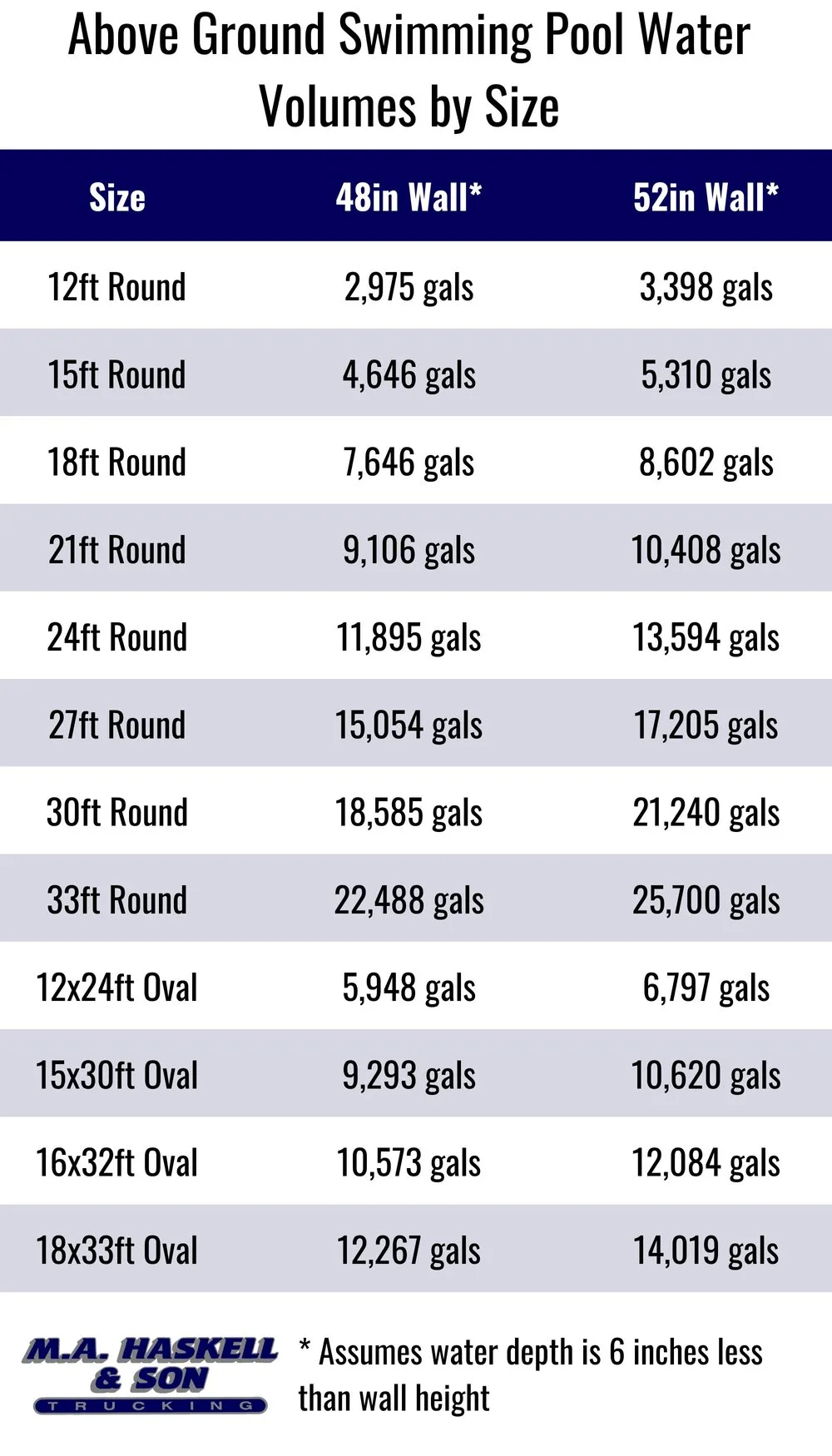
Image source: Bing (Web image (fair-use with source credit))
How to Figure Out Your Target Flow Rate (GPM)
Once you know your pool's total gallon capacity, the next critical step is determining the flow rate you need from your pump. Flow rate is typically measured in Gallons Per Minute (GPM). For residential swimming pools, a widely accepted standard for effective filtration is to be able to circulate the entire volume of pool water at least once every eight hours.
This is known as the "turnover rate."
To calculate your target GPM, you'll use your pool's total gallon volume and the desired turnover time. A standard 8-hour turnover means the pump needs to be powerful enough to move all the water in that timeframe.
- Calculate Required GPM:
- Required GPM = Total Gallons / (Turnover Time in Hours x 60 minutes/hour)
- Using our 8-hour goal: Required GPM = Total Gallons / 480
Let's say your pool holds 12,000 gallons. Your calculation would be: 12,000 gallons / 480 minutes = 25 GPM. This means you need a pump capable of delivering at least 25 gallons of water per minute to ensure a complete turnover within your target timeframe.
Matching Pump GPM to Your Filter's Capabilities
This is where many people run into trouble: simply buying the biggest horsepower pump doesn't automatically mean better filtration. In fact, it can be detrimental. The pump has to work in conjunction with your pool's filter, and each filter type has a maximum flow rate it can handle effectively.
Pushing water through a filter faster than it’s designed for can lead to poor filtration, bypass the filter media, and even cause damage.
- Sand Filters: Generally robust and can handle higher flow rates. A common size might be rated for 50-100 GPM.
- Cartridge Filters: Often offer excellent filtration at lower flow rates. They might have maximum ratings around 100 GPM, but perform best at lower GPMs.
- Diatomaceous Earth (DE) Filters: Known for superior filtration, they also have specific GPM ratings that should not be exceeded.
Manufacturer specifications for pool filters clearly state their recommended flow rate range. You must choose a pump whose GPM output, at the operating pressure of your system, falls within this range. If your pool volume calculation requires a high GPM, and your filter has a low maximum rating, you might need to upgrade your filter to match.
Always consult your specific filter's documentation.
Understanding Horsepower vs. Actual Flow Rate
It's easy to get caught up in horsepower (HP) when shopping for a pump. You see a 1.5 HP pump and think it's automatically better than a 1 HP pump. However, horsepower is just one aspect of a pump's performance.
The real performance indicator you need is its Gallons Per Minute (GPM) output at a given head pressure.
Head pressure refers to the resistance the pump encounters as it pushes water through your pool's plumbing and filter. Factors like pipe diameter, length, and the number of turns in your plumbing system all contribute to this pressure. A pump's stated HP rating is often its maximum potential, but its actual GPM delivery can be significantly lower when working against resistance.
For instance, two different 1 HP pumps might have very different GPM ratings. One might deliver 75 GPM at a moderate head pressure, while another might only deliver 50 GPM under the same conditions. When selecting a pump, look beyond just the HP and focus on the pump's performance curve, which shows its GPM output at various head pressures.
As of 2026, most reputable pump manufacturers provide these detailed performance charts alongside their product specifications.
This is why it's crucial to match the pump's actual flow rate at your system's expected operating pressure with your pool's GPM needs and your filter's limitations. A pump that's too weak won't circulate enough water, and one that's too powerful can force water through the filter too quickly, reducing its effectiveness and potentially causing damage.
Single-Speed vs. Variable-Speed Pumps: Which is Best?
When choosing a pool pump, you'll primarily encounter two types: single-speed and variable-speed. The choice between them significantly impacts your pool's operation, energy consumption, and long-term costs. Understanding the core difference is key to making the right decision for your situation.
Single-speed pumps are the traditional option. They operate at one constant speed, usually at their maximum power setting, whenever they are turned on. Variable-speed pumps (VSPs), on the other hand, allow you to adjust the motor speed to precisely match the task at hand.
This flexibility offers substantial benefits for pool owners.
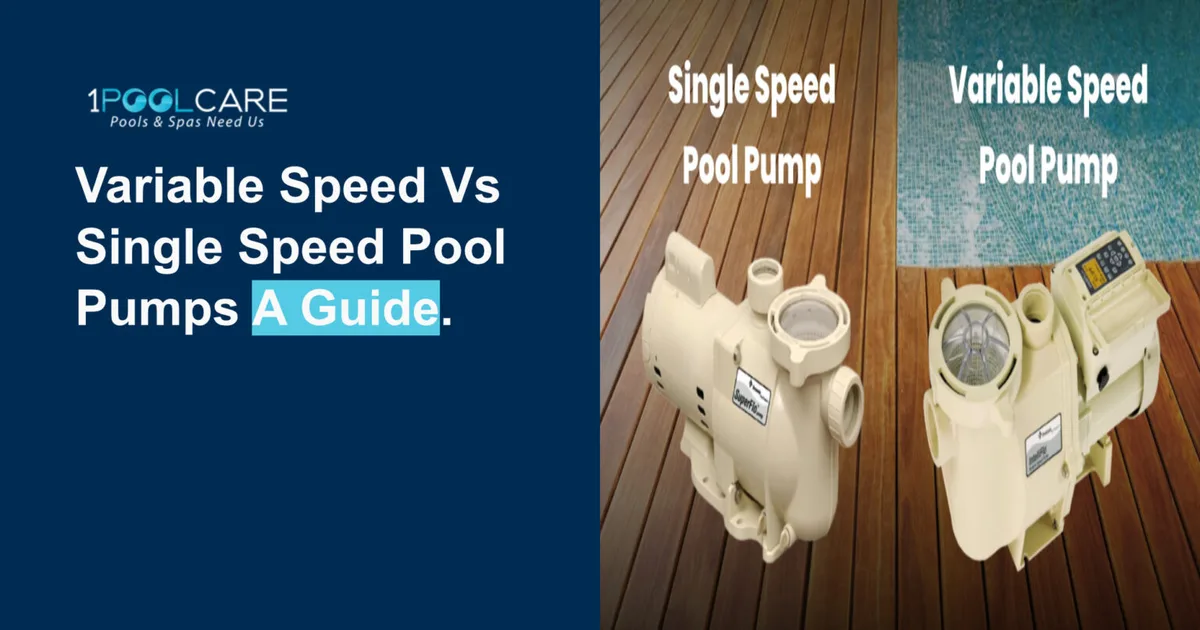
Image source: Bing (Web image (fair-use with source credit))
Single-Speed Pumps: The Classic Choice
These pumps are straightforward and often come with a lower initial purchase price. They’re designed to run at a fixed RPM (revolutions per minute), meaning they deliver a consistent flow rate. When you turn a single-speed pump on, it runs at full tilt until you turn it off.
- Pros:
- Lower upfront cost compared to variable-speed models.
- Simpler to understand and operate.
- Cons:
- Less energy-efficient, as they always run at maximum power.
- Can be noisier due to constant high-speed operation.
- Fixed speed may not always be optimal for different filtration needs.
Variable-Speed Pumps (VSPs): The Modern Solution
Variable-speed pumps offer a significant upgrade in efficiency and control. They use advanced motor technology that allows you to program specific speeds for different times or functions. For example, you might run the pump at a very low speed overnight for continuous filtration and then at a higher speed when you're backwashing or running a cleaner.
- Pros:
- Massive energy savings, often reducing electricity costs by 50-90% compared to single-speed pumps.
- Quieter operation, especially at lower speeds.
- Enhanced filtration capabilities due to longer run times at optimal flow rates.
- Increased equipment longevity due to reduced stress on the motor.
- Many models offer advanced features and programmability.
- Cons:
- Higher initial purchase price.
- Can seem more complex to program initially, though most come with user-friendly interfaces.
Common Mistakes When Choosing a Pool Pump
Selecting the wrong pump size or type is a common pitfall for above-ground pool owners, and it can lead to ongoing problems. One of the biggest errors is focusing solely on the horsepower (HP) rating without considering the pump's actual GPM output or how it interacts with your filter. Many buyers assume that more HP equals better performance, but this isn't always true.
Another frequent mistake is not accounting for "head pressure." Every pool plumbing system creates resistance, slowing down water flow. If you choose a pump based on its maximum GPM in ideal conditions without factoring in this resistance, you'll end up with a pump that underperforms in your actual setup. This leads to inadequate water circulation and poor filtration, essentially defeating the purpose of having a pump at all.
Finally, failing to check your filter's maximum GPM rating is a costly error. Installing a pump that pushes water through the filter too fast can cause it to bypass the filter media, leading to less effective cleaning and potentially damaging the filter itself. Always ensure the pump's GPM output at your system's operating pressure is compatible with your filter.
Your Pool Pump Decision Guide
So, how do you put all this information together to make a concrete decision? The process is essentially a workflow that guides you from understanding your needs to selecting the right equipment. Think of it as a series of if/then statements based on your specific pool setup.
Here’s a breakdown:
- What's your pool's volume?
- If you know your pool's total gallons, great! Move to step 2.
- If not, calculate it using the formulas for round, oval, or rectangular pools.
- What's your target flow rate (GPM)?
- Calculate your required GPM for an 8-hour turnover: Total Gallons / 480.
- This number is your minimum GPM requirement.
- What's your filter's maximum GPM?
- Find this rating on your filter’s label or in its manual.
- If your calculated GPM exceeds your filter's max, you need a larger filter.
- Consider Pump Type:
- Are you prioritizing upfront cost? A single-speed pump might be your choice.
- Are you focused on long-term energy savings and quieter operation? A variable-speed pump is the clear winner.
- Select a Pump:
- Look for a pump whose GPM rating at your system’s likely head pressure is at least your target GPM from step 2 and no more than your filter's max GPM from step 3.
- Variable-speed pumps allow more flexibility, as you can dial in the precise speed needed.
If your pool volume calculation points to a high GPM requirement (e.g., over 70 GPM), and you’re looking at pumps around the 1 HP mark or higher, a variable-speed pump becomes an even more compelling option due to its energy efficiency and controllability.
Frequently Asked Questions About Pool Pump Sizing
What happens if I use a pump that's too small?
If your pump's GPM is too low, it won't be able to circulate all the water in your pool within the desired timeframe (typically 8 hours). This leads to poor water circulation, chemical imbalances, and an increased risk of algae growth. You'll find yourself needing more chemicals and spending more time trying to keep the water clean.
Can a pump be too powerful for my above-ground pool?
Yes, absolutely. A pump that's too powerful can create excessive pressure, which can damage your pool's filter, hoses, and seals. It can also force water through the filter too quickly, preventing it from effectively removing debris and contaminants.
This means your water might not get as clean as it should, despite the pump's high horsepower.
How often should my pool pump run?
For optimal filtration and water quality, your pool pump should ideally run for 8-12 hours per day. The exact duration depends on your pool's size, pump’s GPM, and whether you’re using a single-speed or variable-speed pump. Variable-speed pumps can often achieve excellent filtration by running longer at lower, more energy-efficient speeds.
Do I need a professional to help me size my pump?
While you can certainly calculate this yourself using the information provided, consulting a pool professional can be beneficial, especially if you have a complex setup or are unsure about your filter's specifications. They can help ensure you account for all factors, including plumbing friction loss, and recommend the best pump and filter combination for your specific needs.

