

Finding the best above-ground pool for a small yard is all about smart choices. You want that refreshing escape without turning your compact outdoor space into a crowded swimming pool zone. It means looking beyond just the diameter and considering how different shapes, materials, and features will actually work in your specific backyard.
Our research indicates that homeowners with smaller yards often find success with pools that have a thoughtful design. Factors like how much clearance you need around the pool for safety and access, and whether the pool’s shape complements your existing landscaping are crucial. You'll want a pool that feels like a natural extension of your home, not an imposition.
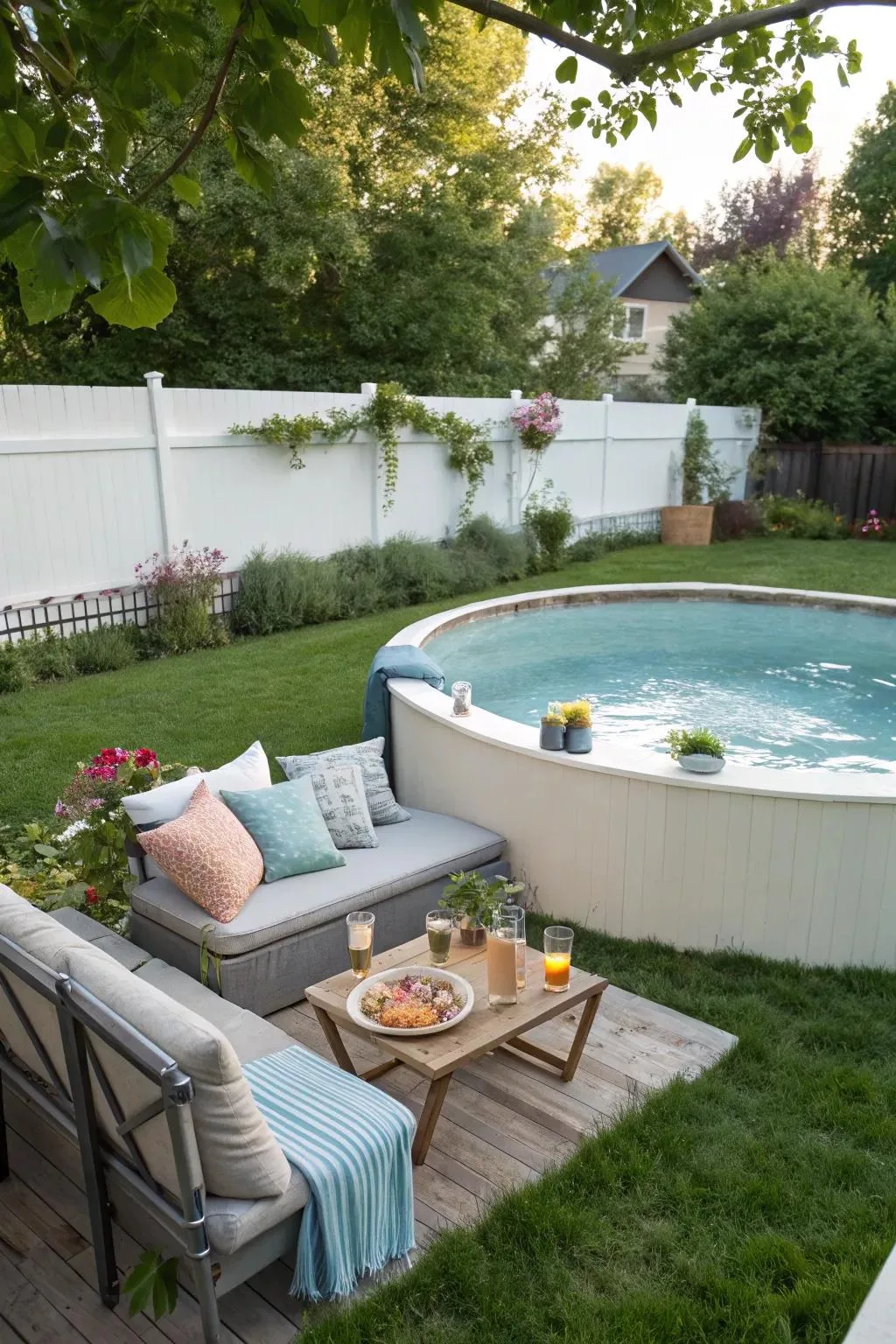
Image source: Bing (Web (fair-use with source credit))
Quick Answer
The best above-ground pool for a small yard is typically an oval or round model made of durable resin or steel. Look for depths around 48 inches and ensure the pump system meets water treatment standards.
Small Yard Pool: What's Your Best Fit?
When you're working with limited space, the question "What is the best above ground pool for a small yard?" really boils down to a few key considerations. It's not just about fitting a pool in, but fitting the right pool that enhances your yard rather than overwhelming it. You’re likely looking at pools that offer a good balance between splash-ready fun and usable outdoor space.
Round vs. Oval vs. Rectangular: Which Shape Works Best?
The shape of your above-ground pool can dramatically impact how it feels and functions in a small yard. Each shape offers different advantages and might suit your particular layout better. Understanding these differences helps you make a more informed choice.
Round Pools: These are often the most common choice, and for good reason.
- Pros: They tend to be the easiest to set up, offer excellent water circulation, and create a natural gathering point for families. Their symmetrical design means no awkward corners for people to bump into. Manufacturer specifications often highlight their structural integrity due to even pressure distribution.
- Cons: In a very tight space, a round pool can sometimes leave odd, unusable gaps of yard space around it. You might feel like you're losing more ground area than with other shapes.
Oval Pools: Oval pools can be a fantastic space-saver for rectangular yards or spaces with one longer dimension.
- Pros: They often provide a longer swimming "path" than a round pool of comparable width, allowing for a bit more of a swim. They tend to fit more snugly against fences or property lines, maximizing usable yard area.
- Cons: Setup can be slightly more complex than round pools, and they might require more robust support structures to maintain their shape.
Rectangular Pools: While less common in the small-yard above-ground pool market, these exist for those who prioritize a swimming experience.
- Pros: They offer the most "swim-ability" and can fit neatly along a wall or fence, minimizing wasted space.
- Cons: These are generally more expensive and can be the most challenging to assemble. They often require more ground preparation and can be less forgiving if the ground isn't perfectly level.
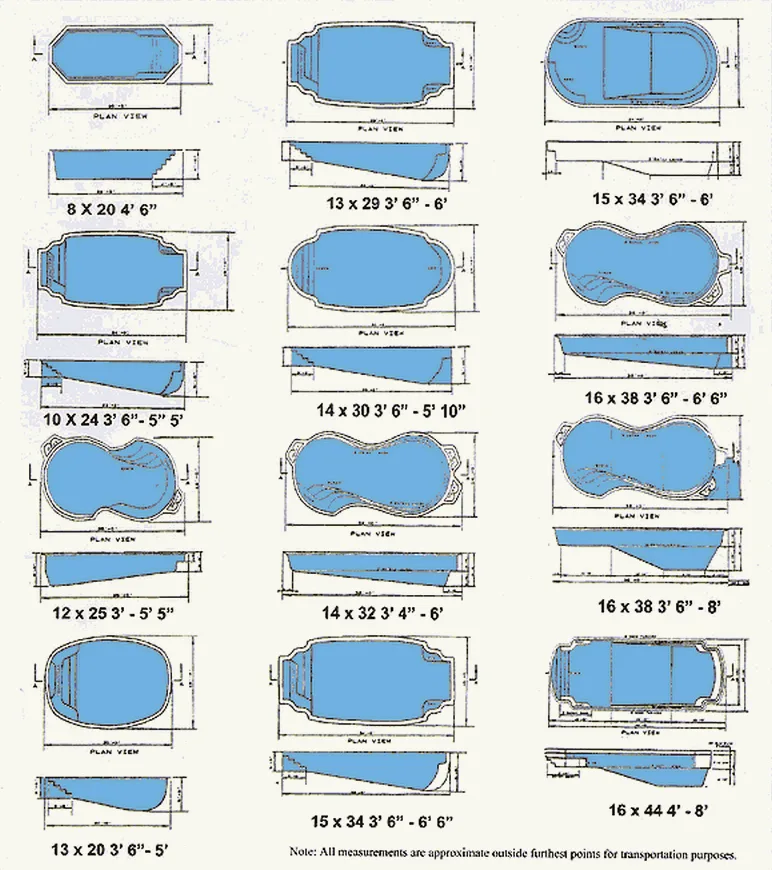
Image source: Bing (Web (fair-use with source credit))
Pool Materials for Durability: Inflatable, Steel, or Resin?
The material your above-ground pool is made from is a critical factor in its lifespan, stability, and how much maintenance it’ll need. For a small yard, you want something that’s built to last without being overly complicated to manage.
Inflatable Pools:
- Who it's for: Best for very temporary use, like a single summer season, or if you're testing the waters on pool ownership.
- Pros: Extremely affordable and quick to set up. They require minimal ground preparation.
- Cons: Least durable option. Prone to punctures and UV degradation, meaning they rarely last more than a couple of seasons. Water quality can also be harder to maintain.
Steel Frame Pools:
- Who it's for: A good middle-ground choice for families looking for durability without the highest price tag.
- Pros: Much sturdier than inflatables, offering better stability and a longer lifespan. The steel frames provide strong support for the vinyl liner. Many models are designed for relatively straightforward assembly. Aggregate user reviews often report 3-5 seasons of reliable use with proper care.
- Cons: Steel can be susceptible to rust if the protective coating is damaged, especially in humid or salty environments.
Resin Frame Pools:
- Who it's for: Those prioritizing longevity, corrosion resistance, and a premium feel.
- Pros: Resin frames are highly resistant to rust and corrosion, making them ideal for various climates. They typically offer superior durability and can last many seasons. The materials used often exceed basic industry standards for longevity.
- Cons: These are usually the most expensive option. Their assembly might also be slightly more involved than basic steel frame models.
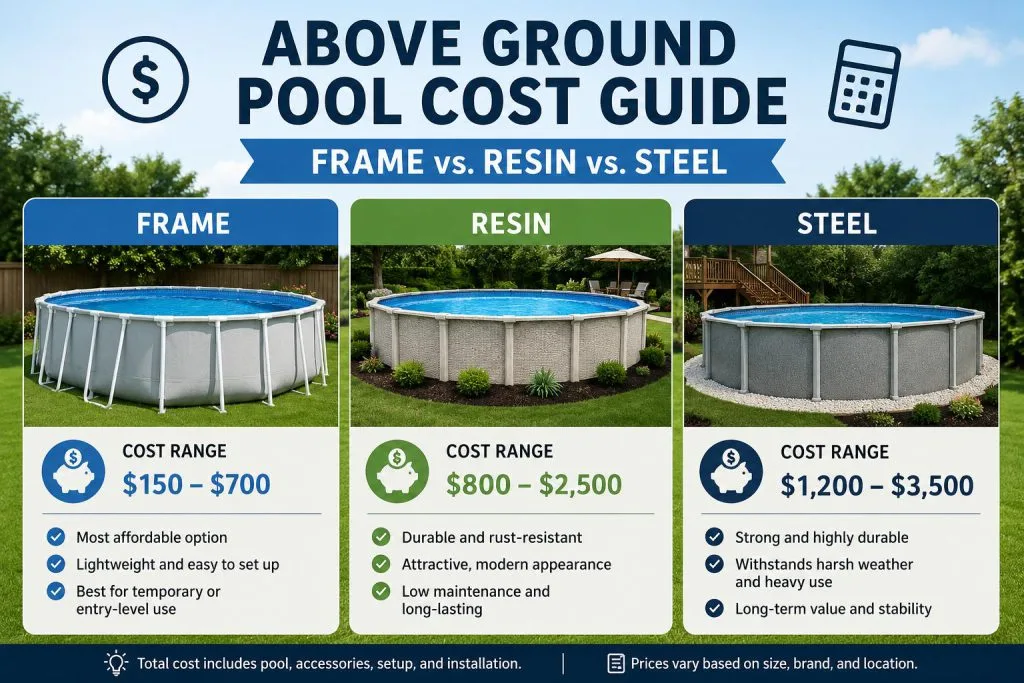
Image source: Bing (Web (fair-use with source credit))
Key Features to Consider for Compact Pools
Beyond shape and material, several specific features can make or break an above-ground pool experience, especially when space is a premium. These are the details that often get overlooked but make a big difference in daily use and long-term satisfaction.
- Depth: For small yards, especially those with children, a shallower depth is often preferable. Pools around 48 inches (1.2 meters) deep are common and provide enough water for cooling off and supervised play without feeling excessively deep or requiring huge amounts of water. Deeper pools might require more water treatment and can feel more imposing in a small space.
- Pump and Filtration System: Don't underestimate the importance of a properly sized pump and filter. A system that's too small will struggle to keep the water clean, leading to cloudy water and potential health issues. Manufacturer specifications will usually recommend a system appropriate for the pool's volume. A good system conserves energy and requires less frequent cleaning.
- Ladder and Entry System: Consider how easy and safe it is to get in and out of the pool. For small yards, a ladder that folds away or is easily removable can be a space-saver. Safety is paramount, so look for sturdy construction and non-slip treads.
- Cover: A good pool cover is essential, especially in a small yard where debris can easily blow in. It helps maintain water temperature, keeps the water clean, and reduces evaporation. Many covers are designed to be simple to put on and take off.
Setup and Space: Planning for Your Pool's Footprint
Getting your above-ground pool set up correctly is crucial, and in a small yard, proper planning is non-negotiable. You need to account for the pool itself, plus the necessary clearance for safety, access, and the pump and filter system.
Pre-Setup Checks
- Level Ground: This is the absolute most critical step. Manufacturer documentation universally stresses the need for perfectly level ground. Even a slight slope can cause uneven pressure on the pool walls, leading to structural damage or collapse. You'll need to use a spirit level and possibly a shovel or tamper to achieve this.
- Clearance Zones: Most manufacturers recommend a minimum clearance of 2-3 feet (0.6-0.9 meters) around the entire pool. This is for access during setup, maintenance, and crucially, for safety. It provides space for emergency egress and prevents people from tripping over the pool edge.
- Pump and Filter Placement: The pump and filter system needs to be on a stable, level surface, usually a paver or a small concrete pad, and must be within reach of a GFCI-protected electrical outlet. It also needs adequate airflow.
Assembly Considerations
- Tools Needed: While specific tools vary by model, you'll often need screwdrivers, wrenches, a ladder, and possibly a helper. Some kits come with basic tools, but having your own set is usually better.
- Time Commitment: Even simpler models can take several hours to set up, especially if you're doing it for the first time. More complex steel or resin frame pools can take a full day or even two.
Here’s a quick look at typical setup considerations:
| Aspect | Inflatable Pool | Steel Frame Pool | Resin Frame Pool |
|---|---|---|---|
| Ground Prep | Minimal | Level, firm ground | Level, firm ground |
| Clearance | 1-2 ft (0.3-0.6m) | 2-3 ft (0.6-0.9m) | 2-3 ft (0.6-0.9m) |
| Assembly Time | 1-2 hours | 4-8 hours | 6-12 hours |
| Tools | Air pump | Wrenches, screwdrivers | Wrenches, screwdrivers |
| Complexity | Very Simple | Moderate | Moderate to High |
Common Pool Problems in Tight Spaces (And How to Avoid Them)
Even with careful planning, small yards present unique challenges for above-ground pools. Understanding these common issues helps you get ahead of them before they become major headaches.
Overcrowding: The most obvious problem is making your yard feel too small. If the pool takes up 90% of your yard, you lose all other outdoor living space.
- Avoidance: Choose a pool shape and size that leaves room for a small patio, a couple of chairs, or a bit of greenery. Oval pools often work better for this than large round ones. Consider the vertical space too, a taller pool can feel more enclosing.
Access and Egress: In a small yard, the path to and from the pool, and around it, can be restricted. This impacts safety and convenience.
- Avoidance: Always maintain that recommended 2-3 feet of clearance. If possible, create a designated pathway. Ensure your entry/exit ladder is secure and doesn't block a crucial walkway.
Pump and Filter Placement Issues: Finding a good spot for the pump and filter can be tricky if there's no obvious flat, safe area near an outlet.
- Avoidance: Invest in a small, stable base (like a paver or a dedicated pad) for the pump. Ensure it's close enough to the pool for hose connections but not so close it creates a tripping hazard or makes the yard feel cluttered. Always use a GFCI-protected outlet for safety.
Water Runoff: When you drain or splash out water, where does it go? In a small yard, it can quickly create muddy messes or pool against your house foundation.
- Avoidance: Plan your drainage strategy in advance. You might need a hose to direct water to a storm drain, a lower part of your yard, or a dedicated receptacle. Never drain directly against your home's foundation.
Maintenance Made Easy: Keeping Your Small Pool Sparkling
Maintaining an above-ground pool in a small yard requires efficient practices to keep the water clean and the area tidy. Since space is limited, an unkempt pool can make the whole yard look neglected.
- Daily Checks: Skim the surface for leaves and debris. This is quick and prevents them from sinking and decomposing.
- Weekly Tasks:
- Water Testing: Use test strips or a liquid test kit to check pH, chlorine levels, and alkalinity. Manufacturer guidelines, often found on their websites, detail ideal ranges. For example, free chlorine levels are typically recommended between 1-3 parts per million (ppm).
- Vacuuming: If debris has settled, vacuum the pool floor. Many small pools benefit from a simple manual vacuum connected to the filter system.
- Filter Cleaning: Depending on your system, the filter will need backwashing or cartridge cleaning. Check your pump manual for frequency and procedure. A clogged filter works less efficiently and can strain the pump.
- Monthly Tasks:
- Shock Treatment: Periodically add a pool shock treatment to eliminate contaminants and algae. Follow product instructions carefully, usually done after sunset.
- Inspect Liner and Frame: Look for any signs of wear, leaks, or damage to the pool liner or frame. Address small issues early.
Keeping up with maintenance prevents larger problems, saves money on chemicals, and ensures your pool is always ready for a dip. A well-maintained pool also looks much better in a compact yard.
Final Verdict: Your Best Above Ground Pool for a Small Yard
When all is said and done, selecting the "best" above-ground pool for a small yard is a personal decision, but a few types consistently rise to the top. For most homeowners with limited outdoor space, an oval or a well-proportioned round above-ground pool made from a durable steel or resin frame offers the ideal blend of fun, functionality, and space efficiency.
Consider a pool with a depth of around 48 inches (1.2 meters), which is ample for cooling off and safe for families without dominating the yard visually. The key is to prioritize a pool that leaves you enough room to move around it comfortably and still enjoy other aspects of your yard. Always double-check manufacturer specifications for required clearance and assembly space.
As of 2026, these types of pools continue to be the most practical and popular choice for maximizing enjoyment in compact living situations.
Frequently Asked Questions About Small Yard Pools
How long does setup take?
Setup time varies significantly by pool type. Inflatable pools can take as little as 1-2 hours. Steel frame pools typically require 4-8 hours, while more robust resin frame pools might take 6-12 hours or more, depending on complexity and the number of people assisting.
What kind of ground preparation is needed?
The ground must be perfectly level and firm. Minor slopes need to be corrected to prevent structural stress on the pool. A stable, level base is critical for safety and the longevity of the pool.
How much water does a small above-ground pool hold?
A common 12-foot round pool, about 30 inches deep, holds roughly 1,700 gallons (6,400 liters) of water. Larger or deeper models will hold more. Always check the specific volume listed by the manufacturer.
Can I install an above-ground pool on a deck or patio?
Generally, above-ground pools are not recommended for installation on decks or patios. These surfaces may not be able to support the immense weight of the pool and water, which can be several tons. Always place pools on a prepared ground surface.

