

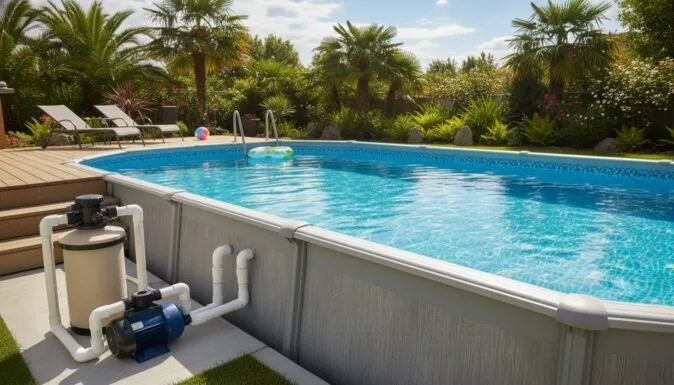
Image source: Bing (Web (fair-use with source credit))
Keeping your above-ground pool water crystal clear might seem like a constant battle, but it's more about consistent, smart maintenance than magic. If you've ever looked out at cloudy or algae-filled water, you know how frustrating it can be. The good news is, with the right approach, you can achieve that inviting, sparkling look.
Manufacturer specifications confirm that maintaining proper water chemistry, specifically keeping your free chlorine levels between 1-3 parts per million (ppm) and your pH between 7.2 and 7.6, is crucial for preventing microbial growth and ensuring filter effectiveness. Let's break down exactly how to do it.
Quick Answer
To keep an above-ground pool clear, regularly test and balance your water chemistry. Ensure your filtration system runs daily and is kept clean. Skim debris and brush surfaces consistently.
Shock the pool when necessary to kill algae. Follow these steps diligently for sparkling water.
Why Is My Above Ground Pool Water Cloudy or Green?
Common Culprits Behind Pool Clarity Issues
Ever gaze at your pool and see… not much? That’s the dreaded cloudy or green water problem. It’s the most common headache for above-ground pool owners, and it usually stems from a few key issues that snowball if left unchecked.
Think of your pool water like a delicate ecosystem; imbalance in one area can quickly throw everything else off.
The primary reasons for this lack of clarity boil down to a few core factors. Improperly balanced chemicals, particularly your sanitizer and pH levels, are often the main offenders. If your sanitizer isn't doing its job, bacteria and algae can take hold.
Your pool's filtration system, the pump and filter working together, is also vital. If it's not running long enough, or if the filter itself is dirty and clogged, it can't effectively remove particles, leading to cloudy water. Basic housekeeping is also key: debris like leaves, bugs, and dirt that sink to the bottom can break down and contribute to water quality issues.
The Essential Pool Water Testing Routine
What to Test: pH, Alkalinity, and Sanitizer
How to Test: Strips vs. Liquid Kits
What to Do: Adjusting Chemicals Correctly
Testing your pool water is the absolute bedrock of keeping it clear. You simply can’t fix a problem if you don’t know what the problem is, and that’s where your test kit comes in. Think of it as your pool's personal doctor, giving you the vital signs you need to make informed decisions.
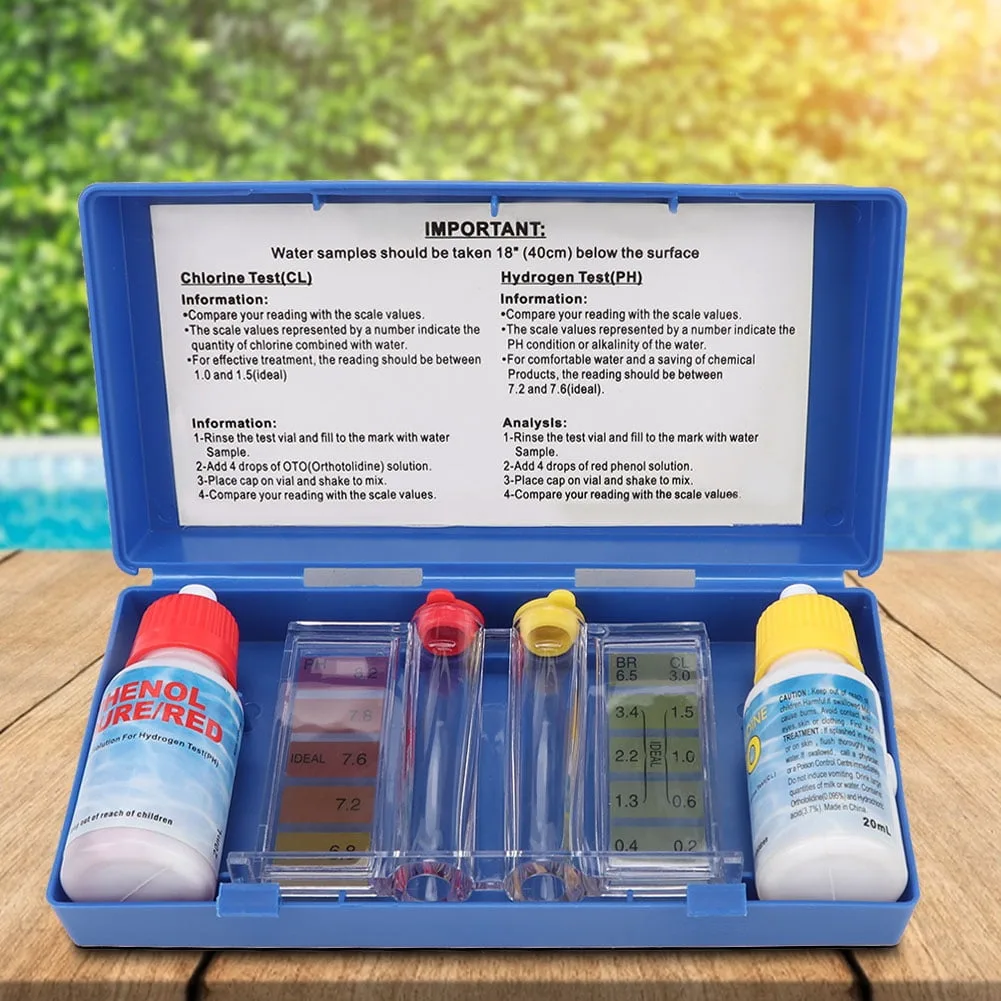
Image source: Bing (Web (fair-use with source credit))
You'll want to check three main things regularly. First, pH, which affects how well your sanitizer works and is crucial for swimmer comfort, ideally between 7.2 and 7.6. Second, Total Alkalinity (TA), which acts as a buffer to keep that pH stable, with a target range of 80-120 ppm.
Finally, and most importantly for killing contaminants, your Sanitizer level. For most pools, this is Free Chlorine, which should hover between 1-3 ppm. Other sanitizers, like bromine or salt-generated chlorine, have their own specific target ranges according to manufacturer specifications.
When it comes to testing, you have two main options: test strips or liquid reagent kits. Strips are super convenient for a quick check, but liquid kits typically offer more precise readings, especially for TA. Regardless of which you use, the process is straightforward.
You collect a water sample, add the reagents or dip the strip, and compare the resulting color to a chart.
Based on your readings, you'll adjust your chemicals. It's best practice to adjust them in a specific order: first Total Alkalinity, then pH, and finally your sanitizer. Always add chemicals one at a time, allow them to circulate in the pool water for at least a few hours (checking your pump’s run time is important here), and retest before adding more.
Never, ever mix different pool chemicals together; add them to the water separately.
Your Pool's Filtration System: The Clear Water Engine
Understanding Your Pump and Filter Function
When and How to Clean Your Filter (Cartridge, Sand, DE)
Ensuring Sufficient Pump Run Time
Your pool pump and filter are the unsung heroes when it comes to keeping your water sparkling. They work non-stop, circulating and cleaning the water, removing all sorts of microscopic gunk that would otherwise make your pool look like pea soup. Without a properly functioning filtration system, even perfectly balanced chemicals won't keep your water clear.
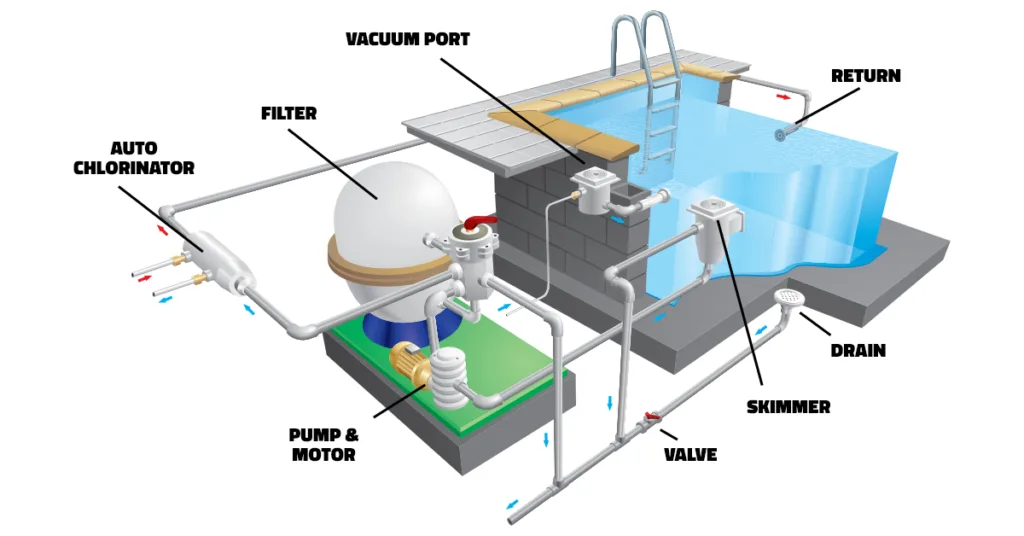
Image source: Bing (Web (fair-use with source credit))
The pool pump acts like the heart, drawing water from the pool through skimmer baskets and drains, pushing it through the filter, and then returning it to the pool. The pool filter is where the actual cleaning happens; it traps debris, dirt, and other particles as water passes through it. The type of filter you have, cartridge, sand, or Diatomaceous Earth (DE), will determine how you clean it.
Manufacturer specifications indicate that a filter's "clean" operating pressure is usually indicated on the filter unit itself or in its manual. When the pressure gauge reads 8-10 psi (pounds per square inch) higher than this clean baseline, it’s time for cleaning. For cartridge filters, this means removing and hosing down the cartridge element. Sand filters require "backwashing," which reverses the water flow to flush out trapped debris. DE filters are more involved, requiring backwashing and then replenishing the filter with DE powder.
Crucially, your pump needs to run long enough each day for the entire volume of your pool water to pass through the filter at least once. For most above-ground pools, this means running the pump for about 8-10 hours daily, but this can increase significantly during hot weather or heavy use. Not running the pump long enough is a very common reason for cloudy water.
Daily & Weekly Pool Maintenance Habits for Clarity
Skimming for Debris
Brushing Walls and Floor
Proactive Chemical Balancing
Preventative care is the name of the game here. A few minutes of consistent effort each day or every couple of days can save you hours of frantic chemical balancing and filter cleaning later on. These are the simple habits that make the biggest difference in keeping your above-ground pool clear.
Skimming the surface is your first line of defense. Grab a leaf skimmer and just sweep across the top of the water. This removes floating debris like leaves, pollen, and insects before they have a chance to sink, decompose, and start mucking up your water chemistry or clogging your filter.
Aim to do this daily, or at least every other day.
Next up is brushing. Use a pool brush to scrub the walls and floor of your pool. This might seem like a chore, but it’s incredibly important.
Brushing dislodges any dirt, grit, or potential algae growth that's clinging to the surfaces. Once loosened, these particles are much easier for your filtration system to pick up. Pay special attention to corners, steps, and any areas where water flow might be weaker.
Beyond physical cleaning, proactive chemical balancing is key. This means testing your water not just when something looks wrong, but regularly. As of 2026, the recommendation for most residential pools is to test your pH and chlorine at least twice a week, and your total alkalinity weekly.
Keeping these parameters within their ideal ranges prevents many common clarity issues before they even start. It's far easier to add a small amount of pH decreaser than to shock and filter a green pool.
Troubleshooting Specific Clarity Problems
Dealing with Cloudy Water: Clarifiers vs. Flocculants
Fighting Green Water: The Shock Treatment Process
Addressing Milky or Murky Water
Even with the best intentions, sometimes your pool water can still take on an undesirable appearance. When this happens, it’s time to play detective and figure out the best course of action. The solution often depends on what you’re seeing.
Cloudy water is one of the most common complaints. If your chemical levels are properly balanced but the water is still hazy, it typically means your filter is struggling. It could be overloaded with fine particles that it can't quite catch, or it might need cleaning.
- Clarifiers: These are helpful for mild cloudiness. A clarifier works by causing microscopic particles to clump together, forming larger particles that your filter can more easily trap. You add it to the pool, let it circulate for 12-24 hours, and then clean your filter.
- Flocculants: For more stubborn cloudiness, flocculants are stronger. They cause all suspended particles to clump together and sink to the bottom of the pool. You then need to vacuum this settled debris very slowly directly to waste (if your filter allows), as stirring it up will only make the water cloudy again. Use flocculants with caution, as incorrect application can worsen the problem.
Green water is the tell-tale sign of an algae bloom, and it’s usually caused by your sanitizer levels dropping too low for too long.
- Shocking the pool is the standard treatment. This involves adding a very high dose of chlorine (or a non-chlorine shock product if preferred) to kill off the algae and other contaminants. The amount needed depends on your pool size and the severity of the bloom. Always follow the product's instructions carefully.
- After shocking, you'll need to brush vigorously to loosen the dead algae from the pool surfaces. Then, your filtration system needs to run 24/7 until the water clears. Be prepared to clean your filter multiple times during this process as it collects the dead algae.
Milky or murky water can sometimes be a sign of tiny, suspended particles that your filter can't handle, similar to mild cloudiness. If your chemicals are balanced and you've tried a clarifier without success, it might point to issues with calcium hardness or a high level of total dissolved solids. In these cases, a partial draining and refilling of the pool might be necessary to reset the water chemistry.
Expert Tips for Long-Term Pool Clarity
Preventing Algae Growth
The Role of Showering Before Swimming
Using Pool Covers Effectively
Maintaining clear pool water isn't just about fixing problems when they arise; it’s also about adopting smart habits that prevent them from happening in the first place. These expert-level tips focus on proactive measures that significantly reduce the likelihood of cloudiness or algae blooms, making your pool a consistently inviting space. By incorporating these practices, you're essentially building resilience against common water quality issues.
One of the most effective preventative measures is using an algaecide regularly, especially during warmer months or if your pool is prone to algae. A weekly dose, added according to product instructions, acts as a backup defense system. It targets and inhibits the growth of algae spores before they can multiply and become visible.
This is particularly useful if you've had past issues with algae.
Another surprisingly effective habit is to ask swimmers to shower before they get in. Lotions, deodorants, sweat, and body oils can all contribute to the organic load in your pool water. These substances consume sanitizer and can even create a film that affects water clarity.
A quick rinse removes much of this before it enters the pool.
Finally, using a pool cover when the pool is not in use is a game-changer. Covers are fantastic for preventing debris like leaves, dust, and insects from falling in. This reduces the workload on your filter and minimizes the organic matter that needs to be broken down.
A cover also helps to reduce water evaporation, meaning you use less water and chemicals over time.
Frequently Asked Questions About Clear Pool Water
When should I shock my pool?
Shocking your pool is essentially a super-dose of sanitizer to quickly kill contaminants like algae, bacteria, and chloramines. You should shock your pool if you notice green or cloudy water, after heavy use (like a big pool party), after heavy rain, or if your free chlorine levels consistently read very low. It's also a good practice to shock your pool every 1-2 weeks during peak season to keep it in top shape.
How often should I test my water?
As of 2026, for optimal water clarity and safety, you should test your pool water at least twice a week for free chlorine and pH. Total alkalinity should be tested weekly. More frequent testing might be necessary during very hot weather, after heavy rainfall, or if you notice any changes in the water's appearance.
Consistent testing is the key to preventing major clarity issues.
Can I use pool chemicals with a salt system?
Yes, you can use many pool chemicals with a salt system, but with some important considerations. Saltwater pools generate their own chlorine, so you generally won't need to add traditional chlorine. However, you'll still need to monitor and balance pH, total alkalinity, and calcium hardness.
Some algaecides and clarifiers are compatible, but always check the product label for compatibility with saltwater pools.
What if my water is still cloudy after shocking and filtering?
If your pool water remains cloudy even after shocking, brushing, and running your filter for extended periods, it often indicates a filtration problem. Check your filter pressure gauge; if it's high, the filter needs cleaning or backwashing. If the filter is clean, the issue might be that the filter itself is undersized for the pool or has reached the end of its lifespan.
You might also consider a clarifier to help your filter catch the remaining fine particles.

