

Keeping your above-ground pool sparkling and inviting isn't a mystery, but it does take a bit of know-how and consistent effort. The key is understanding that a clean pool is a result of both physical cleaning and proper water chemistry working together. Getting this balance right means more enjoyable swimming and less time spent troubleshooting.
Research from industry professionals indicates that maintaining optimal water balance, with pH typically between 7.2 and 7.6 according to the Pool & Hot Tub Alliance, is crucial. Consistent attention to a few core tasks will prevent common issues before they start, ensuring your pool remains a summer oasis.
Quick Answer
To keep an above ground pool clean, regularly skim debris, brush walls, vacuum the floor, and test water chemistry. Maintain proper sanitizer levels using chlorine or salt. Ensure your filter system runs daily and clean it as needed.
Consistent care prevents algae and cloudy water.
Is Your Above-Ground Pool Water Cloudy? Let's Figure It Out
Cloudy water in your above-ground pool is one of the most frustrating signs that something's off. It can be caused by a few different things, and figuring out which one is the culprit is the first step to getting your water clear again. Think of it like a diagnostic puzzle for your pool.
- Fine particles suspended: This is the most common reason. These tiny bits, too small for your filter to catch, can be dust, pollen, microscopic algae, or even dissolved solids from chemicals or hard water.
- Chemical imbalance: If your pH is too high or too low, or if your sanitizer levels are off, it can make the water appear cloudy. For instance, high pH can reduce chlorine's effectiveness, leading to bacterial growth that causes cloudiness.
- Filtration issues: If your filter isn't running long enough, isn't clean, or is the wrong type for your pool size, it won't remove particles efficiently.
- Recent activity: Heavy bather load, dust storms, or even adding new chemicals incorrectly can temporarily cloud the water.
When you notice cloudy water, resist the urge to just dump in more chemicals. Instead, start by testing your water. A simple pool test kit can tell you if your pH, alkalinity, and sanitizer levels are in the correct range.
Based on those readings, you can then decide on the best course of action, which might involve adjusting chemicals, running the filter longer, or adding a water clarifier.
The Dirt on Debris: Keeping Your Pool Surface and Skimmer Clean
Leaves, bugs, grass clippings, and all sorts of other gunk can make their way into your pool, and if left unchecked, they're a fast track to murky water and potential filter clogs. Regularly removing this surface debris is probably the most visible and satisfying part of pool cleaning. It’s a daily, or at least every-other-day, job that makes a huge difference.
Skimming the Surface
Your skimmer basket is designed to catch larger floating debris before it sinks to the bottom or clogs your filter.
- Check daily, especially after windy days or if you have overhanging trees.
- Empty the basket when it’s about half-full. Don't wait until it's overflowing, as this reduces its effectiveness and can strain your pump.
- Rinse the basket with a hose to keep it clear.
Using a Leaf Net
For larger or more stubborn debris that might not get caught by the skimmer, a leaf net on a telescoping pole is your best friend.
- Sweep gently across the water's surface, collecting all visible floating items.
- Target the edges and areas around the skimmer and returns where debris can accumulate.
This simple, physical act of removing debris prevents it from breaking down in the water, which would otherwise consume sanitizer and contribute to cloudiness. It’s preventative maintenance that’s incredibly effective.
Beyond the Surface: How to Tackle Algae Blooms and Green Water
If your pool water has turned a noticeable shade of green, you're likely dealing with an algae bloom. This happens when algae, microscopic plant-like organisms, multiply rapidly. It’s not just unsightly; algae can make your pool water unsafe and unpleasant to swim in, and it significantly impacts your water chemistry.
Image source: Bing (Web (fair-use with source credit))
Here’s the workflow to combat and prevent green water:
Test and Balance Water Chemistry: Before you can kill algae, your water needs to be balanced.
- pH: Aim for 7.2-7.6. If it's too high, chlorine won't work effectively.
- Alkalinity: Aim for 80-120 ppm. This acts as a buffer for pH.
- Sanitizer: Ensure your free chlorine is at a functional level (or your salt system is producing adequately). If it's zero, you need to add sanitizer first.
Brush Vigorously: Use a pool brush on a pole to scrub all pool surfaces, walls, steps, and the floor. This loosens the algae so chemicals and the filter can work on it. Don't forget corners and around ladders.
Shock the Pool: This means adding a large dose of a strong oxidizer, typically chlorine, to kill the algae and other contaminants.
- Follow Product Instructions: Use a shock product specifically designed for pools and follow the dosage instructions carefully based on your pool's volume.
- Timing is Key: Shock the pool in the evening or at night. Sunlight can dissipate shock treatments rapidly.
- Run the Filter: Keep the filter running continuously for at least 24 hours after shocking.
Filter, Filter, Filter: Your filter will work overtime to remove the dead algae.
- Monitor Pressure: Watch your filter's pressure gauge. If it climbs significantly (usually 8-10 psi above its clean starting pressure), it's time to clean or backwash it.
- Clean Frequently: You may need to clean your filter multiple times over a couple of days until the water runs clear.
Add an Algaecide (Optional but Recommended): After shocking and once your sanitizer levels have returned to normal, consider adding a quality algaecide as a preventative measure or to help finish off stubborn algae. Some algaecides are more effective against specific types of algae (like black or mustard algae).
To prevent algae, the best strategy is consistent chemical balancing and regular filtration. Keeping your sanitizer levels optimal at all times is your primary defense.
Water Chemistry 101 for Above-Ground Pools: The pH, Alkalinity, and Hardness Game
Understanding and controlling your pool water's chemistry is perhaps the most critical aspect of keeping it clean and safe. It's not just about killing germs; it's about creating an environment where your sanitizer works effectively and your pool equipment lasts. The three key players here are pH, total alkalinity, and calcium hardness.
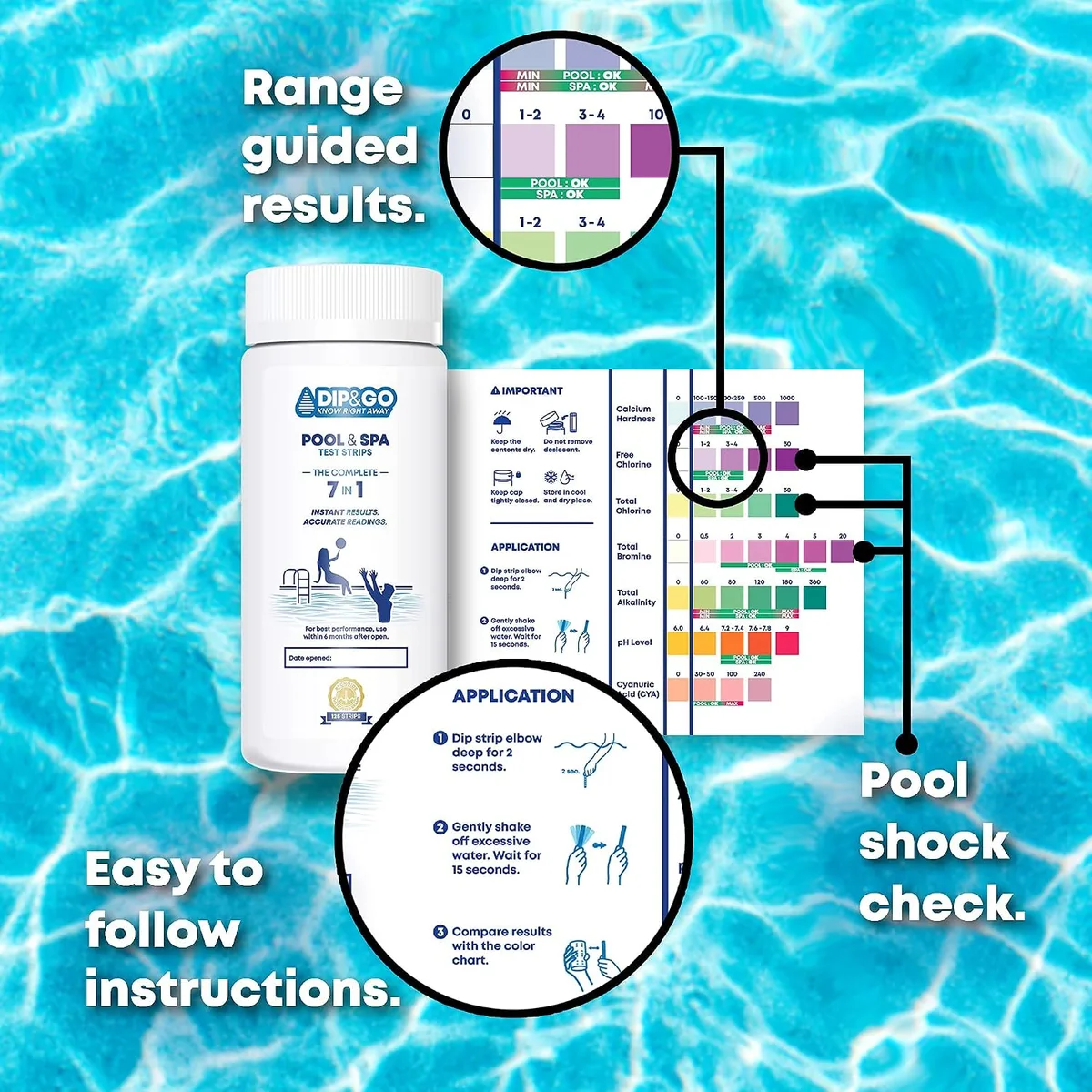
Image source: Bing (Web (fair-use with source credit))
pH: The Acidity Balance
- What it is: pH measures how acidic or basic your water is on a scale of 0-14.
- Ideal Range: 7.2 to 7.6 is perfect for swimming pools.
- Why it matters: Water that's too acidic (low pH) can corrode pool equipment and irritate skin. Water that's too alkaline (high pH) makes your sanitizer less effective and can cause cloudy water and scale buildup.
- How to adjust: Use pH increaser (soda ash) to raise pH or pH decreaser (muriatic acid or dry acid) to lower it. Always add chemicals slowly and retest.
Total Alkalinity (TA): The pH Buffer
- What it is: TA measures the amount of alkaline substances dissolved in your water that resist changes in pH. It’s like the water's shock absorber for pH.
- Ideal Range: 80 to 120 parts per million (ppm).
- Why it matters: If your TA is too low, your pH will bounce around wildly, making it hard to control. If it's too high, your pH will be difficult to lower.
- How to adjust: Use alkalinity increaser (sodium bicarbonate, baking soda) to raise TA. Lowering TA is trickier and usually involves adding acid to lower pH, then aerating the water to drive off CO2, which also lowers TA.
Calcium Hardness (CH): The Protection Factor
- What it is: CH measures the amount of dissolved calcium in your water.
- Ideal Range: For above-ground pools, aim for 180 to 250 ppm. Some sources suggest a slightly wider range might be acceptable.
- Why it matters: Water that is too soft (low CH) can become corrosive, pulling calcium from your pool surfaces and equipment. Water that is too hard (high CH) can lead to cloudy water and scale buildup on surfaces and in your filter.
- How to adjust: Use calcium chloride to raise CH. Lowering CH is typically done by partially draining and refilling the pool with water that has a lower calcium content.
Testing is Key: You'll need a good quality test kit or test strips. Test pH and alkalinity at least twice a week, and calcium hardness monthly or when adding significant amounts of new water. Always add chemicals one at a time, allowing them to circulate for several hours (or as directed) before adding another.
Sanitizing Smart: Chlorine vs. Salt and Keeping Levels Just Right
Sanitizer is the workhorse that keeps your pool water safe by killing bacteria, viruses, and other harmful microorganisms. The two most popular methods for above-ground pools are traditional chlorine and saltwater chlorination. Both have their pros and cons, and maintaining the correct level is non-negotiable for a clean and healthy pool.
Traditional Chlorine Systems
- How it works: You add chlorine tablets, granules, or liquid directly to the pool water. These dissolve and release hypochlorous acid, which sanitizes.
- Pros: Relatively inexpensive to start, widely available, and effective when used correctly.
- Cons: Requires frequent manual addition, can cause eye and skin irritation for some swimmers, and levels can fluctuate significantly.
- Ideal Levels: Free Chlorine (FC) should typically be maintained between 1-3 ppm. Always follow product instructions.
Saltwater Chlorine Generators (SWGs)
- How it works: These systems use a special electrolytic cell to convert salt (sodium chloride) dissolved in the pool water into chlorine.
- Pros: Provides a more consistent, gentler form of chlorine, often leading to softer-feeling water. Reduces the need for manual chlorine additions.
- Cons: Higher initial cost for the generator, requires salt to be added periodically, and the cell needs eventual replacement. Salt itself is not a sanitizer.
- Ideal Levels: Salt levels typically range from 3000-3500 ppm, but this varies by SWG manufacturer. The SWG then produces FC, which should also be kept in the 1-3 ppm range.
Maintaining Your Sanitizer Level
Regardless of your chosen system, consistent testing is vital.
- Test Frequency: Test FC daily if possible, or at least 2-3 times per week.
- When to Add: If levels drop below 1 ppm, it's time to add more chlorine or adjust your SWG output. If levels spike too high (e.g., after shocking), you'll need to wait for them to dissipate or use a chlorine neutralizer.
- Impact of Conditions: Swimmers, sunlight, heat, and debris all consume chlorine. You'll need to add more during heavy use or hot weather.
Using your sanitizer wisely is fundamental. A properly sanitized pool prevents the growth of algae and bacteria, making your pool a safe and enjoyable place to be.
Your Filter is Your Friend: Understanding and Maintaining Your Pool's Lifeline
Your pool's filter is arguably the most important piece of equipment for keeping water clean. It’s the system that physically removes particles, debris, and contaminants from the water, circulating it back into your pool clean and clear. Without a properly functioning filter, even perfect water chemistry won't keep your pool from looking murky.
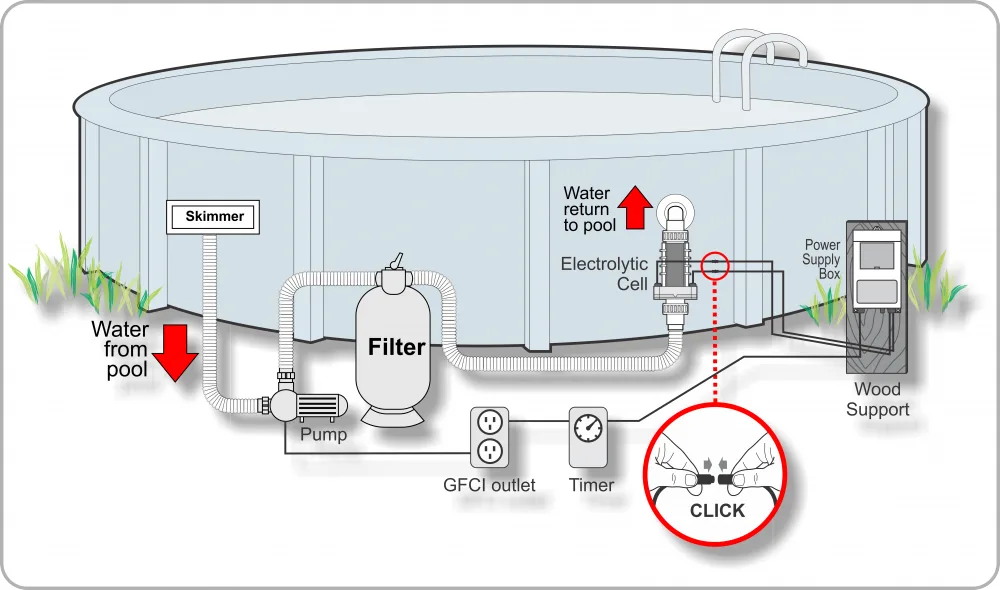
Image source: Bing (Web (fair-use with source credit))
Types of Filters for Above-Ground Pools
- Cartridge Filters: These use a pleated fabric cartridge to trap debris. They're generally easy to clean by rinsing with a hose, but cartridges need replacement every 1-3 years.
- Sand Filters: These use special filter sand to trap particles. They are cleaned by "backwashing", reversing the water flow to flush out the trapped debris. Sand needs replacement every 3-5 years.
- Diatomaceous Earth (DE) Filters: These offer the finest filtration, using a powder called DE to coat internal grids. They also clean via backwashing, followed by adding new DE powder. DE filters require more maintenance and specific handling.
Making Your Filter Work Harder
- Run Time: Ensure your filter runs for at least 8-12 hours per day. For smaller pumps or very active pools, you might need longer. This ensures all the water in your pool cycles through the filter multiple times a day.
- Cleanliness is Crucial: A dirty filter can't do its job. Check your filter's pressure gauge; if it's 8-10 psi higher than its clean starting pressure, it's time to clean it. For cartridge filters, this means removing and rinsing the cartridge. For sand or DE filters, it means backwashing.
- Replace Filter Media: Cartridges eventually wear out and need replacing. Sand filters' effectiveness decreases over time and needs replacing every few seasons.
Common Pool Cleaning Pitfalls to Steer Clear Of
Even with the best intentions, it's easy to make mistakes that can undo your cleaning efforts or even damage your pool. Knowing these common pitfalls can save you time, money, and frustration. Think of these as the "don't do this" list for pool maintenance.
- Over-Sanitizing: Adding too much chlorine or other sanitizer can be just as bad as too little. It can bleach pool liners, corrode equipment, and cause skin and eye irritation for swimmers. Always test before adding more.
- Under-Sanitizing: This is the most direct route to cloudy water, algae growth, and unhealthy swimming conditions. If your free chlorine level consistently dips below 1 ppm, you're asking for trouble.
- Ignoring Water Balance: Many people focus only on sanitizer levels. However, if your pH is off, your sanitizer won't work efficiently. Imbalanced water also leads to scale or corrosion.
- Infrequent Filter Cleaning: A clogged filter reduces water flow, strains the pump, and can't effectively remove debris. This leads to cloudy water and potentially equipment failure.
- Shocking During the Day: Sunlight rapidly breaks down chlorine shock, making it far less effective. Always shock your pool in the evening.
- Adding Chemicals Directly: Never pour chemicals directly into the skimmer or mix different chemicals together. Always dilute them in a bucket of water according to product directions, and add them to the water in the pool, away from the skimmer.
- Skipping the Brush: Algae and dirt can cling to pool surfaces. Brushing helps loosen them so your filter and chemicals can deal with them. Don't rely on just chemicals and filtration.
Quick Fixes and Long-Term Habits for a Consistently Clean Pool
Maintaining a clean above-ground pool isn't a one-time job; it's a set of habits. Fortunately, most of the work involves simple, regular tasks that, when done consistently, prevent major problems. Think of it as routine home maintenance, but for your backyard oasis.
Daily/Every Other Day Habits
- Skim the surface to remove leaves and bugs before they sink.
- Check the skimmer basket and empty if more than half-full.
- Test sanitizer levels (like free chlorine) to ensure your system is working.
Weekly Habits
- Brush pool walls and floor to loosen dirt and potential algae.
- Vacuum the pool to remove settled debris.
- Test full water chemistry: pH, alkalinity, and sanitizer. Adjust as needed.
- Note the filter pressure so you know when to clean the filter.
Monthly Habits
- Test calcium hardness to ensure it's within the recommended range.
- Inspect pool equipment for any leaks or unusual noises.
Seasonal Tasks
- Properly open the pool in spring and close it for winter to prevent damage.
- Replace filter cartridges, sand, or DE grids according to manufacturer guidelines or performance decline.
By integrating these tasks into your routine, you’ll prevent most common pool problems and enjoy consistently clear, clean water all season long.
Frequently Asked Questions About Above-Ground Pool Cleaning
How often should I test my pool water?
You should test your pool water at least two to three times per week for sanitizer levels (like free chlorine) and pH. Test total alkalinity weekly, and calcium hardness monthly. During heavy use or extreme weather, daily testing is recommended.
What if my pool water is foamy?
Foamy water is often caused by a buildup of oils, lotions, and soaps from swimmers, or sometimes by an excess of certain chemicals. Try running your filter continuously and consider using a foam-reducing additive. Ensure you're not overusing certain types of algaecides.
Can I use a regular vacuum cleaner for my pool?
No, you should use a vacuum designed for swimming pools. These are typically suction-side vacuums that connect to your skimmer or filter, or more advanced robotic cleaners. Standard vacuums can damage your pool liner or plumbing.
How long should I run my pool pump and filter each day?
As a general rule, you should run your pool pump and filter for at least 8 to 12 hours per day. This ensures that all the water in your pool circulates through the filter at least once to remove contaminants. The exact time can vary based on your pool size and pump’s flow rate.

