

When it comes to keeping your car’s interior spotless, a good vacuum cleaner is essential. But faced with the choice between cordless and corded car vacuums, which one is the better option for you? Both have their strengths and weaknesses, and the “better” choice really depends on your specific needs and how you plan to use it.
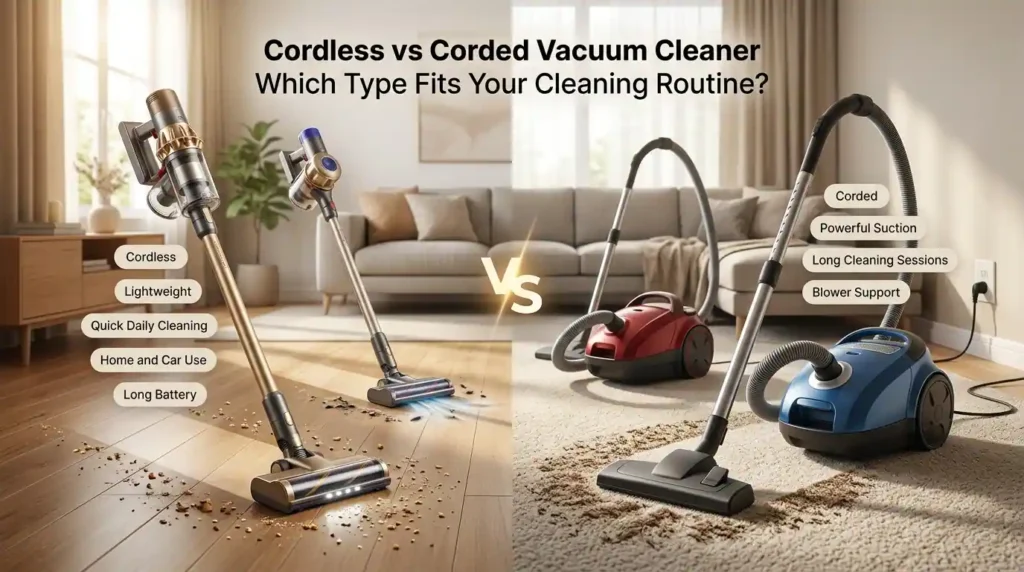
A cordless vacuum offers ultimate freedom, letting you move around your car without being tethered to a power outlet. This convenience is a major draw for many. On the other hand, a corded vacuum typically provides more consistent power and doesn’t run the risk of its battery dying mid-clean.
Let’s break down the key differences to help you decide.
Power And Performance
The power of a vacuum cleaner is often measured by its suction strength, usually indicated by Air Watts (AW) or Pascals (Pa). Generally, corded vacuums tend to offer more consistent and robust suction power. This is because they draw directly from a power source without the limitations of a battery.
For deep cleaning tasks, like removing stubborn pet hair or deeply embedded dirt, a corded model can be more effective. They are less likely to lose power as the battery drains, ensuring a strong clean from start to finish.
Cordless vacuums have made significant strides in power, with many high-end models offering suction comparable to their corded counterparts. However, battery technology still plays a crucial role. The initial suction might be strong, but it can diminish as the battery level drops.
Battery Life Vs. Unlimited Power
A key difference lies in how they are powered. Cordless vacuums rely on rechargeable batteries. This means you have a set amount of runtime per charge, typically ranging from 15 to 60 minutes depending on the model and power setting. For quick cleanups, this is often more than enough.
However, if you have a larger vehicle or a particularly messy job, you might find yourself needing a recharge mid-clean. This can be frustrating. Corded vacuums, on the other hand, are connected to your car’s power source (usually via the 12V outlet or an AC adapter for home use) and can run indefinitely as long as they are plugged in. This unlimited runtime is a significant advantage for thorough cleaning sessions.
Portability And Convenience
When it comes to portability, cordless vacuums shine. Their lack of a cord makes them incredibly easy to maneuver around car seats, into tight spaces, and even up and down stairs if you’re cleaning out of the car. They are typically lightweight and designed for handheld use, making them ideal for quick spills and regular maintenance.
The convenience of grabbing a cordless vacuum and starting to clean immediately, without searching for an outlet or extension cord, is a major selling point. Many come with various attachments that store easily within the vacuum itself or a compact carrying case.
Corded vacuums for cars usually plug into your vehicle’s 12V power outlet. While this means you’re limited by the length of the cord (typically 10-16 feet), it’s usually sufficient for most cars and SUVs. Some more powerful corded models might require an AC adapter to plug into a wall outlet at home, offering even more power but less portability for in-car use.
Ease Of Use In Different Scenarios
For a quick clean after a muddy walk with the dog or a spill from a fast-food meal, a cordless vacuum is hard to beat. You can pull it out of its charging dock or storage bag and be cleaning in seconds.
If you’re planning a deep clean of your car, perhaps after a long road trip or before selling it, a corded vacuum might be more practical. You won’t have to worry about the battery dying as you meticulously clean every nook and cranny.
In my experience, having both can be ideal, a cordless for daily touch-ups and a corded for the occasional deep clean.
:max_bytes(150000):strip_icc()/peo-car-vacuums-test-dirt-devil-scorpion-plus-corded-handheld-cleaner-sd30025b-walmart-dburreson-020-10-8248e011949d452d8f996a47a8bd148a.jpg)
Battery Life And Charging
For cordless models, battery life and charging time are critical considerations. Higher-end models often feature longer runtimes and faster charging. Some even offer swappable batteries, allowing you to continue cleaning with a second charged battery while the first one recharges.
You need to consider how long a single charge lasts and how long it takes to fully recharge. If a vacuum offers only 15 minutes of runtime and takes 4 hours to charge, it might not be practical for anything more than very minor cleanups.
Look for models that balance runtime with charging speed.
Cost And Maintenance
The initial cost can vary significantly for both types. High-powered, feature-rich cordless vacuums can be quite expensive, often costing more than a comparable corded model. However, basic corded car vacuums are generally quite affordable.
Maintenance for both is usually straightforward. For cordless vacuums, this includes keeping the battery charged and cleaning or replacing the dustbin filter. Corded vacuums require similar filter cleaning and ensuring the cord is not damaged. The longevity of the battery in a cordless vacuum is also a factor to consider, as batteries degrade over time and may eventually need replacement, adding to the long-term cost.
Key Features To Consider
When comparing specific models, regardless of whether they are cordless or corded, several features are important:
- Attachments: Look for vacuums that come with a good selection of attachments. Crevice tools are essential for reaching between seats, brush attachments are great for upholstery and floor mats, and extension hoses can help you get into difficult spots.
- Dustbin Capacity: A larger dustbin means you won’t have to empty it as often. For cordless models, a larger bin can sometimes mean a slightly bulkier design.
- Filtration System: A good filtration system, like HEPA, can trap fine dust particles and allergens, improving air quality inside your car. This is particularly important for people with allergies or asthma.
- Weight and Ergonomics: How the vacuum feels in your hand is important, especially for longer cleaning sessions. A lightweight, well-balanced vacuum will be more comfortable to use.
- Noise Level: Some vacuums can be quite loud. If noise is a concern, check reviews for decibel ratings.
Here’s a quick comparison of the general pros and cons:
| Feature | Cordless Car Vacuum | Corded Car Vacuum |
|---|---|---|
| **Power** | Can be powerful, but may diminish with battery | Generally consistent and strong suction |
| **Runtime** | Limited by battery life (15-60 mins typical) | Unlimited as long as plugged in |
| **Portability** | High; no cords to manage | Moderate; limited by cord length |
| **Convenience** | Quick to grab and use, ideal for small messes | Requires finding power source, better for deep cleans |
| **Cost** | Can be higher, especially for premium models | Generally more affordable |
| **Maintenance** | Battery charging and replacement | No battery concerns |
| **Best For** | Quick cleanups, smaller cars, convenience | Deep cleaning, larger vehicles, consistent power |
Which Is Better For You?
The choice between a cordless and corded car vacuum boils down to your priorities.
Choose a cordless vacuum if:
- You prioritize speed and convenience for frequent, quick cleanups.
- You have a smaller car or only need to clean specific areas.
- You don’t have easy access to a power outlet while cleaning your car.
- You are willing to invest in a model with good battery life and fast charging.
Choose a corded vacuum if:
- You need consistent, strong suction for deep cleaning tasks.
- You have a larger vehicle or tend to get very messy interiors.
- You prefer not to worry about battery life or charging times.
- You are looking for a more budget-friendly option.
Ultimately, the best car vacuum is the one that fits your lifestyle and cleaning habits.


2 Comments
Pingback: How Do You Vacuum Under Car Seats? - Vacuum Cleaner Tips
Pingback: How Do You Vacuum Between Car Seats? - Vacuum Cleaner Tips