

Yes, a vacuum cleaner is one of the most effective tools you can use to remove pet hair from furniture. With the right attachments and techniques, a vacuum can lift stubborn fur that clings to upholstery, making your furniture look clean and feel fresh again. The suction power and specialized brushes found on many vacuum models are designed to tackle this common pet owner challenge.
Why Pet Hair Sticks To Furniture
Pet hair has a unique way of embedding itself into fabric fibers. This is partly due to the tiny barbs on many animal hairs, which catch on upholstery threads. Static electricity also plays a role, especially in dry environments, causing hairs to cling more tightly.
Over time, these hairs can become deeply woven into the fabric, making them difficult to remove with simple brushing or lint rollers.
The Power Of Suction: How Vacuums Work On Pet Hair
Vacuum cleaners work by creating suction that pulls air and debris into the machine. For pet hair on furniture, this suction is crucial for lifting the embedded hairs from the fabric’s surface. Many vacuums come with specialized pet hair attachments designed to enhance this process. These attachments often feature rubberized surfaces or rotating brushes that agitate the fabric, loosening the hair so the suction can grab it.
Types Of Vacuum Attachments For Pet Hair
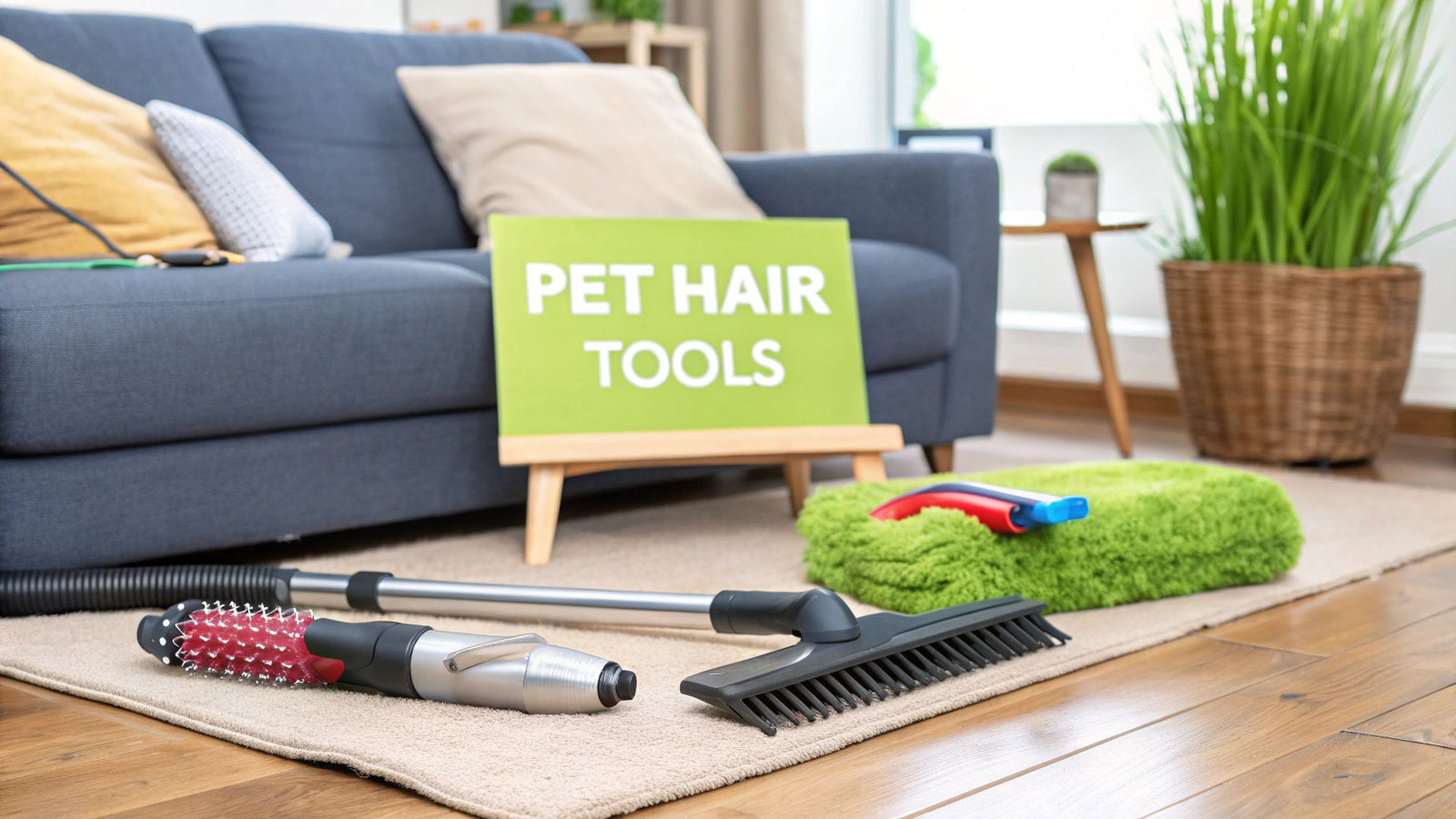
Different attachments are better suited for various furniture types and hair situations. Understanding these can significantly improve your cleaning results.
- Upholstery Tool: This is a standard attachment, usually a small, flat head with a fabric strip or brush. It’s good for general surface hair removal.
- Crevice Tool: Long and narrow, this tool is perfect for getting into tight spots like seams, corners, and between cushions where hair often accumulates.
- Motorized Brush Tool (Mini Turbo Brush): This is often the most effective tool for pet hair. It has its own small motor that spins a brush roll, actively dislodging hair from deeper within the fabric.
- Rubberized Tools: Some attachments are made of rubber or have rubber nubs. These create static and grip hair well, making them excellent for smooth upholstery or even hard surfaces.
Choosing The Right Vacuum For Pet Hair
Not all vacuums are created equal when it comes to tackling pet hair. Several factors make a vacuum more suitable for pet owners.
Suction Power
The stronger the suction, the better a vacuum will be at pulling embedded pet hair from furniture. Look for vacuums with high Air Watts (AW) or Pascals (Pa), which are measures of suction power. While these numbers can be a good indicator, real-world performance can vary.
Filtration System
Pet dander and allergens often accompany pet hair. A vacuum with a HEPA filter (High-Efficiency Particulate Air) is essential for trapping these microscopic particles, improving air quality in your home. This is particularly important for people with allergies or asthma.
Specialized Pet Features
Many brands offer vacuums specifically designed for pet owners. These often include:
- Tangle-free brush rolls: Designed to prevent hair from wrapping around the brush, reducing maintenance.
- Onboard tool storage: Keeps your pet hair attachments readily accessible.
- Durable construction: To withstand frequent use.
Vacuum Types And Pet Hair Removal
- Upright Vacuums: Often have powerful suction and wide cleaning paths. Many come with excellent pet hair attachments.
- Canister Vacuums: Typically offer strong suction and greater maneuverability, making them good for furniture and stairs.
- Stick Vacuums: Lighter and more convenient for quick cleanups, but suction power can vary. Look for models with motorized pet tools.
- Robot Vacuums: Can help with daily maintenance by picking up loose hair, but they are not a substitute for deep cleaning furniture.
Techniques For Effective Pet Hair Removal
Simply running a vacuum over your furniture isn’t always enough. Using the right techniques can make a significant difference.
Use The Right Attachment
Always select the attachment best suited for the job. For deeply embedded hair on fabric sofas or chairs, a motorized brush tool is usually your best bet. For crevices, use the crevice tool.
Go Slow And Steady
Don’t rush the process. Move the vacuum attachment slowly over the furniture. This gives the suction and brushes enough time to dislodge and pick up the hair. Overlapping your strokes also ensures no spots are missed.
Work In Different Directions
Pet hair can get woven into fabric from various angles. Vacuuming in one direction might miss some hairs. Try vacuuming horizontally, then vertically, and even diagonally over stubborn areas to lift all the embedded fur.
Pre-treat Stubborn Areas
For extremely stubborn hair, consider pre-treating the area. Lightly dampen a rubber glove or a microfiber cloth and wipe the furniture. This can help clump the hair together, making it easier for the vacuum to pick up.
Pro Tip: Regularly cleaning your vacuum’s brushes and filters is crucial. Clogged filters and tangled brush rolls significantly reduce suction power and cleaning efficiency.

Beyond The Vacuum: Complementary Tools
While vacuums are excellent, sometimes other tools can help before or after vacuuming.
Rubber Gloves Or Squeegees
A simple rubber glove, slightly dampened, can be surprisingly effective. Rubbing your hand over the fabric in a sweeping motion will gather hair into clumps that can then be picked up by hand or vacuumed. A rubber squeegee can work similarly.
Lint Rollers And Fabric Sweepers
These are good for quick touch-ups or for furniture that doesn’t tolerate heavy vacuuming. They work best on surface-level hair.
Specialized Pet Hair Brushes
There are various brushes designed specifically to attract and lift pet hair from upholstery. These often use a unique fabric or bristle design.
How Often Should You Vacuum Furniture For Pet Hair?
The frequency depends on your pet and your home environment. For homes with shedding pets, vacuuming furniture at least once a week is recommended. If you have multiple pets or pets that shed heavily, you might need to vacuum more often, perhaps every few days or even daily for high-traffic areas.
Maintenance Of Your Vacuum Cleaner
To ensure your vacuum continues to perform well, regular maintenance is key. This includes:
- Emptying the dustbin or replacing the bag: Do this regularly to maintain optimal suction.
- Cleaning or replacing filters: Follow the manufacturer’s recommendations for filter maintenance.
- Cleaning brush rolls: Remove tangled hair and debris from brush rolls, especially if you don’t have a self-cleaning model.
- Checking hoses and attachments: Ensure there are no blockages.

