

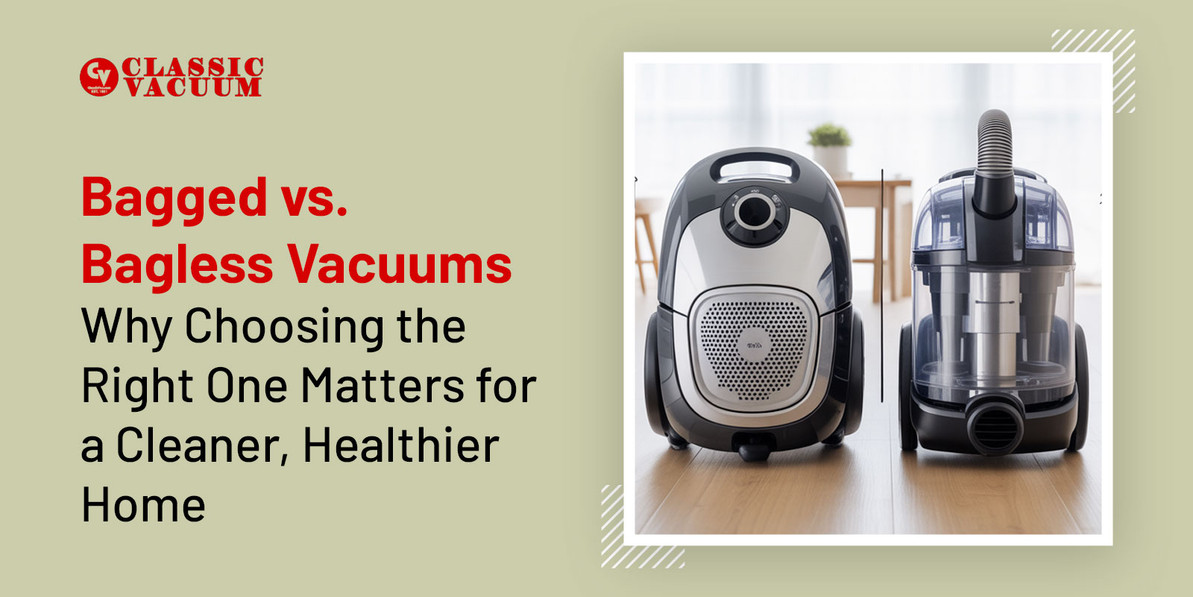
Bagged upright vacuums trap dirt in a sealed bag, while bagless models collect debris in a bin.
If you’ve ever stood in a store aisle comparing upright vacuums, you know the choice can feel oddly bigger than it should. The difference between bagged and bagless upright vacuums is not just about where the dust goes. It affects suction, maintenance, air quality, cost, and how easy the vacuum is to live with week after week.

What bagged and bagless upright vacuums actually are
A bagged upright vacuum uses a disposable dust bag inside the machine. Dirt, dust, and pet hair go straight into that bag, which you remove and throw away when it gets full.
A bagless upright vacuum uses a dust bin or canister instead. You empty the bin into the trash and keep using the same container again and again.
That sounds simple, but the difference between bagged and bagless upright vacuums changes the whole cleaning experience. In my own testing and day-to-day use, I’ve found that the “best” option depends less on features and more on your home, your allergies, and how much mess you want to handle by hand.
The biggest differences between bagged and bagless upright vacuums
The difference between bagged and bagless upright vacuums shows up in a few key areas. If you understand these, the choice gets much easier.
Dirt disposal
Bagged vacuums seal dirt inside a replaceable bag. This helps keep dust contained when you throw it away.
Bagless vacuums require you to empty the bin. That is convenient, but it can also kick dust back into the air if you are not careful.
Maintenance
Bagged models usually need less frequent deep cleaning. You replace the bag, check the filters, and move on.
Bagless models need more hands-on care. You have to empty the bin, clean filters, and sometimes remove hair or debris from the cyclone system.
Suction performance
Bagged vacuums often hold suction well as the bag fills, especially when designed well. The bag itself can act like an extra filter layer.
Bagless vacuums can lose performance if the bin gets too full or the filters clog. That is why many owners notice a drop in airflow when they wait too long to empty them.
Air quality
Bagged vacuums are often the better pick for allergy concerns. The sealed bag helps trap fine dust, pollen, and pet dander.
Bagless vacuums can be messier during emptying. Some do have HEPA filters, but the emptying process still matters a lot.
Ongoing cost
Bagged vacuums create a recurring cost because you keep buying replacement bags. Over time, that can add up.
Bagless vacuums usually cost less to maintain because there are no bags to replace. You still may need new filters now and then.
How bagged upright vacuums work
A bagged upright vacuum pulls air through the hose, brush roll, and filter path, then traps debris in a disposable bag. The bag acts as both a dirt collector and part of the filtration system.
This design is popular with people who want cleaner disposal and less exposure to dust. I’ve seen many homeowners with allergies prefer bagged vacuums because they do not want to stare at a cloud of dust every time they empty a bin.
Pros of bagged upright vacuums
Bagged upright vacuums come with a few clear strengths.
• Better containment of dust and debris
• Easier disposal for allergy-sensitive households
• Less frequent mess during maintenance
• Often better for fine dust and pet dander
• Usually cleaner to handle after vacuuming
Cons of bagged upright vacuums
There are also some drawbacks.
• Ongoing cost for replacement bags
• You need to keep spare bags on hand
• The vacuum can feel “full” before the bag looks packed
• Some people dislike throwing bags away often
How bagless upright vacuums work
A bagless upright vacuum uses centrifugal force and filters to separate dirt from airflow. The debris lands in a transparent bin so you can see what has been collected.
This is part of the appeal. People like the visual feedback, and some enjoy the idea of not buying bags. Still, the difference between bagged and bagless upright vacuums becomes obvious fast once you start emptying the bin over a trash can.
Pros of bagless upright vacuums
Bagless models have real advantages too.
• No bags to buy
• Easy to see when the bin is filling up
• Convenient for quick cleanups
• Good for users who want low recurring costs
• Often simple to empty, at least in theory
Cons of bagless upright vacuums
Bagless vacuums are not perfect.
• Emptying can release dust back into the air
• Filters need regular cleaning
• Bins can get dirty and smelly
• Performance may drop if maintenance is skipped
• Fine dust can cling to the canister and seals
I learned this the hard way once after emptying a very full bin of drywall dust. It looked harmless in the bin, but the fine particles puffed up like smoke the second I opened it. Since then, I treat bin emptying like a job that deserves a slow, careful hand.
Which type is better for allergies and asthma
If allergies or asthma are a concern, bagged upright vacuums are often the safer choice. The sealed bag helps contain dust mites, pet dander, and pollen better during disposal.
That said, the final result also depends on the vacuum’s filters and build quality. A bagless vacuum with a true HEPA filter can still perform well, but the emptying step is usually the weak point. According to indoor air quality guidance from health and environmental organizations, reducing dust release during cleaning matters just as much as collecting it.
Best choice for allergy-prone homes
• Bagged upright vacuum if you want the lowest dust exposure
• HEPA filtration if you want to improve particle capture
• Sealed disposal if you want less contact with allergens
Which type costs less over time
The difference between bagged and bagless upright vacuums often comes down to long-term cost.
Bagless vacuums usually cost less in ongoing supplies because there are no bags to replace. But they may still need filter replacements, brush roll cleaning, and more frequent maintenance.
Bagged vacuums cost more over time because bags are a repeating expense. Still, many people find the added cost worth it for cleaner disposal and less mess.
A simple way to think about cost
• Bagged vacuum = lower mess, higher supply cost
• Bagless vacuum = lower supply cost, more hands-on cleaning
If you vacuum often or have a larger home, that bag cost may matter more than you think. If you clean only once or twice a week, the long-term expense may feel much smaller.
Which vacuum is easier to maintain
Bagged upright vacuums are usually easier to live with. When the bag is full, you replace it and keep going.
Bagless upright vacuums need more steps. You empty the bin, rinse or clean filters, and keep the system free of buildup. If you skip those chores, performance can drop fast.
In my experience, this is where many people get surprised. They buy bagless because it sounds simpler, then realize “no bags” does not mean “no maintenance.” It just means the maintenance moved from shopping for bags to cleaning the machine itself.
Which type is better for pet owners
Pet owners often need strong suction, good filtration, and easy hair cleanup. The difference between bagged and bagless upright vacuums matters even more here because pet hair can fill a vacuum fast.
Bagged vacuums are often better if your pets shed a lot and you want less mess when disposing of the waste. Bagless models can still work well, especially if they have strong brush rolls and anti-tangle features.
Pet owner tips
• Choose a vacuum with a sealed system
• Look for washable or replaceable filters
• Check for pet hair tools and anti-wrap brush designs
• Empty bagless bins outdoors if dust bothers you
What to look for when buying an upright vacuum
Once you know the difference between bagged and bagless upright vacuums, shopping becomes easier. Focus on how the vacuum fits your home, not just the style.
Important features to compare
• Filtration system, especially HEPA if allergies matter
• Suction strength and airflow
• Brush roll design for carpets and pet hair
• Cord length and weight
• Noise level
• Bin or bag size
• Ease of maintenance
A vacuum should feel like a helper, not a project. If it is too heavy, too loud, or too annoying to clean, you are less likely to use it often enough.
Real-world examples of who should choose what
The difference between bagged and bagless upright vacuums is easiest to see in real life.
• A family with allergies may prefer bagged because dust stays sealed during disposal
• A renter with a small apartment may like bagless because it keeps recurring costs low
• A pet owner with heavy shedding may choose bagged for cleaner disposal
• A busy household may choose bagless for quick visibility and easy emptying
• A person with limited strength may prefer bagged if replacing a bag feels easier than washing filters and cleaning the bin
I’ve noticed that once people match the vacuum to their routine, satisfaction goes way up. The machine does not need to be perfect. It just needs to fit the way you clean.
Common mistakes to avoid
A lot of vacuum regret comes from small mistakes, not bad products.
• Buying bagless and forgetting that filters still need care
• Choosing bagged without checking bag price and availability
• Ignoring weight and maneuverability
• Focusing only on suction, not filtration
• Emptying a bagless bin indoors when dust sensitivity is an issue
The most common mistake I see is people assuming bagless is always easier. It is easier in one way, but not always cleaner or more convenient overall.
Frequently Asked Questions
Which is better, bagged or bagless upright vacuum?
Bagged upright vacuums are usually better for allergy control and cleaner disposal. Bagless vacuums are often better if you want lower long-term supply costs and do not mind more maintenance.
Do bagged vacuums lose suction?
They can lose suction if the bag is overfilled or airflow is blocked. In a well-designed model, suction often stays steadier as long as you replace the bag on time.
Are bagless vacuums worse for dust?
They can be messier when emptying, which may release more dust into the air. That does not make them bad, but it does mean they are not always the best choice for sensitive homes.
Do bagged vacuums cost more?
Yes, usually over time, because you need to keep buying replacement bags. The tradeoff is cleaner disposal and often less exposure to dust.
Which type is better for pet hair?
Both can work well, but bagged vacuums often make disposal easier when hair and dander build up. The best choice also depends on brush roll design, suction power, and filtration.
Conclusion
The difference between bagged and bagless upright vacuums comes down to how you want to handle dirt after cleaning. Bagged models are usually cleaner, easier for allergy sufferers, and simpler to dispose of. Bagless models can save money and give you more visibility, but they often need more upkeep and can be messier to empty.
If you want the easiest path to clean air and low-contact disposal, bagged is often the smarter pick. If you want lower ongoing costs and do not mind more maintenance, bagless may fit better. Take a close look at your home, your cleaning habits, and your sensitivity to dust, then choose the vacuum that will actually make life easier.

