

The best lawn sweeper for leaves is a sturdy tow-behind model with large capacity and adjustable brushes.
I’ve spent years testing and using lawn tools, and I’ll walk you through how to pick the best lawn sweeper for leaves for your yard. This guide explains types, key features, buying tips, real-world pros and cons, and practical maintenance advice so you can clean leaves faster and keep your lawn healthy.
:max_bytes(150000):strip_icc()/spr-agri-fab-44-in-tow-behind-lawn-sweeper-sara-luckey-05-ae43479260514cb9b433895fe90a7894.jpeg)
How a lawn sweeper works and why it helps
A lawn sweeper lifts leaves and debris with rotating brushes. Brushes sweep material into a hopper or bag. You then empty the hopper into a compost bin or yard waste cart.
Why use a lawn sweeper for leaves
- It saves time versus raking small and large yards.
- It keeps grass healthy by removing leaf cover that blocks light.
- It reduces strain compared to hand raking.
What they do well
- Collect leaves, pine needles, grass clippings, and small twigs.
- Work quickly on flat to gently sloped yards.
What they don’t do
- Pick up wet, matted leaves as well as dry leaves.
- Replace a leaf blower for tight spots and gutters.

Types of sweepers and which is best for leaves
There are four main types. Each type suits different yard sizes and budgets.
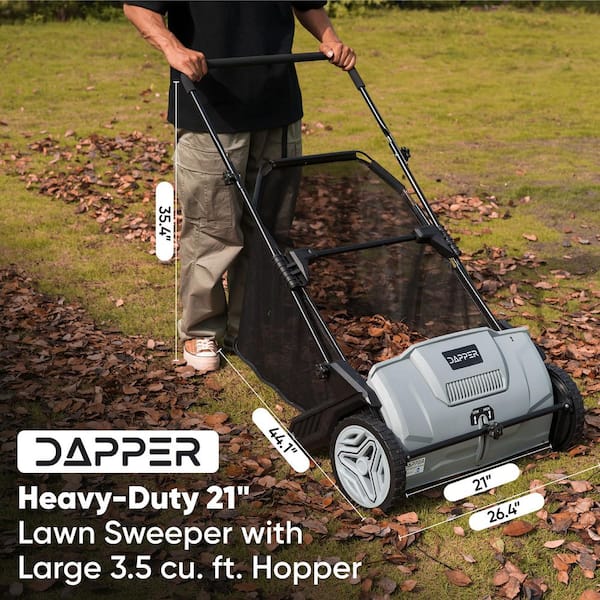
- Best for small yards and light leaf loads.
- They are lightweight and easy to store.
- They require physical effort and are slower than tow-behind sweepers.
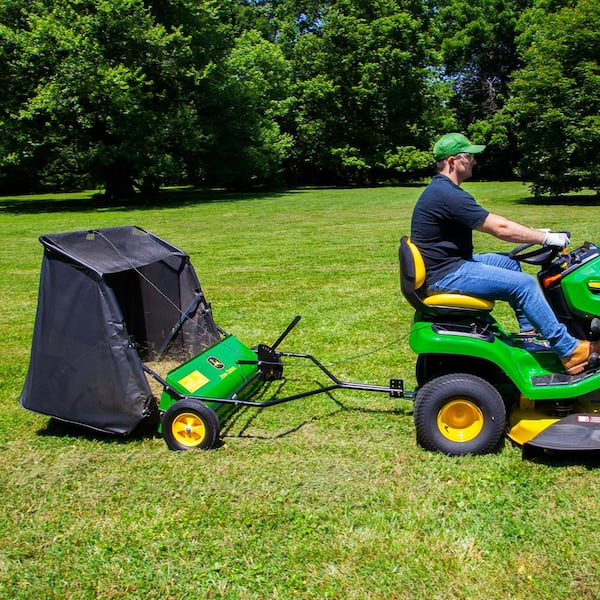
Tow-behind sweepers
- Best lawn sweeper for leaves in medium to large yards.
- They hitch to a lawn tractor or ATV for fast collection.
- They come in wide sweep widths and large hoppers.
Powered or electric sweepers
- Best for medium yards when you want less manual effort.
- Battery or corded models drive brushes or vacuums.
- They work well for moderate leaf loads but often have smaller hoppers.
Handheld or vacuum-sweepers
- Best for spot work, walkways, and small areas.
- Not ideal for whole-yard leaf cleanup.
Which to pick
- For yards under 1/4 acre: push or electric sweepers.
- For 1/4 to several acres: tow-behind sweepers are the best lawn sweeper for leaves.
- For spot cleanup: handheld or small powered units.
Key features to look for in the best lawn sweeper for leaves
Choose features that match your yard and workflow. These features improve performance and durability.
Brush type and adjustability
- Stiffer brushes work better on heavy, wet leaves.
- Adjustable brush height handles uneven turf.
Hopper capacity
- Larger hoppers mean fewer stops to empty.
- For large yards, aim for 10+ cubic feet.
Sweep width
- Wider sweep equals faster coverage.
- Tow-behind models often offer 30–48 inches widths.
Frame and wheel build
- Steel frames last longer than thin metal or plastic.
- Pneumatic tires handle rough ground better.
Hitch type and ease of emptying
- Quick-release hoppers save time.
- Universal hitches fit most tractors and ATVs.
Storage and weight
- Foldable handles and compact design ease storage.
- Lighter sweepers are simpler to move for small yards.
Price vs. value
- Mid-range tow-behind models often balance durability and cost.
- Cheaper models may need repair sooner and can cost more over time.
 recommendations by yard type”
style=”max-width: 100%; height: auto; border: 2px solid black; border-radius: 10px; display: block; margin: 0 auto;”
loading=”lazy”
/>
Best lawn sweeper for leaves — recommendations by yard type
Here are practical picks based on yard size and needs. These are general recommendations to match common use cases.
Small yards under 1/4 acre
- Push sweepers or compact electric sweepers work best.
- Look for light weight, simple brush height adjustment, and easy emptying.
Medium yards 1/4–1 acre
- Battery-powered or larger push sweepers are a good fit.
- Choose a unit with a roomy hopper and durable brush system.
Large yards over 1 acre
- A tow-behind sweeper is the best lawn sweeper for leaves for speed and capacity.
- Get a model with a wide sweep, heavy-duty frame, and 10+ cu ft hopper.
Special situations
- Wet climates: prioritize brush stiffness and ease of cleaning.
- Lots of pine needles: use denser bristles and fine brush settings.
Personal note from testing
- My yard is a half acre with big oaks. A tow-behind worked best after I upgraded to stiffer brushes and a quick-release hopper. I finished leaf season in one afternoon instead of several weekends.
:max_bytes(150000):strip_icc()/spr-agri-fab-44-in-tow-behind-lawn-sweeper-sara-luckey-05-1-ea7c18f6833249248437f9c427768dab.jpeg)
How to choose the right model step-by-step
Follow this checklist when shopping for the best lawn sweeper for leaves.
- Measure your yard size and note slope and obstacles.
- Choose the type: push, electric, tow-behind, or handheld.
- Compare sweep width and hopper size to match your yard.
- Check brush adjustability and replacement parts availability.
- Inspect frame quality and wheel type for durability.
- Read user reviews for real-world reliability and issues.
- Factor in storage space and weight for your garage.
- Pick a model with easy-to-find spare brushes.
- Prefer steel frames for long-term use.
- If you have a tractor, a tow-behind saves the most time.

Maintenance tips to keep your sweeper working well
Routine care extends life and performance. These tips are simple and effective.
After each use
- Empty the hopper and knock loose clogs from brushes.
- Rinse off dirt and let dry before storage.
Monthly in season
- Inspect brushes for wear and replace if bristles are short.
- Check tire pressure and wheel bearings.
Seasonal storage
- Lubricate moving parts and store in a dry area.
- Cover the sweeper to keep dust and moisture away.
Troubleshooting common issues
- Poor pickup: lower brush height or slow your speed.
- Hopper won’t empty: check latches and clean debris from hinges.
:max_bytes(150000):strip_icc()/spr-agri-fab-44-in-tow-behind-lawn-sweeper-sara-luckey-23-79f16357089c480b94bf7c6ed8aceb2d.jpeg)
Personal lessons and mistakes to avoid
I’ve used several sweepers and learned what matters. Here are honest tips.
Mistake: Buying by price alone
- Cheaper sweepers often fail early. Spend a bit more for a quality frame and brushes.
Mistake: Ignoring brush type
- Soft brushes miss wet leaves. Choose brush stiffness for your leaf type.
Best habit I picked up
- Empty the hopper more often. A partially full hopper works better than an overfilled one that jams brushes.
PAA-style questions (short answers)
What size hopper is best for leaf collection?
- For medium and large yards, aim for a hopper of 6–12 cubic feet. Larger hoppers reduce stops to empty.
Can a lawn sweeper pick up wet leaves?
- It can, but performance drops with wet or matted leaves. Dry leaves sweep much more efficiently.
Will a lawn sweeper damage grass?
- Proper use should not damage grass. Keep brush height adjusted above turf crowns and avoid high speeds.
Frequently Asked Questions of What is the best lawn sweeper for leaves?
What is the best type of lawn sweeper for a large yard?
A tow-behind lawn sweeper is the best lawn sweeper for leaves in large yards due to its wide sweep and big hopper. It mounts to a tractor or ATV and covers acres quickly.
Can lawn sweepers work on uneven ground?
They can, but performance falls on steep or very rough terrain. Choose pneumatic tires and adjustable brushes for better results.
How often should I empty the hopper?
Empty it whenever it’s about two-thirds full to prevent clogs and maintain good brush contact. Frequent emptying speeds up overall cleanup time.
Are electric lawn sweepers powerful enough for dense leaves?
Modern battery or corded electric sweepers handle moderate leaf loads well. For heavy or large volumes, a tow-behind is usually more effective.
Do sweepers pick up small debris like pine needles?
Yes, many sweepers pick up pine needles, but very fine needles may need a finer brush setting or a second sweep. Multiple passes can improve pickup.
How long do brushes last on a sweeper?
Brush life varies with use and surface. With regular use, expect 1–3 seasons before replacement; inspect often to keep pickup high.
Conclusion
Choosing the best lawn sweeper for leaves starts with your yard size and leaf habits. For small yards, a push or electric sweeper saves time and space. For medium to large yards, a tow-behind sweeper gives the best speed, capacity, and value. Focus on brush adjustability, hopper size, and build quality to get reliable pickup and long life. Take action by measuring your yard, listing must-have features, and comparing a few models based on the checklist above. If you found this guide helpful, try one of these picks this fall, and leave a note about your results or questions below.

