

When you walk into an intensive care unit (ICU), you notice the equipment is different from regular hospital rooms. The ICU hospital bed stands out. It’s not only larger but also more complex, with rails, controls, and sometimes built-in scales. But one question often comes up for patients, families, and hospital planners: What is the weight capacity of an ICU hospital bed? Understanding this is more than a technical detail—it’s about safety, patient care, and proper equipment use. Let’s explore what determines the weight limit, what the numbers mean, and why it matters in real-world hospital settings.
What Does Weight Capacity Mean For Icu Beds?
The weight capacity of an ICU bed is the maximum safe load the bed can support, including the patient, bedding, and any attached equipment. Most people think only about the patient’s body weight, but in practice, things like monitors, IV pumps, and even visiting relatives sitting on the edge can add extra load. If the total weight goes over the bed’s rated limit, parts of the bed may break or function poorly. This can lead to injuries, equipment failure, and even life-threatening situations for patients who often can’t move themselves.
Manufacturers test beds using strict standards, but each model is different. The weight capacity is always listed in the technical specs. Still, in busy ICUs, it’s easy for staff to overlook these numbers—an oversight that can have serious consequences.
Standard Weight Capacities Of Icu Beds
Not all ICU beds are built the same. However, most modern ICU beds support 250 kg to 320 kg (about 550 to 700 lbs) as the standard weight capacity. Let’s look at some common models and their limits:
| ICU Bed Model | Standard Weight Capacity (kg) | Standard Weight Capacity (lbs) |
|---|---|---|
| Stryker InTouch Critical Care | 227 | 500 |
| Hillrom Progressa | 227 | 500 |
| Linet Eleganza 5 | 250 | 551 |
| Paramount Bed A5 Series | 300 | 661 |
| Arjo Citadel | 320 | 705 |
Key insight: Many ICU beds in older hospitals may have lower capacities, sometimes just 180 kg (400 lbs). Always check the label and the user manual—never assume all beds are equal, even within the same hospital.
Why Weight Capacity Matters In The Icu
The ICU often cares for patients with limited mobility or those who are unconscious, sedated, or hooked up to life-support devices. These patients cannot adjust their position to relieve pressure or avoid falls. If a bed fails, the risks are severe:
- Bed collapse: Frame or motor failure can cause the patient to fall, sometimes with attached medical lines or tubes.
- Impaired movement functions: ICU beds have electric controls for raising, lowering, and tilting. Overloading can break these functions, trapping the patient in a dangerous position.
- Reduced emergency response: In a code blue or emergency, staff may need to move or turn the bed quickly. Excess weight can slow them down or cause the bed to get stuck.
ICU beds are also used for bariatric patients (those with obesity), who may need special beds. Using a regular ICU bed beyond its rated capacity is risky and can result in legal and insurance problems for hospitals.
Components Affecting Weight Capacity
The total weight a bed can handle depends on more than just the frame:
- Mattress and overlays: Specialized pressure-relief mattresses can add 10-30 kg (22-66 lbs).
- Bed attachments: IV poles, traction systems, and other built-in devices add weight.
- Medical equipment: Monitors, pumps, and feeding machines are sometimes attached to the bed or patient.
- Bed movement mechanisms: Motors and hydraulics are rated for certain loads. If overloaded, these may fail before the frame does.
Manufacturers always calculate the total capacity including all these elements. Hospitals must subtract the weight of these extras from the total limit to know how much the patient can safely weigh.

Types Of Icu Beds And Their Weight Limits
ICU beds are not all the same. Understanding the main types helps clarify how weight capacity changes.
Standard Icu Beds
These are used for most adults. Weight capacity: 180-250 kg (400-550 lbs). They suit the average patient but may be too small for heavier individuals.
Bariatric Icu Beds
Designed for patients with higher body weight. Weight capacity: 320-500 kg (700-1100 lbs), sometimes more. These beds are wider, have reinforced frames, and often special mattresses.
Pediatric Icu Beds
Used for children or small adults. Weight capacity: 70-100 kg (150-220 lbs). Not suitable for heavy adults—using them incorrectly is dangerous.
Specialty Icu Beds
Beds for spinal injuries, burns, or specific surgical needs may have lower or higher weight ratings. Always check each model’s specifications.
Non-obvious insight: Sometimes, hospitals use “temporary” beds in the ICU due to shortages. These may have lower weight limits and fewer safety features.
How Hospitals Choose Icu Beds Based On Weight Capacity
Hospital administrators and biomedical engineers must consider several factors before purchasing or assigning an ICU bed:
- Patient population: Hospitals serving regions with high rates of obesity need beds with higher limits.
- Type of care: Trauma centers, burn units, or neurological ICUs may need specialized beds.
- Budget: Higher-capacity beds are more expensive. Not every room may need the strongest bed.
- Space constraints: Bariatric beds are larger and may not fit in smaller ICU rooms.
- Maintenance and service: Heavier beds require stronger motors and frames, which can be harder and costlier to service.
Tip: Hospitals often keep a few high-capacity beds “in reserve” for unexpected needs, but staff must know where they are and how to use them.

Comparing Weight Capacities: Icu, Regular, And Bariatric Beds
To better understand how ICU beds compare with others, see the data below:
| Bed Type | Typical Weight Capacity (kg) | Typical Weight Capacity (lbs) |
|---|---|---|
| Regular Ward Bed | 150-200 | 330-440 |
| Standard ICU Bed | 180-250 | 400-550 |
| Bariatric ICU Bed | 320-500 | 700-1100 |
| Pediatric ICU Bed | 70-100 | 150-220 |
Observation: Standard ICU beds offer higher capacity than regular hospital beds, but bariatric beds far exceed both. This is crucial for hospitals to serve all patient types safely.
What Happens If You Exceed An Icu Bed’s Weight Limit?
Exceeding the weight limit of an ICU bed is risky and can cause:
- Structural damage: The bed frame, joints, or support beams can bend or break.
- Motor failure: The electric or hydraulic parts may stop working, leaving the patient stuck.
- Safety feature malfunction: Bed alarms, side rails, and emergency brakes may not work as designed.
- Injury: The most serious risk—if the bed fails, the patient can fall or become trapped, leading to fractures, pressure injuries, or worse.
Hospital liability: Hospitals may face legal action and insurance claims if a bed fails due to overloading.
Non-obvious insight: Even if the bed does not break immediately, repeated overloading weakens it, making failure more likely in the future—even with lighter patients.
Factors That Influence The Needed Weight Capacity
Choosing the right bed is not only about the patient’s weight. Here are other things hospitals and families should consider:
- Patient movement: Restless or agitated patients create more force on the bed.
- Family visitors: Sometimes, people sit on the bed with the patient, adding extra weight.
- Bed-bound equipment: Some patients need extra devices that stay on the bed around the clock.
- Transfers and lifts: Staff sometimes use the bed to transfer or lift patients—this adds more force than static weight.
Tip: Always plan for the “worst-case scenario,” not just the patient’s listed weight.
How To Check And Respect Icu Bed Weight Limits
For safety, staff must know the weight rating of each bed and monitor the total load.
- Read the label: Every ICU bed has a sticker or metal plate listing the maximum safe weight.
- Consult the manual: The user manual gives details, including load calculations for attachments.
- Keep track of equipment: Make a checklist of all devices or extras on the bed.
- Weigh the patient: Many ICU beds have built-in scales. If not, weigh the patient using a separate scale before transfer.
- Educate staff: Regular training reduces mistakes.
- Use bariatric beds for heavier patients: Never “make do” with a standard bed if the patient is near or over the limit.
Practical insight: Hospitals that use color-coded tags on beds (e.g., green for <250 kg, orange for <320 kg, red for >320 kg) reduce errors and improve patient safety.
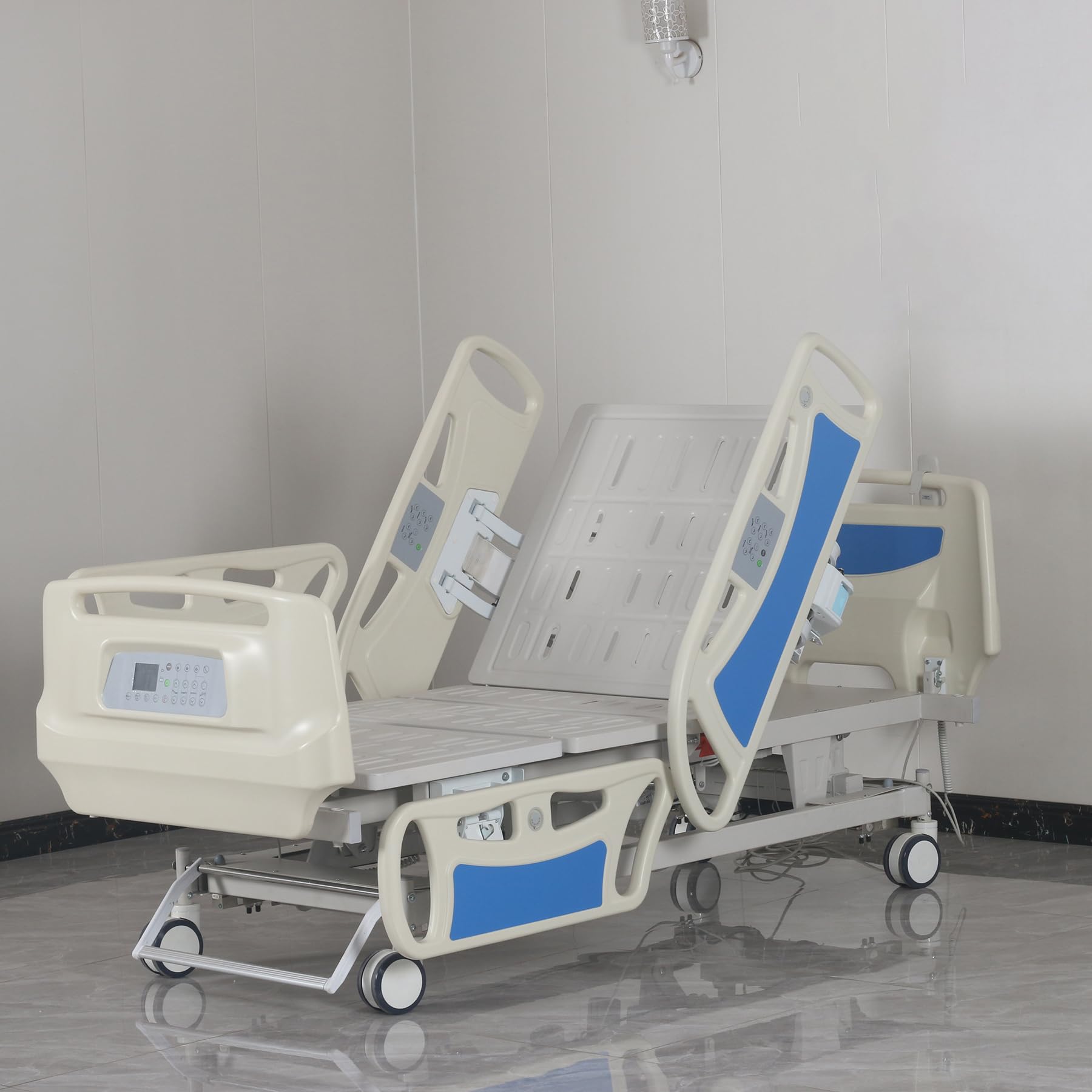
Icu Bed Features That Support Higher Weight Capacities
Modern ICU beds are more than just strong frames. Here are features that help manage higher weights safely:
- Reinforced steel frames: Thicker and stronger than in regular beds.
- Wide sleeping surfaces: Allows for larger patients, reducing fall risk.
- Upgraded motors and hydraulics: Stronger lifting power for heavier loads.
- Side rails and safety locks: Designed to withstand higher forces.
- Integrated scales: Many high-capacity beds have accurate weighing systems to track patient weight changes in real time.
- Pressure redistribution mattresses: Special foams or air systems to prevent pressure sores in heavier patients.
Non-obvious insight: Even the wheels and brakes on bariatric ICU beds are upgraded to handle more weight and make movement safer.
Common Mistakes When Using Icu Beds
Despite clear guidelines, mistakes still happen in hospitals:
- Not checking weight limits: Staff may assume all beds are the same.
- Ignoring extra weight: Forgetting to count equipment, bedding, or family members.
- Using old or damaged beds: Older beds may not have their original strength due to wear and tear.
- Improvising with padding or boards: Adding makeshift supports does not increase the real weight limit.
- Skipping maintenance: Over time, screws loosen, and motors wear out, reducing capacity.
Experience-based tip: Always check for service tags or inspection stickers before using a bed for a heavy patient.
Guidelines And Standards For Icu Bed Weight Capacity
International health agencies and regulatory bodies set standards for hospital beds, including weight limits. Examples include:
- FDA (U.S. Food and Drug Administration): Requires labeling, testing, and clear documentation of bed capacities.
- IEC 60601-2-52: An international standard for safety and performance of medical beds, including load testing.
- Local hospital protocols: Many hospitals have their own guidelines for assigning and checking bed use.
Staying current with these standards helps avoid legal and safety issues. For more details, see the official documentation at the FDA Hospital Bed Safety page.
How To Upgrade Or Replace Icu Beds For Higher Weight Needs
Hospitals may need to upgrade or replace beds as patient needs change. Here’s how to do this safely:
- Audit current beds: Check the age, condition, and listed capacity of all beds.
- Review patient data: Look at recent admissions to see if higher-weight beds are needed.
- Set a replacement plan: Budget for bariatric or high-capacity beds in each unit.
- Train staff: Make sure everyone knows how to identify and use the new beds.
- Plan for emergencies: Keep a few high-capacity beds available for unexpected cases.
Practical advice: Don’t wait for an incident. Proactive planning prevents accidents and improves care quality.
The Role Of Maintenance In Weight Capacity
Weight capacity is not a “set and forget” number. Regular maintenance is essential:
- Inspect frames and welds: Look for cracks, rust, or bending.
- Test motors and controls: Make sure they lift and tilt properly at full load.
- Check wheels and brakes: Heavier beds need stronger brakes for safety.
- Replace worn parts: Use only manufacturer-approved replacements.
- Document repairs: Keep a log for each bed, showing inspections and fixes.
Non-obvious insight: A bed that “seems fine” may have hidden damage after years of use. Always err on the side of caution.
Looking Ahead: Trends In Icu Bed Design
Modern hospitals are seeing more patients with higher weights. This changes how ICU beds are designed:
- Higher average capacities: Many new beds now start at 250 kg (550 lbs) or more.
- Wider and longer beds: For greater comfort and safety.
- Smart sensors: Beds can alert staff if weight goes over safe limits.
- Self-adjusting features: To automatically balance and support different body shapes.
- Improved ergonomics: For both patients and staff, reducing lifting injuries.
Hospitals that invest in newer beds are better prepared for the future—and provide better care for all patients.
Real-world Examples: When Weight Capacity Became Critical
Bariatric Patient In A Standard Icu Bed
A 170 kg (375 lbs) patient was admitted to the ICU. The bed’s listed limit was 180 kg (400 lbs), but with equipment and bedding, the total weight reached 190 kg (420 lbs). The bed’s motor struggled, and the frame bent during repositioning. Fortunately, staff noticed before a full failure, but the bed had to be replaced urgently. The lesson: never cut it close—always allow a safety margin.
Multi-patient Transfers
During a mass casualty event, a hospital used all available ICU beds, including some older models with lower limits. A heavier patient was placed on an outdated bed, which collapsed when nurses tried to tilt it for airway management. This delayed care and created extra risk.
Hospitals now keep a clear map of bed capacities to avoid this mistake.
How Patients And Families Can Help
It’s not just hospital staff who play a role in bed safety:
- Ask about the bed’s weight limit if you or your loved one is close to or over 100 kg (220 lbs).
- Don’t let multiple people sit or lie on the bed at once.
- Report strange noises or malfunctions to nurses immediately.
- Don’t add personal mattresses or boards—these add weight and can affect safety.
Empowerment: Being proactive can prevent accidents, especially during busy or stressful times in the ICU.
Frequently Asked Questions
What Is The Typical Weight Capacity Of A Standard Icu Bed?
Most standard ICU beds support 180-250 kg (400-550 lbs). However, some newer models can handle up to 320 kg (700 lbs). Always check the specific bed’s label or manual for exact limits.
How Do I Know If A Patient Needs A Bariatric Icu Bed?
If the patient’s body weight, plus equipment and bedding, is near or above the standard bed’s limit (usually 250 kg or 550 lbs), a bariatric ICU bed is required. It’s best to use a bed with a higher capacity than risk overloading a standard one.
Can Icu Beds Break If Overloaded?
Yes, ICU beds can break or malfunction if the weight capacity is exceeded. This may not happen immediately, but repeated overloading weakens parts and increases the risk of sudden failure.
Are Pediatric Icu Beds Safe For Small Adults?
Pediatric ICU beds are designed for children or very small adults, usually up to 70-100 kg (150-220 lbs). They are not safe for heavier adults, even if the person “fits” in the bed.
Where Can I Find Official Information About Hospital Bed Safety?
The FDA Hospital Bed Safety page is a reliable source for official guidelines, standards, and safety tips. Visit the FDA’s website for more details.
—
Understanding the weight capacity of an ICU hospital bed is not just a technical concern. It’s about safety, quality care, and being prepared for every patient. By knowing the numbers, respecting limits, and planning ahead, hospitals and families can protect those who need care the most—when it matters most.

