

The world of healthcare is always changing, and nowhere is this more visible than in the design and function of ICU beds. These beds are not just furniture—they are essential tools that help save lives. Two main types of ICU beds are used in hospitals: electric ICU beds and manual ICU beds. Understanding the differences between these two is important for anyone involved in patient care, hospital administration, or even for families who want the best for their loved ones. This article explains in detail what sets them apart, how each type works, their benefits, limitations, and what to consider when choosing between them.
What Is An Icu Bed?
An ICU bed is a special kind of hospital bed used in the Intensive Care Unit. It is designed for patients who are very sick or need close monitoring. These beds are more advanced than regular hospital beds. They support many medical devices, allow easy movement, and keep patients comfortable during long stays.
ICU beds usually have features such as:
- Adjustable height
- Movable head and foot sections
- Side rails for safety
- Wheels for easy movement
But the way these adjustments happen is where electric and manual ICU beds start to differ.
Basic Function: How Icu Beds Work
ICU beds are built for flexibility and safety. They can be moved up and down, and the head or feet can be raised or lowered. These movements help with:
- Making the patient comfortable
- Allowing medical staff to care for wounds or perform procedures
- Helping with breathing or blood flow
There are two main ways these adjustments are made: manually or with electric motors.

What Is A Manual Icu Bed?
A manual ICU bed is adjusted by hand, using mechanical levers or cranks. To raise the head or lower the bed, a nurse or caregiver turns a crank. These beds do not need electricity to work. They are often simpler and cheaper than electric beds.
Manual ICU beds are common in:
- Smaller hospitals
- Rural clinics
- Areas with unreliable electricity
What Is An Electric Icu Bed?
An electric ICU bed uses motors and electronic controls. Adjustments are made with buttons, usually on a remote or a panel on the bed. These beds often have extra features like:
- Automatic position changes
- Timed movements
- Built-in scales to weigh patients
Electric ICU beds are found in most modern hospitals, especially in developed countries.
Key Differences Between Electric And Manual Icu Beds
The differences between electric and manual ICU beds go beyond how they move. They affect many areas of patient care, staff workload, costs, and more. Here’s a breakdown of the main areas where they differ.
1. Adjustment Method
Manual ICU beds require physical effort. Staff must use a crank or lever. This can take time and energy, especially if changes are needed often.
Electric ICU beds use motors. Pressing a button adjusts the bed. This saves time and reduces the risk of staff injury.
2. Range Of Movements
Electric beds often allow more movements. For example, they may let you tilt the whole bed (called Trendelenburg position) or set up pre-programmed positions.
Manual beds usually have fewer options. Most can only raise or lower the head, foot, or overall height.
3. Ease Of Use
Electric beds are easier for both patients and staff. A weak patient can sometimes adjust their own bed with the remote. In manual beds, the staff must always help.
4. Speed And Precision
Electric ICU beds adjust quickly and stop exactly where you want. Manual beds can be slower and less precise, especially if the crank is hard to turn.
5. Patient Comfort
Frequent position changes help prevent bedsores and improve comfort. Electric beds make these changes easier, so patients often feel better.
6. Safety Features
Many electric beds have built-in alarms, lockout systems, and sensors. These help prevent accidents, such as a patient getting stuck in the bed. Manual beds rarely have these features.
7. Maintenance And Repairs
Manual beds are simple machines. If something breaks, it’s usually easy to fix. Electric beds have motors and electronics that need special skills to repair.
8. Cost
Manual ICU beds are less expensive to buy and maintain. Electric beds cost more but may save money in staff time and reduce injuries.
9. Power Requirements
Manual beds work during power outages. Electric beds need electricity, though some have battery backups.
10. Technology Integration
Electric beds can connect with hospital systems, record patient data, or even alert staff if the patient tries to get up. Manual beds do not have these options.
Head-to-head Comparison
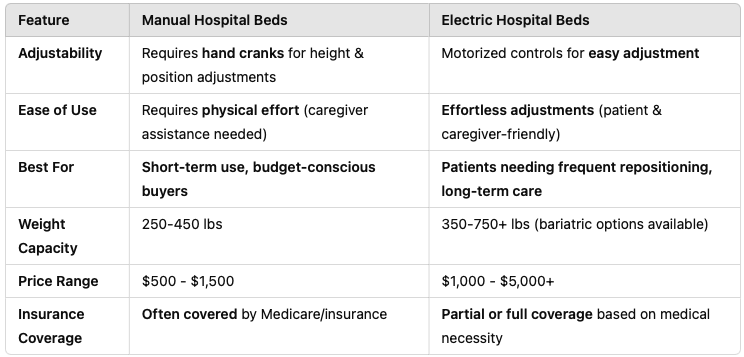
For a clearer picture, see this side-by-side comparison of common features:
| Feature | Manual ICU Bed | Electric ICU Bed |
|---|---|---|
| Adjustment Method | Hand crank/levers | Remote or panel (motors) |
| Position Options | Limited | Wide range (including tilt) |
| Ease of Use | Needs caregiver | Can be patient-controlled |
| Power Needs | None | Electricity (battery backup possible) |
| Safety Features | Basic | Advanced (alarms, sensors) |
| Maintenance | Simple, low-cost | Complex, higher cost |
| Integration | Not possible | Possible (with hospital systems) |
| Cost | Lower | Higher |
Benefits Of Electric Icu Beds
Electric ICU beds offer many advantages for patients, nurses, and hospitals.
Improved Patient Comfort
Patients spend many hours or days in ICU beds. Electric beds make it easy to adjust positions, which reduces pain and prevents pressure ulcers (bedsores). Some electric beds have memory foam mattresses and gentle movement features to improve sleep.
Reduced Staff Workload
Nurses can change bed positions with less effort. This saves time, especially in busy ICUs where each nurse cares for several patients. Over time, this can reduce staff injuries from lifting or bending.
Advanced Safety Features
Most electric beds have side rail sensors, bed exit alarms, and built-in weight scales. These features lower the risk of falls and help nurses monitor patients more closely.
Better Positioning For Treatment
Some treatments, like certain surgeries or breathing support, need the patient in special positions. Electric beds allow fast, precise changes. This makes care safer and more effective.
Data Collection And Integration
Modern electric beds can record data like patient weight or movement patterns. This information can be sent to hospital computers for better care planning.
Benefits Of Manual Icu Beds
Manual ICU beds still have important roles, especially in certain settings.
Lower Initial And Maintenance Costs
Manual beds are cheaper to buy, so they are a good choice for hospitals with limited budgets. They also have fewer parts that can break.
No Power Needed
If the electricity goes out, manual beds still work. This is vital in places with unstable power or during disasters.
Simple To Repair
Because they are mechanical, most problems can be fixed by regular staff. This means beds are out of service for less time.
Durability
Manual beds can last for many years with basic maintenance. Their simple design means less can go wrong.
Limitations Of Electric Icu Beds
Electric beds are not perfect. Here are some of their main drawbacks.
Cost
They are more expensive to buy and repair. Hospitals need to budget for both purchase and maintenance.
Power Dependence
If the power fails and batteries are not working, the bed may not move at all. This can be dangerous in emergencies.
Complex Repairs
Electric beds have motors, wiring, and electronic parts. When something breaks, it may take longer to fix, and special technicians may be needed.
Risk Of Technical Failure
Any electronic device can fail. If a control panel stops working, nurses may not be able to adjust the bed quickly.
Limitations Of Manual Icu Beds
Manual ICU beds also have their own set of drawbacks.
More Physical Work
Staff must manually adjust the bed, which can be tiring and time-consuming, especially with heavy or immobile patients.
Limited Features
Manual beds usually cannot offer advanced features like automatic tilt or built-in scales. This can limit patient care options.
Less Comfort For Patients
Since adjustments are less frequent, patients may be uncomfortable for longer periods.
Slower Response In Emergencies
In urgent situations, waiting for a nurse to adjust the bed can cause delays.
Real-world Example
Consider a busy hospital in a large city. Most patients in the ICU are critically ill, and nurses are responsible for several patients at once. With electric ICU beds, nurses can quickly adjust bed positions using a remote, check the patient’s weight without moving them, and receive alerts if a patient tries to get up.
This saves time and reduces injuries.
Now, think of a small clinic in a rural area. Power outages are common, and there is no technician nearby. Manual ICU beds are used because they don’t need electricity and are simple to fix if something goes wrong.
Data: Hospital Adoption Rates
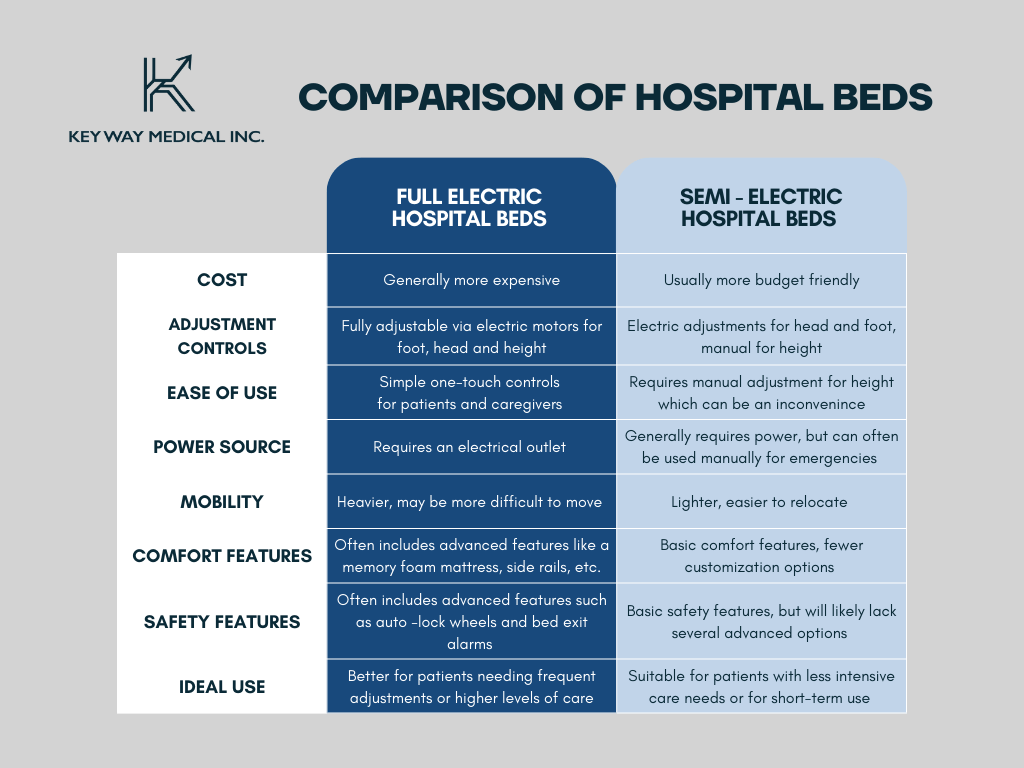
Studies show that more than 80% of hospitals in developed countries use electric ICU beds in their main intensive care units. In contrast, many hospitals in developing countries still use manual beds due to cost and infrastructure limits. For instance, according to the World Health Organization, only about 35% of hospitals in low-income countries have access to electric ICU beds.
Patient Safety: A Closer Look
Patient safety is a major concern in any hospital. Electric beds can reduce falls by alerting staff if a patient tries to get up. They can also make sure the bed is at the right height for transfers, reducing the risk of injury.
Manual beds, while sturdy, depend on staff to remember to adjust them. If a nurse forgets to lower the bed, a patient might fall when trying to get out.
Staff Health And Ergonomics
Nurses and caregivers are at high risk of back injuries. Manually lifting and adjusting patients can cause long-term health problems. Electric beds can lower these risks by handling the heavy lifting.
Infection Control Considerations
Both types of beds can be cleaned, but electric beds sometimes have more hidden parts (like motors or wires) where germs can hide. Hospitals must train cleaning staff to handle these areas properly.
Features That Make A Real Difference
When choosing between electric and manual ICU beds, look at features that matter most for your setting:
- Adjustable height: Helps staff care for patients safely.
- Trendelenburg and reverse Trendelenburg positions: Needed for some treatments.
- Patient weight scale: Useful for tracking fluid balance.
- Bed exit alarm: Reduces falls.
- Battery backup: Critical for electric beds in case of power failure.
How To Choose: Factors To Consider
Selecting the right ICU bed depends on many factors. Here’s what decision-makers should think about:
1. Patient Needs
If patients are likely to stay in bed for a long time or need frequent position changes, an electric bed is better. For short stays or less critical patients, manual beds may be enough.
2. Staff Numbers And Skills
Electric beds save staff time, which is important if nurses are stretched thin. Manual beds are fine if there are enough staff and patient needs are simple.
3. Budget
Manual beds cost less upfront. Electric beds may save money in the long run by reducing staff injuries and improving patient outcomes.
4. Infrastructure
If power supply is unreliable, manual beds are safer. If the hospital has reliable power and technical support, electric beds are a good investment.
5. Maintenance Support
Electric beds need trained technicians for repairs. Manual beds can often be fixed in-house.
Common Mistakes When Choosing Icu Beds
Many buyers make errors when choosing beds. Here are a few to avoid:
- Ignoring staff input: Nurses and caregivers use these beds the most. Always ask for their opinions.
- Focusing only on price: Cheaper beds may cost more in staff injuries or patient complications.
- Not planning for repairs: Make sure you have support for maintenance, especially for electric beds.
- Overlooking safety features: Bed alarms and side rails are essential for preventing falls.
- Not considering patient comfort: Uncomfortable beds lead to more problems, like bedsores.
Cost Analysis: Manual Vs. Electric Icu Beds
Let’s look at how costs can add up over five years:
| Cost Type | Manual ICU Bed | Electric ICU Bed |
|---|---|---|
| Initial purchase (per bed) | $900–$1,500 | $3,500–$7,000 |
| Annual maintenance | $100–$200 | $300–$800 |
| Repair costs (5 years) | $250–$500 | $1,000–$2,000 |
| Staff time savings (per year) | Low | High |
| Patient injury risk | Higher | Lower |
When Manual Icu Beds Are The Right Choice
Manual ICU beds are best when:
- The budget is very limited
- Power supply is unreliable
- Staff are well-trained and available
- Patients do not need frequent or complex position changes
When Electric Icu Beds Are The Better Option
Electric ICU beds are better when:
- Patients need long-term care or frequent position changes
- Staff numbers are low or there is a risk of injury
- Hospital has strong technical support
- There is reliable electricity
- Patient safety and comfort are top priorities
Non-obvious Insights
Many people overlook the importance of battery backup in electric ICU beds. A bed without working batteries can become a serious risk during power outages. Regular battery checks are essential.
Another commonly missed point is bed width. Some electric beds can adjust their width to accommodate different patient sizes or to fit through narrow doors—an important feature in emergencies.
Future Trends In Icu Beds
The future of ICU beds is moving toward more automation and smart features. Beds with sensors can adjust automatically if a patient starts to slide. Some can even monitor heart rate or breathing. As technology improves, the gap between manual and electric beds will grow wider.
For more details about hospital bed technology, visit the Wikipedia Hospital Bed page.
Frequently Asked Questions
What Is The Main Difference Between Electric And Manual Icu Beds?
The main difference is how adjustments are made. Manual ICU beds use cranks or levers, while electric beds use motors and electronic controls operated by buttons.
Are Electric Icu Beds Safer Than Manual Icu Beds?
Electric ICU beds often have more safety features like alarms and sensors, which can help prevent falls or other accidents. However, if the power fails, they can be less reliable unless there is a backup.
Which Type Of Icu Bed Is Better For Home Care?
For home care, manual beds are often chosen because they are simpler and less expensive. However, for patients needing frequent position changes, an electric bed provides more comfort and is easier for caregivers.
How Long Do Electric And Manual Icu Beds Last?
Both types can last 10–15 years with proper maintenance. Electric beds may need more repairs due to their electronic parts, while manual beds are generally more durable.
Can Manual Icu Beds Be Upgraded To Electric?
Some manual beds can be partially upgraded with motor kits, but they usually do not match the features of a true electric ICU bed. It is often better to buy a new electric bed if advanced features are needed.
Modern hospitals must balance cost, patient safety, staff needs, and infrastructure when choosing ICU beds. Both electric and manual ICU beds have their place, and the right choice depends on the unique needs of each hospital and patient. By understanding the key differences, benefits, and limitations, decision-makers can provide the best care possible while making smart investments for the future.

