

Figuring out how often to add chlorine to your above ground pool can feel like a guessing game. Too little, and you risk a murky, germ-filled mess. Too much, and your eyes will sting and your wallet will feel lighter.
The truth is, there's no single, simple answer for everyone. It depends on a few key factors unique to your pool and its environment.
In our research, we found that consistently maintaining proper chlorine levels, generally between 1-3 parts per million (ppm) of free chlorine according to pool industry standards, is crucial for safe and enjoyable swimming. This isn't just about clear water; it's about preventing the growth of harmful bacteria and algae. Let's break down what really influences your pool's chlorine needs and how to get it right.
Quick Answer
You should add chlorine to your above ground pool almost daily, or at least every few days, based on water testing. Daily testing is ideal. Sunlight, heavy use, and high temperatures deplete chlorine faster.
Maintain 1-3 ppm free chlorine.
When Does Your Above Ground Pool Actually Need More Chlorine?
It's tempting to think you just add chlorine once a week and call it a day, but that’s rarely the case for an above ground pool. The main job of chlorine is to sanitize your water by killing off all sorts of microscopic nasties, bacteria, viruses, and algae. Think of it as your pool's constant bodyguard.
This bodyguard gets used up in the process. Therefore, how often you need to "replenish the troops" depends entirely on how hard your bodyguard is working and how quickly it's being depleted.
Several things play a major role here. The biggest culprits are sunlight and how much people are swimming. You also need to consider the water's pH balance and the presence of stabilizer, like cyanuric acid.
We’ll dive into these factors more, but the core idea is simple: if your chlorine is being used up, you need to add more to keep that protective shield strong.
Image source: Bing (Web (fair-use with source credit))
Testing Your Pool Water: Your Daily Chlorine Compass
The absolute best way to know how often to add chlorine is to test your water regularly. Think of your test kit as your pool's diagnostic tool. Without it, you're just guessing, and that’s a fast track to problems.
You can’t see chlorine, so you need a reliable way to measure its presence.
Understanding Free Chlorine Levels
Free chlorine is the amount of chlorine that's actually available to do the sanitizing work in your pool water. It’s the active sanitizer. The target range for free chlorine in residential pools is typically 1-3 parts per million (ppm).
Manufacturer specifications and industry recommendations often align with this range for effective sanitation without over-saturation. If your test shows levels below 1 ppm, it’s time to add more chlorine right away. If it’s above 3 ppm, you might want to wait a bit or take steps to lower it, as too much can be irritating and corrosive.
How pH and Cyanuric Acid Affect Chlorine
Your pool’s water chemistry is a delicate balance, and pH and cyanuric acid are key players. The pH level tells you how acidic or basic your water is. If your pH is too high (above 7.6), chlorine becomes much less effective, meaning you need more of it to do the same job.
Conversely, a very low pH can make chlorine dissipate too quickly. Cyanuric acid, often called a stabilizer, protects chlorine from being burned off by the sun's UV rays. While this is good, too much cyanuric acid can also reduce chlorine's sanitizing power.
A balanced pH (ideally 7.2-7.6) and a cyanuric acid level between 30-50 ppm are crucial for making your chlorine work efficiently.
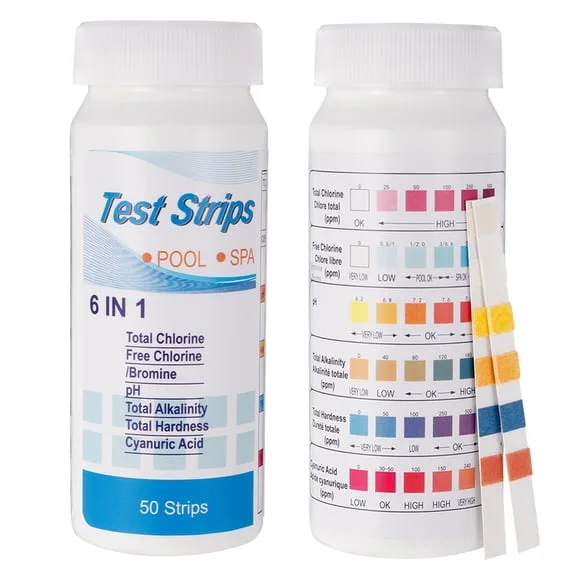
Image source: Bing (Web (fair-use with source credit))
Factors That Speed Up Chlorine Loss
Even with regular testing, you might notice your chlorine levels dropping faster than expected. This isn't usually because your test kit is broken; it's because certain environmental conditions are working overtime to zap your sanitizer. Understanding these factors helps you anticipate when you'll need to add chlorine and how much.
Sunlight and Heat
This is a big one. The sun's ultraviolet (UV) rays are powerful and will break down chlorine quite rapidly. On a very sunny, hot day, chlorine can dissipate much faster than on a cloudy or cooler day.
This is why manufacturers often recommend using a pool stabilizer like cyanuric acid. It acts like sunscreen for your chlorine, making it more resistant to UV degradation. However, even with stabilization, direct, intense sunlight will still cause some loss, meaning you’ll likely need to top up your chlorine levels more frequently during peak sunshine hours.

Image source: Web (Bing) / alap.news (Web image (fair-use with source credit))
Swimmer Load and Contaminants
Every time someone jumps into your pool, they bring things with them. This includes sweat, lotions, hair products, and even just organic matter from their skin. All of these act as contaminants that react with and consume chlorine.
The more people swimming, and the longer they swim, the faster your chlorine levels will drop. Think of it like this: the chlorine has to "fight" these contaminants, and in doing so, it gets used up. A pool with heavy use will require more frequent chlorine additions than a lightly used one.
Similarly, if leaves, dirt, or other debris fall into the pool, they also introduce organic matter that consumes chlorine.
Heavy Rain and Debris
Unexpected heavy rain can significantly impact your pool's chlorine levels. Rainwater itself is generally soft and can lower the pH of your pool water, which, as we discussed, makes chlorine less effective. More importantly, rain can wash in all sorts of contaminants from the surrounding environment, dirt, pollen, grass clippings, and even pollutants from the air.
All of this foreign material enters the water and demands chlorine to break it down. If you experience a big storm, it's a good idea to test your water immediately afterward, as you'll likely need to add more chlorine, and possibly even shock the pool, to get back to safe levels.
When and How to Shock Your Above Ground Pool
Shocking your pool is essentially a super-chlorination process. It's like giving your pool a powerful cleaning boost to break down chloramines (which cause that strong chlorine smell and eye irritation), kill algae, and oxidize organic contaminants. This isn't a daily or even weekly task for most pools.
You'll typically need to shock your pool every 1-2 weeks, or more often if you notice specific signs.
Signs Your Pool Needs Shocking
If you notice your pool water has a strong "chlorine" smell, it's actually a sign of chloramines, not enough free chlorine. This is a clear indicator that it's time to shock. Other signs include cloudy water that doesn't clear up with regular chlorine additions, an algae bloom (even a slight green tint), or after heavy use, like after a big party or a day with many swimmers.
You might also shock your pool after heavy rainfall if contaminants are suspected.
The Shocking Process: Step-by-Step
- Test your water. Before shocking, test your pH and free chlorine levels. Adjust pH to the ideal range of 7.2-7.6 first. This ensures the shock treatment works effectively.
- Choose your shock product. Most pool shock products are granular, typically calcium hypochlorite or dichlor. Follow the product's instructions for dosage, it’s usually measured in pounds per 10,000 gallons of water.
- Dissolve the shock. For granular shock, pre-dissolve it in a bucket of pool water before adding it to the pool. Never add granular shock directly to the skimmer or pour it directly into the pool in concentrated form, as this can damage your pool liner.
- Circulate the water. Pour the dissolved shock mixture around the perimeter of the pool while the pump is running. Let the pump run for at least 8-12 hours, or even 24 hours, to ensure the shock circulates thoroughly and breaks down contaminants.
- Wait to swim. Do not enter the pool until the free chlorine level has dropped back down to the safe range of 1-3 ppm. This usually takes 24 hours, but can be longer depending on the amount of shock used and your pool's circulation.
Common Mistakes That Mess With Your Chlorine Levels
It’s easy to fall into traps when managing pool chemicals, especially with above ground pools. Some common missteps can lead to fluctuating chlorine levels, cloudy water, or even costly repairs. Being aware of these pitfalls can save you a lot of frustration and money.
Relying Only on Tablets
Chlorine tablets, typically trichlor, are convenient because they dissolve slowly, providing a more consistent, albeit low, level of chlorine. However, relying solely on tablets often isn't enough, especially in warmer climates or during heavy use. Tablets also release cyanuric acid as they dissolve, so overuse can lead to high stabilizer levels, which in turn reduces chlorine effectiveness.
They are best used as a maintenance supplement, not your sole source of sanitation.
Ignoring Water Balance
Many pool owners focus only on chlorine, forgetting that other chemistry factors are critical. As we’ve mentioned, pH and cyanuric acid levels drastically impact how well your chlorine works. If your pH is off, your chlorine can be practically useless, even if your test kit says the level is adequate.
Always test and adjust pH, alkalinity, and stabilizer levels before, or at least alongside, your chlorine checks. This ensures your chlorine is actually doing its job effectively.
Not Testing Enough
This is the most common mistake. You can't manage what you don't measure. Guessing when to add chlorine based on appearance or smell alone is unreliable.
Cloudy water or a strong odor usually means you’ve already got a problem, like an algae bloom or high chloramine levels, that should have been prevented. Investing in a quality test kit and using it as recommended, ideally daily for free chlorine and a few times a week for pH and other factors, is non-negotiable for consistent water quality.
Expert Tips for Consistent Chlorine Levels
Keeping your above ground pool water crystal clear and safe doesn't have to be a constant battle. A few consistent practices, recommended by pool maintenance professionals, can make a world of difference. These aren't complicated, but they require a bit of discipline.
Get a Good Test Kit
Don't skimp on your water testing equipment. A basic strip test can give you a general idea, but a liquid reagent test kit is far more accurate for measuring free chlorine and pH. Many kits also test for alkalinity and cyanuric acid, providing a more complete picture of your water chemistry.
Look for kits that provide clear color comparisons. As of 2026, reliable liquid test kits are readily available and are the best investment for accurate pool maintenance.
Run Your Pump Enough
Your pool pump and filter system are vital for circulating chemicals and removing debris. For proper sanitation, especially when adding chlorine, you need to run your pump long enough each day for the water to circulate through the filter at least once, and ideally twice. For most above ground pools, this means running the pump for 8-12 hours daily, particularly during the swimming season.
Proper circulation ensures that added chlorine is distributed evenly throughout the entire pool.
Stabilize Your Water
As we've touched on, cyanuric acid (CYA) is your chlorine's best friend against the sun. It prevents UV rays from breaking down your sanitizer too quickly. You can add CYA in granular form.
The ideal range for CYA in an above ground pool is typically 30-50 ppm. Be careful not to over-stabilize, as excessively high CYA levels can make your chlorine less effective. Adding CYA is usually a seasonal task, and you'll need to monitor its level rather than add it constantly.
Your Decision Guide: When to Add Chlorine Next
So, you've got your test kit ready, you understand the factors, and you're ready to make a decision. Here's a quick workflow to help you decide exactly when and how much chlorine to add. Remember, this is a guide, and your specific pool conditions might require slight adjustments.
If your free chlorine level is below 1 ppm:
- Action: Add chlorine immediately.
- Amount: Follow product instructions for your pool volume. If you've been testing regularly and it's just slightly below, a smaller dose might suffice. If it's near zero, you may need to add more and consider shocking.
- Follow-up: Retest in a few hours after the pump has circulated the water.
If your free chlorine level is between 1 ppm and 3 ppm:
- Action: Maintain current levels. You're in the sweet spot!
- Amount: Add your standard daily maintenance dose if you test regularly and it's on the lower end of this range. If it's at 3 ppm, you likely don't need to add any chlorine today.
- Follow-up: Continue regular testing, especially if conditions change (heavy use, hot sun).
If your free chlorine level is above 3 ppm:
- Action: Wait and retest.
- Amount: Do not add chlorine. High levels can irritate swimmers and damage pool equipment.
- Follow-up: Retest later that day or the next morning. If levels remain high, consider running your pump longer to help dissipate it or investigate why it's so high (e.g., over-dosing).
If your pool smells strongly of chlorine or looks cloudy:
- Action: This indicates chloramines, not free chlorine. You likely need to shock the pool.
- Amount: Follow shock product instructions carefully.
- Follow-up: Do not swim until free chlorine levels return to 1-3 ppm.
After heavy rain or a lot of swimmers:
- Action: Test your water sooner than usual, even if it looks fine.
- Amount: Add chlorine as needed based on your test results. Be prepared to add more than usual or shock the pool.
- Follow-up: Monitor levels closely for the next 24-48 hours.
Frequently Asked Questions
How long does it take for added chlorine to work?
It typically takes a few hours for added chlorine to fully circulate and distribute throughout the pool water. For the best results, ensure your pump is running continuously for at least 8-12 hours after adding chemicals.
Can I add chlorine tablets directly to my pool?
It's generally not recommended to add chlorine tablets directly into the pool water, especially if they are placed in one spot. This can lead to uneven chlorine distribution and potentially damage your pool liner. Use a floating dispenser or a chemical feeder for tablets.
What happens if I don't add enough chlorine?
If you don't add enough chlorine, the water won't be properly sanitized. This can lead to rapid algae growth, making your pool green and cloudy. It also allows bacteria and other harmful microorganisms to thrive, posing a health risk to swimmers.
How do I know if my chlorine is "used up"?
When chlorine reacts with contaminants like sweat, oils, and organic matter, it forms compounds called chloramines. These chloramines are what cause the strong, "chlorine" smell in pools and can irritate your eyes. High levels of chloramines mean your free chlorine has been consumed and needs replenishment, or the pool needs shocking.

