

Image source: Web (Bing) / flickr.com (Web image (fair-use with source credit))
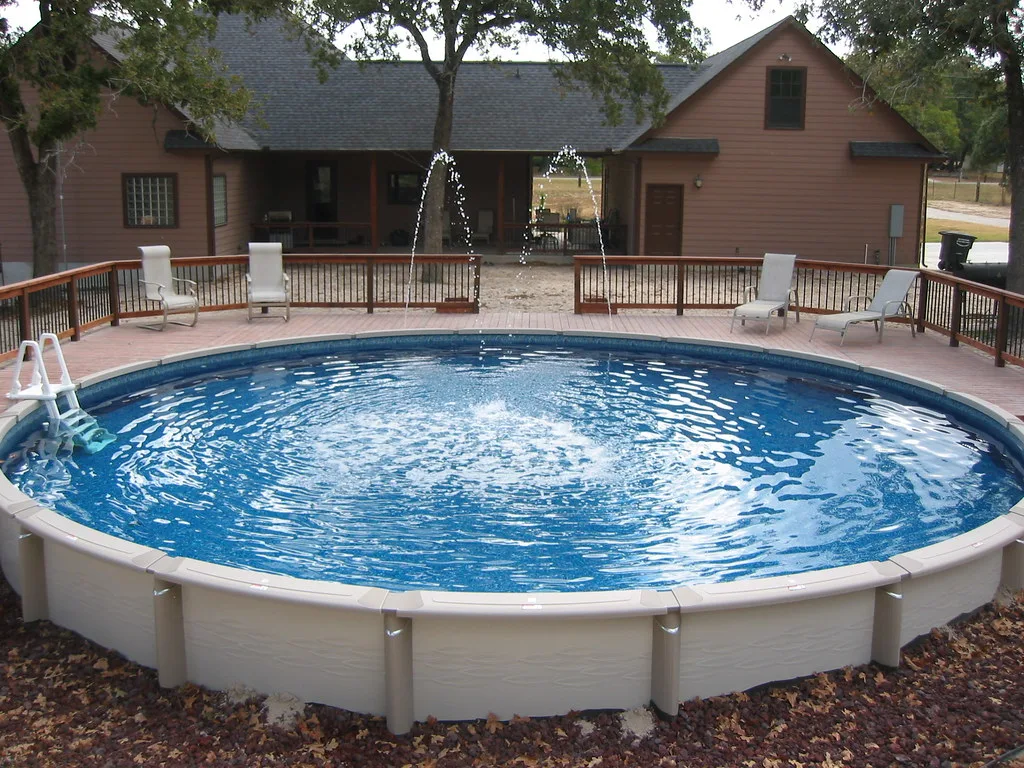
How big can an above ground pool be? It's a question that sparks backyard dreams, but the answer isn't a single number. It’s a blend of what’s physically possible, what your yard can accommodate, and what local rules allow.
Manufacturer specifications indicate that the largest commonly available round above-ground pools typically reach about 30 feet in diameter, with oval models extending to roughly 33 feet long. But fitting one is another story.
Sizing Up Your Yard: What Fits?
This is where the dream meets reality. Your backyard is the canvas, and the pool is the artwork, but you need to make sure it fits without looking cramped or breaking local laws.
Yard Size and Shape Considerations
You can't just pick the biggest pool you see online and expect it to work. The first thing you need to do is physically measure your yard and look at its layout.
- Available Space: Most importantly, how much flat, usable ground do you actually have? A pool's footprint is significant, and you need space not just for the pool itself, but also for access around it for maintenance, and potentially for decking or a patio.
- Shape Matters: Are you working with a perfectly rectangular lawn, or is it more of an irregular shape with mature trees, garden beds, or sloping areas? A round pool might fit neatly in a corner, while an oval pool could stretch across a longer, narrower space. Visualizing how the pool’s shape interacts with your existing landscape is key.
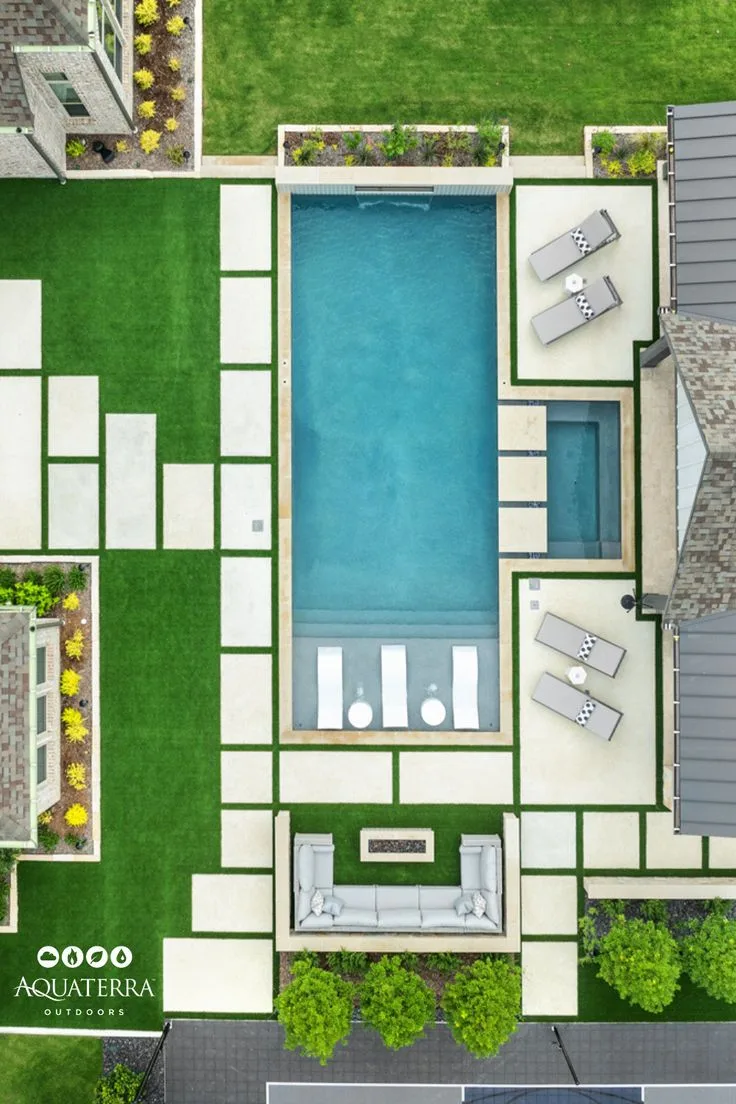
Image source: Bing (Web (fair-use with source credit))
- Obstacles: Keep an eye out for underground utilities, overhead power lines, or septic system drain fields. You definitely don't want to place a pool where it interferes with these crucial elements.
Local Rules and Setbacks
Before you get too far, you've got to check with your local government. This is non-negotiable.
- Setback Requirements: Nearly every town or city has rules about how far structures, including pools, must be from property lines, your house, and other buildings. These setback distances are there for safety and to maintain neighborhood aesthetics. A setback of, say, 5 or 10 feet from your property line can drastically reduce the maximum pool diameter you can install.
- Permits and Zoning: Larger pools, especially those that might be semi-inground or require significant site preparation, often need building permits. Your local planning or building department can tell you what’s required in your area. They might have specific guidelines on pool fencing, safety covers, and maximum allowable pool sizes within certain zones. Ignoring these rules can lead to fines or even having to remove the pool.
Understanding Pool Types and Their Size Limits
Not all above-ground pools are built the same, and their construction significantly influences the maximum size you can typically find and install.
Frame Pools: Common Dimensions
These are often the most accessible and affordable options. They typically consist of a metal frame supporting a durable vinyl liner.
- Round Frame Pools: The most common maximum diameter for these pools you'll see commercially is around 24 feet. Some heavy-duty models might push closer to 26 feet, but 24 feet is a good general upper limit for standard offerings.
- Oval Frame Pools: These tend to be shorter than their wall pool counterparts. You might find lengths up to about 30 feet for frame-style oval pools, with widths typically around 15 feet.
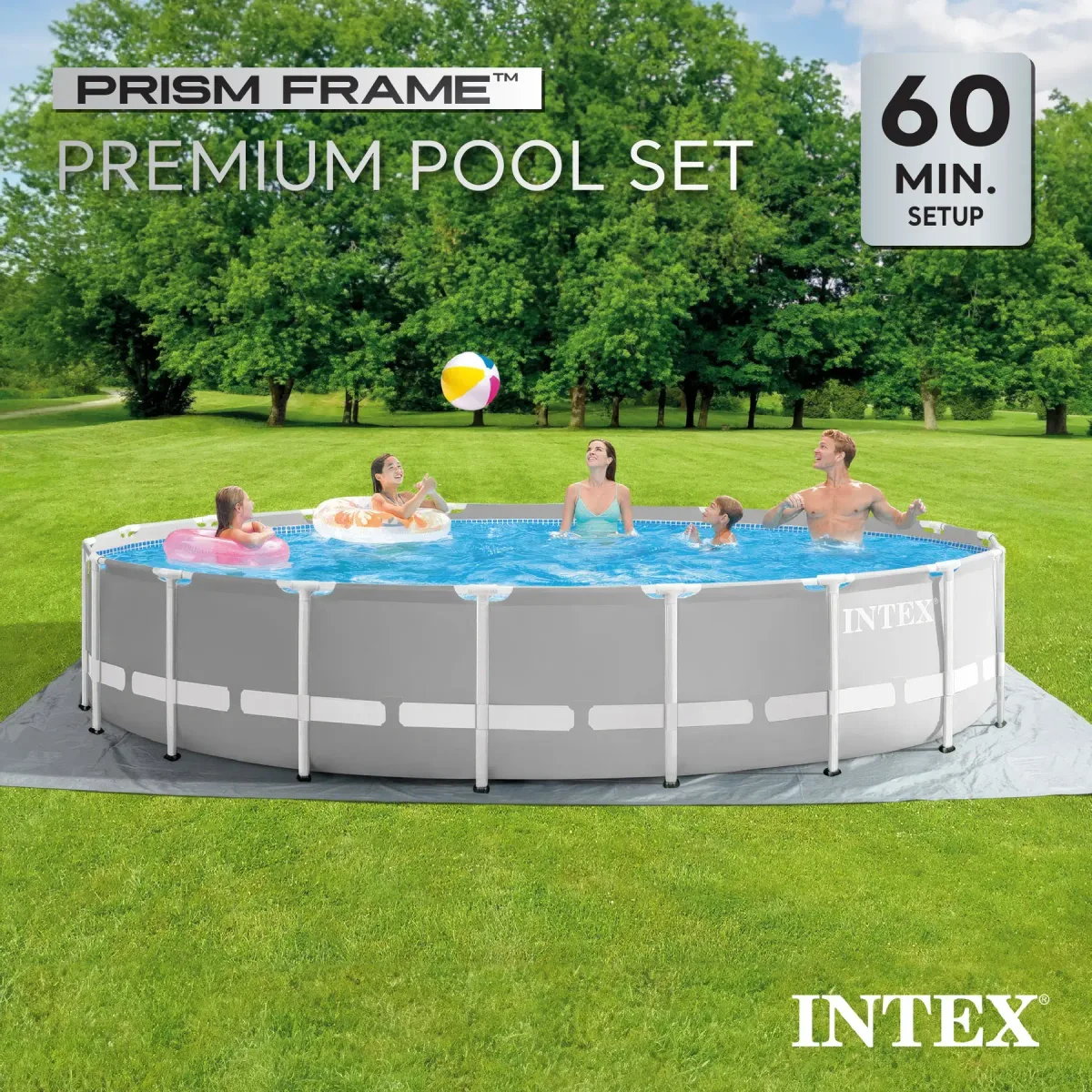
Image source: Bing (Web (fair-use with source credit))
- Installation Simplicity: Their frame design makes them relatively easier to set up and take down, which is why they often come in more standardized, slightly smaller maximum sizes.
Wall Pools: Bigger Options
These are more robust, featuring rigid walls made of steel, resin, or a composite material. They offer greater durability and, importantly, can accommodate larger sizes.
- Round Wall Pools: Manufacturer specifications confirm that round wall pools commonly reach diameters of 30 feet. You can find some premium or heavy-duty models that might slightly exceed this, but 30 feet is a widely available maximum.
- Oval Wall Pools: These offer more length. It's common to find oval wall pools with dimensions like 18 feet wide by 33 feet long. Some manufacturers offer even larger options, potentially pushing lengths up to around 40 feet, though these become less common and require significant yard space and structural consideration.
Semi-Inground and Custom Possibilities
If you're really looking for something exceptional, the lines between above-ground and in-ground begin to blur.
- Semi-Inground Installation: Many rigid wall pools are designed to be partially buried. This means the ground helps support the pool's walls, allowing for larger dimensions than a fully above-ground setup. With proper engineering and local permits, you can achieve sizes similar to smaller in-ground pools.
- Custom Orders: While rare and significantly more expensive, some manufacturers might offer custom-sized above-ground pools, particularly for commercial or unique residential applications. These would be subject to extensive engineering and regulatory approval.
Key Dimensions: Diameter, Length, and Width Explained
When we talk about "how big" an above-ground pool can be, we're really talking about its physical dimensions, and how those dimensions translate to usable space. For above-ground pools, these are generally measured in feet.
- Diameter: This term applies to round pools. It's the straight-line distance across the center of the pool from one edge to the opposite edge. For example, a 24-foot round pool has a diameter of 24 feet. This measurement is crucial for understanding the overall footprint and how much swimming space you have in a circular shape.
- Length and Width: These terms apply to oval and rectangular pools.
- Length is the longest dimension of the pool.
- Width is the shorter dimension.
For an oval pool, imagine it as a stretched circle; the length would be along its longest axis, and the width along its shortest. For a rectangular pool, it’s simply the length and width of the rectangle.
- Depth: While not directly dictating the maximum size in terms of footprint, pool depth is a critical attribute. Most standard above-ground pools have a consistent depth, often ranging from 48 inches to 54 inches. Some larger models might offer 56-inch or even 60-inch depths, but this is less common and adds complexity. The depth is a vital consideration for swimming and safety, but it's usually standardized within a specific pool model rather than being a variable size limit like diameter or length.
When "Biggest" Isn't Always Best: Practical Limits
Even if you have a massive yard and local codes allow it, fitting the largest possible above-ground pool might not be the smartest move. Several practical factors come into play that can make a slightly smaller pool a much better choice.
Installation and Delivery Challenges
Getting a very large pool to your backyard isn't always straightforward.
- Access: Think about how the pool components, the wall sections, frame pieces, liner, and pump, will get into your yard. If you have narrow gates, tight corners, or steep slopes, a massive pool kit can be incredibly difficult, or even impossible, to deliver and assemble.
- Site Preparation: Larger pools require a more substantial, perfectly level base. This might involve significant excavation, grading, and compacting of the ground. The more extensive the site prep, the more labor and potential cost are involved.
- Assembly Complexity: While most above-ground pools are DIY-friendly, the sheer scale of a 30-foot or larger pool means assembly will be a bigger project. You’ll likely need more people to help, and the process will take longer.
Maintenance and Costs
The bigger the pool, the bigger the commitment.
- Water Volume: A 30-foot round pool holds tens of thousands of gallons of water. As of 2026, filling this with water can be expensive, depending on your local water rates. Frequent top-offs due to evaporation also add up.
- Chemicals: Maintaining water balance in a large volume of water requires more chemicals. You'll need to purchase larger quantities of sanitizers, pH adjusters, and algaecides, which increases ongoing operational costs.
- Filtration and Pumping: A larger pool demands a more powerful and efficient filtration system. You'll likely need a larger pump and filter unit, which not only have a higher upfront cost but also consume more electricity.
- Cleaning: Skimming debris, vacuuming the bottom, and brushing walls takes considerably more time and effort for a larger pool. You might also need specialized cleaning tools designed for larger diameters.
Safety First: What Size Means for Pool Use
The size of an above-ground pool isn't just about fitting more people; it has significant safety implications that everyone needs to understand.
No Diving Rule Reinforcement
This is a critical point, and it applies to virtually all above-ground pools, regardless of size.
- Designed for Splashing, Not Diving: Manufacturer specifications and safety guidelines universally state that above-ground pools are not designed for diving. The relatively shallow and consistent depth of these pools makes diving extremely dangerous. Even a large 30-foot pool typically only has a depth of 48-54 inches, which is nowhere near sufficient for safe diving.
- Risk of Serious Injury: Attempting to dive into an above-ground pool can lead to severe head, neck, and spinal injuries, including paralysis. This risk remains the same whether the pool is 15 feet or 30 feet in diameter. Always supervise children and ensure everyone understands the "no diving" rule.
General Safety Considerations
Beyond diving, larger pools present a few other safety considerations.
- Supervision: More swimmers, especially children, in a larger pool require even more vigilant adult supervision. It's easier for someone to get into trouble in a crowded, larger body of water.
- Entry and Exit: Ensure steps or ladders are secure and appropriate for all users, especially for larger pools where reaching the edge might be more challenging for smaller children or individuals with mobility issues.
- Fencing and Barriers: Many local regulations mandate fencing around above-ground pools, particularly larger ones, to prevent unsupervised access by young children. Always check and comply with these rules.
Making the Right Size Choice: Your Yard's Needs
So, you've looked at the yard, checked the rules, and thought about pool types. Now it's time to align what you want with what you can realistically have. This is about making a smart decision for your specific situation.
- Consider Your Primary Use: Are you planning on doing laps, or is this mainly for kids to splash around and for adults to cool off? A longer oval pool might be better for gentle swimming, while a larger round pool offers more open space for general play.
- Future Plans: Think about any upcoming landscaping projects or additions to your home. Will the pool size you're considering still make sense in a few years if you decide to add a deck, a pool house, or a garden area? It’s better to plan for space now.
- Budget Alignment: Bigger pools often mean bigger upfront costs for the pool kit, and higher ongoing costs for water, chemicals, and electricity. Be honest about what you can afford long-term. A slightly smaller, well-maintained pool is always better than a huge, neglected one.
Frequently Asked Questions About Above-Ground Pool Size
How do I measure my yard for a pool?
You'll need a long tape measure to determine the available flat space. Measure the length and width of the area you intend to use. Also, check the distance from this area to fences, property lines, and your house to ensure you meet local setback requirements.
What's the largest above-ground pool diameter I can legally install?
The largest legal diameter depends entirely on your local zoning ordinances and property setback rules. While manufacturers offer pools up to 30 feet in diameter, your town’s regulations will dictate the maximum size that can be placed on your property, often requiring space between the pool edge and property lines.
Do larger pools cost significantly more to maintain?
Yes, larger pools generally incur higher maintenance costs. They require more water to fill, more chemicals to balance, and more electricity for their filtration systems. The time spent cleaning also increases proportionally with the pool's surface area and volume.
Can I install a very large above-ground pool on a slight slope?
While some above-ground pools can tolerate a very minor slope, larger pools require a meticulously level base for structural integrity and safety. Installing a large pool on a significant slope usually requires extensive, professional-grade excavation and site preparation, which can be costly. It's often best to opt for a smaller size or consult a professional for significant grading work.
Are there special permits needed for large above-ground pools?
Many municipalities require building permits for above-ground pools, especially those that are larger or require substantial site preparation. You should always contact your local building or planning department to understand permit requirements, inspection schedules, and any necessary safety compliance measures before installation.

