

Cleaning your house can feel overwhelming, especially when you don’t know where to begin. You might stand in the middle of a messy room, unsure which task to tackle first.
26% off Today's Exclusive Deals
Limited-time Exclusive Deals. Check current discount on Amazon.
Check Price on Amazon As an Amazon Associate I earn from qualifying purchases.But what if you had a simple plan that made cleaning easier, faster, and even a little satisfying? This guide will show you exactly where to start when cleaning your house, helping you transform chaos into calm. Keep reading, and you’ll discover easy steps that save time and energy—making your home sparkle without the stress.
Gather Essential Supplies
Starting to clean your house is easier with the right supplies. Gathering essential tools and products saves time. It helps avoid interruptions during cleaning. Having everything ready boosts your cleaning flow and keeps you focused.
Cleaning Tools Checklist
Collect basic cleaning tools before you begin. A broom and dustpan handle floors and debris. A mop cleans hard surfaces quickly. Use microfiber cloths for dust and wiping. Sponges and scrub brushes remove tough stains. A vacuum cleaner works well on carpets. Gloves protect your hands from chemicals and dirt. Keep a bucket handy for water and solutions.
26% off Today's Exclusive Deals
Limited-time Exclusive Deals. Check current discount on Amazon.
Check Price on Amazon As an Amazon Associate I earn from qualifying purchases.Choosing The Right Cleaning Products
Select cleaning products based on your surfaces. Use gentle cleaners for wood and delicate areas. Disinfectants kill germs on kitchen and bathroom surfaces. Glass cleaner makes windows and mirrors shine. Avoid mixing chemicals to prevent harmful fumes. Choose eco-friendly products for a safer home. Test new products on small spots first. Read labels carefully to use products correctly.

Create A Cleaning Plan
Creating a cleaning plan helps make house cleaning less overwhelming. It breaks the work into smaller, clear steps. This way, you know what to clean first and how long each task might take. A plan keeps you focused and makes cleaning more manageable.
Prioritize Rooms By Use
Start with the rooms you use most often. Kitchens and living rooms usually get dirty faster. Clean these areas first to keep your home fresh. Bedrooms and guest rooms can wait a little longer. This method saves time and effort.
Set Realistic Timeframes
Give yourself a clear, short time to finish each task. Avoid planning too much for one day. Small goals are easier to reach and keep you motivated. Use a timer to stay on track. Break big jobs into smaller parts.
26% off Today's Exclusive Deals
Limited-time Exclusive Deals. Check current discount on Amazon.
Check Price on Amazon As an Amazon Associate I earn from qualifying purchases.Declutter Before Cleaning
Decluttering before cleaning makes the whole process easier and faster. It clears space and removes items that cause mess. Starting with decluttering helps you focus on cleaning only the necessary areas. A tidy space feels more relaxing and looks better instantly.
Sort Items To Keep Or Discard
Begin by sorting through your belongings. Create two piles: one for items to keep and one for things to throw away. Be honest about what you really use or need. Donate or recycle items that are still in good condition. Toss broken or useless things to reduce clutter.
Organize Storage Spaces
After sorting, organize your storage spaces. Use bins, shelves, or boxes to group similar items together. Label storage containers to find things quickly later. Keep everyday items easy to reach and store seasonal things away. An organized space saves time during future cleaning sessions.

Start With High-traffic Areas
Start cleaning your house by focusing on high-traffic areas. These spots get dirty faster because many people use them daily. Cleaning here first makes the biggest impact. It also helps keep your home feeling fresh and welcoming.
Cleaning The Living Room
The living room is where family and guests gather. Begin by picking up clutter like toys, magazines, or dishes. Wipe down surfaces such as tables and shelves with a damp cloth. Vacuum or sweep the floor to remove dust and crumbs. Fluff pillows and fold blankets to create a tidy look. This quick effort makes the room feel neat and inviting.
Tidying The Kitchen
The kitchen sees lots of activity and mess. Clear countertops by putting away utensils and ingredients. Wash dirty dishes or load them into the dishwasher. Wipe down the sink, stove, and counters to remove stains and spills. Sweep or mop the floor to catch dropped food. Cleaning this area first helps keep germs away and makes cooking more pleasant.
Move To Bedrooms And Bathrooms
After tidying common areas, move to bedrooms and bathrooms. These rooms need special care. Bedrooms are personal spaces that must feel clean and fresh. Bathrooms require thorough cleaning to keep germs away. Start with simple tasks, then deep clean for better results.
Making Beds And Dusting
Begin by making beds neatly. Pull up sheets and arrange pillows. A tidy bed makes the room look clean instantly.
Dust all surfaces next. Use a cloth or duster on furniture, shelves, and window sills. Dust can cause allergies and make rooms look dull.
Don’t forget to clean under the bed. Dust and dirt collect there easily. This step helps keep the whole room fresh.
Sanitizing Bathroom Surfaces
Start by wiping down sinks and countertops. Use a disinfectant to kill germs.
Clean the toilet thoroughly. Apply cleaner inside and outside the bowl. Use a brush to scrub hard-to-reach spots.
Wipe mirrors and faucet handles. These areas often have fingerprints and water spots.
Finally, clean the shower or bathtub. Remove soap scum and mildew with a good bathroom cleaner.
Focus On Floors And Carpets
Floors and carpets often hold the most dirt in a house. Cleaning them first makes the whole space look fresher. Dirt, dust, and crumbs hide easily in these areas. Starting here helps prevent spreading mess to other parts of your home.
Proper cleaning keeps floors safe and bright. It also stops allergies caused by dust and dust mites. Focus on the right methods for vacuuming and mopping to get the best results.
Vacuuming Techniques
Use a vacuum with strong suction to clean carpets well. Move the vacuum slowly for deep dirt removal. Vacuum in different directions to reach all fibers. Don’t forget corners and under furniture. Empty the vacuum bag or bin regularly for better performance.
Mopping Tips For Different Surfaces
Choose a mop suited for your floor type. For hardwood, use a damp mop, not wet. Water can damage wood over time. For tile or vinyl, a wet mop works best. Use mild soap to avoid residue. Change mop water often to avoid spreading dirt.
Tackle Windows And Mirrors
Cleaning windows and mirrors is a smart first step. These surfaces show dirt quickly. Clean glass brightens every room. It lets in more light. A clear mirror makes the space feel bigger and fresh.
Start by choosing the right cleaner. Use tools that help avoid streaks. Small effort here makes a big difference.
Best Cleaners For Glass
Water and vinegar mix well for glass cleaning. It cuts grease and dirt easily. Spray bottles work best for even coverage. Commercial glass cleaners also help. Look for ones that say “streak-free.” Avoid cleaners with ammonia for tinted windows. Use a soft cloth or microfiber towel. Paper towels can leave lint behind.
Avoiding Streaks
Wipe windows in a circular motion first. Then finish with vertical or horizontal strokes. Clean in the shade or on a cloudy day. Sunlight dries cleaner too fast and causes streaks. Use a dry microfiber cloth for the final wipe. Replace cloths often to avoid spreading dirt. Patience and gentle pressure lead to better results.
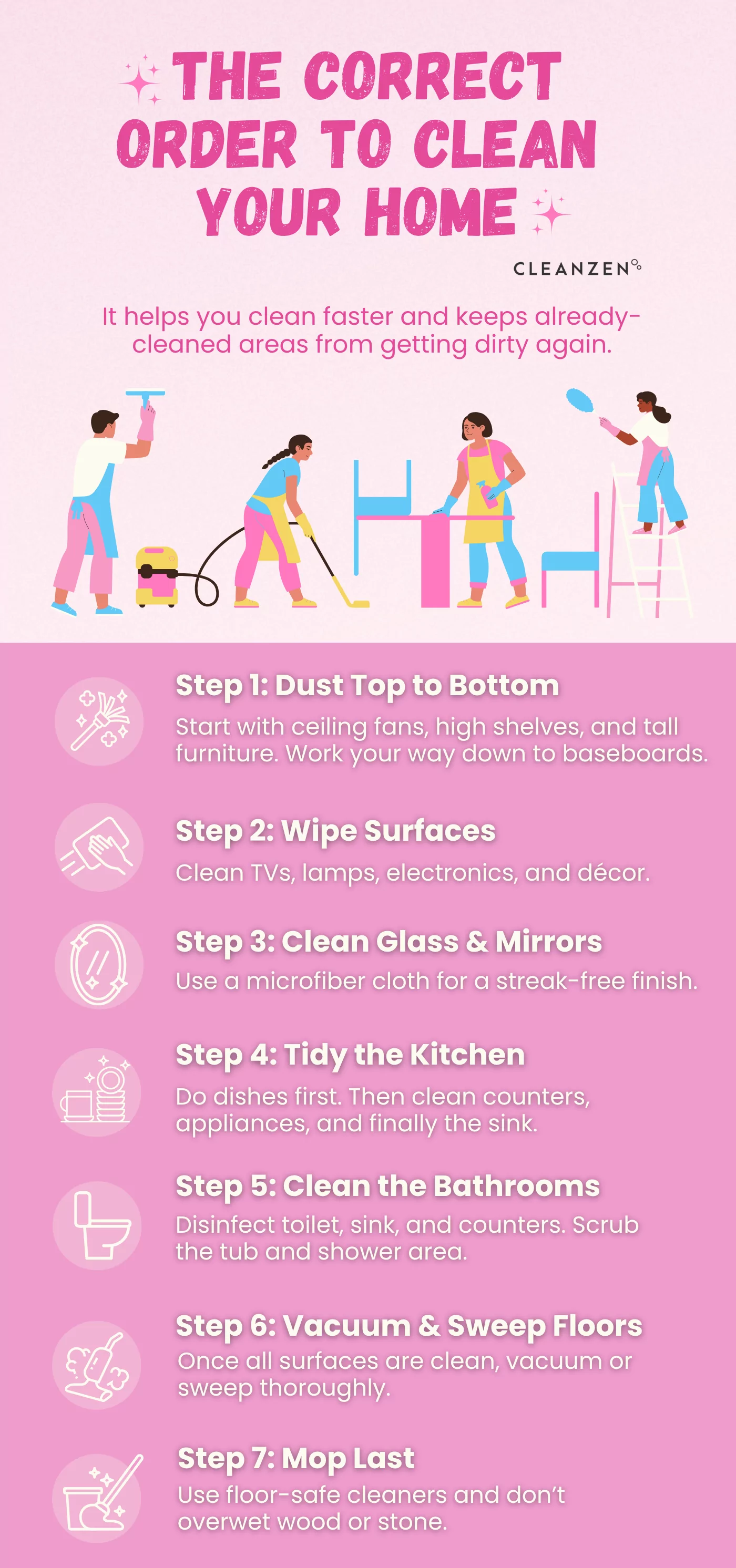
Maintain Cleanliness Daily
Maintaining cleanliness daily helps keep your home fresh and tidy. Small efforts every day stop dirt and mess from building up. This makes cleaning easier and faster. Creating simple routines can save time and stress.
Simple Daily Habits
Start with making your bed each morning. It sets a clean tone for the day. Wipe kitchen counters after cooking to avoid stains and crumbs. Put dirty clothes in the laundry basket right away. Wash dishes or load the dishwasher after meals. Sweep or vacuum high-traffic areas to remove dust and dirt. Take out trash regularly to prevent odors. These small habits keep your home neat without much effort.
Weekly Deep Cleaning Tasks
Set aside time each week for deeper cleaning. Dust all surfaces, including shelves and furniture. Mop floors to remove grime and spills. Clean bathroom sinks, toilets, and showers thoroughly. Change bed linens to keep them fresh. Check the fridge and toss expired food. Vacuum carpets and rugs to remove embedded dirt. Doing these tasks weekly helps maintain a healthy and clean home environment.
Frequently Asked Questions
Where Should I Begin When Cleaning My House?
Start with decluttering each room to clear space. Then, dust surfaces and vacuum floors. Focus on high-traffic areas first for noticeable results. This approach saves time and makes cleaning efficient.
How Do I Prioritize Rooms For Cleaning?
Prioritize rooms based on usage and mess level. Clean kitchens and bathrooms first as they harbor germs. Bedrooms and living rooms come next for comfort. This strategy keeps your home hygienic and inviting.
What Cleaning Tools Are Essential To Start?
Basic tools include a vacuum, microfiber cloths, mop, and all-purpose cleaner. These cover most surfaces and messes. Having the right tools speeds up the cleaning process and ensures better results.
How Long Should I Spend Cleaning Each Room?
Aim for 15 to 30 minutes per room. Focus on key tasks like dusting, vacuuming, and wiping surfaces. Short, consistent sessions prevent overwhelm and maintain a clean home regularly.
Conclusion
Starting your house cleaning with clear steps makes the task easier. Focus on one room at a time to avoid feeling overwhelmed. Use simple tools and keep your cleaning routine steady. Small efforts each day lead to a cleaner home.
Remember, patience helps you finish without stress. Enjoy the fresh, neat space you create. Cleaning does not need to be hard or quick. Take your time and see the difference. You can do this!

