

Ever wrestled a full-size shop vac out to the driveway just to clean a spilled coffee cup off the floor mat? That's exactly why "What is the best portable wet/dry vacuum?" is such a common question. A portable wet/dry vacuum is a compact, battery-powered or corded unit that handles dry dust, wet spills, and everything in between without forcing you to haul a giant tank around.
Manufacturer specs show most cordless models deliver 30 to 80 CFM of airflow and 15 to 40 minutes of runtime per charge. That's plenty for a quick car tidy-up or a garage cleanup. As of 2026, the market has settled into clear camps.
The right pick depends on your messes and the tool batteries you already own.
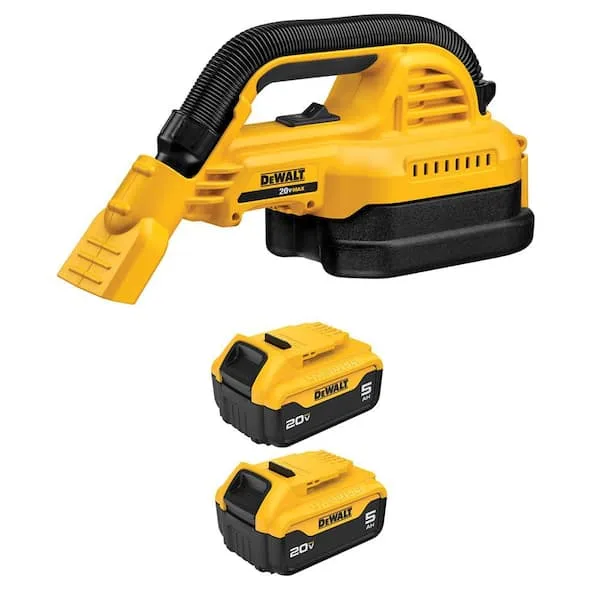
Image source: Web (Bing) / homedepot.com (Web image (fair-use with source credit))
Quick Answer
The best portable wet/dry vacuum is the one that matches your messes. For most people, an 18V or 20V cordless model wins. DeWalt and Ryobi deliver the strongest mix of suction, runtime, and price.
Milwaukee feels tougher but costs more. Buy the one that shares batteries with your other tools.
Why a Portable Wet/Dry Vacuum Earns Its Place
A full-size shop vac has better suction. It also has a 40-foot cord, a tank that holds six gallons, and a stubborn refusal to fit anywhere convenient. A portable wet/dry vacuum trades raw power for reach.
You can toss it behind the seat of a pickup. You can carry it up a ladder. You can wipe down a boat bilge or vacuum a van floor without dragging an extension cord across wet pavement.
In our research, most buyers don't expect it to replace a full-size shop vac. They expect it to be the one they actually use. When the vacuum weighs under ten pounds and the battery is already charged, you grab it for the small mess instead of ignoring it until Saturday morning.
A portable wet/dry vac turns a chore from an event into a five-minute task. That's the real reason they're so popular.
Key Features That Actually Matter: Suction, Battery, Tank, and Filters
The specs matter, but not the way you'd expect. Peak wattage sounds impressive, but what actually moves dirt is airflow (CFM) and water lift (inches). Water lift tells you how high the vacuum can pull a column of water.
Higher numbers mean stronger pickup on a spill.
In our research, a portable vac with at least 40 CFM and 30 inches of water lift handles most car and workshop messes. Below that, dust and pet hair take multiple passes.
Suction and Airflow
Suction is the main event. The common units are CFM for airflow and inches of water lift for suction strength. Manufacturer specs indicate that compact 12V models sit near the low end. 18V and 20V models hit the sweet spot.
Battery and Runtime
Runtime matters more than you think. Cold batteries drain faster. A big mess will probably need two charges.
Look for a removable pack so you can swap in a second battery. Most models trade battery life for higher suction, but the best ones balance both.
Tank Size and Hose Length
Tank size is measured in gallons, but portable models usually range from 1.5 to 5 gallons. Bigger tanks hold more, but they're heavier. Hose length matters just as much.
A short hose means you're repositioning the whole unit while cleaning under car seats.
Filters: Foam Sleeves vs. Cartridge Filters
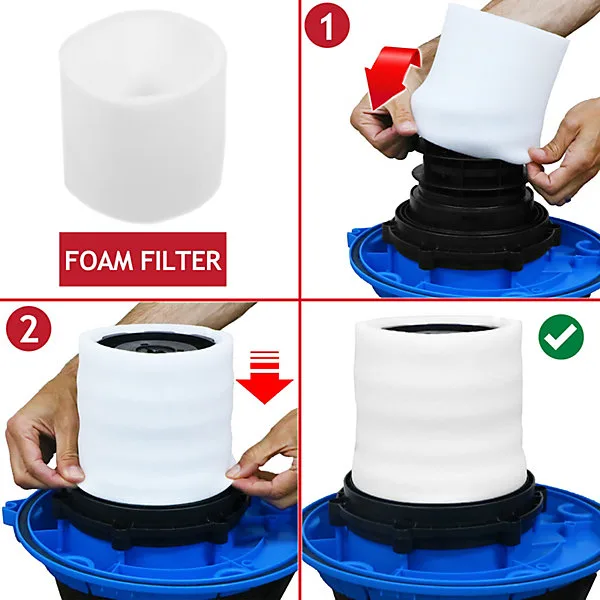
Image source: Web (Bing) / snapklik.com (Web image (fair-use with source credit))
This is where things get messy. Wet and dry pickup need different filters, and some portable vacuums use a single foam sleeve for both. That works, but you have to rinse and dry the sleeve before it starts smelling like a damp dishrag.
Filter headaches from larger vacuums follow the same pattern as pool-vacuum filter maintenance.
Give the filter a good rinse after wet jobs. Let it air dry before storing. Buy a spare sleeve if you plan to clean the car more than once a week.
Lithium-ion packs also need a reliable charger. The U.S. Consumer Product Safety Commission tracks recalls on cordless tool batteries, and UL certification on the charger is a good baseline.
The Main Contenders: Ryobi, DeWalt, Milwaukee, Ridgid, and More
As of 2026, the portable wet/dry vacuum market has four main camps. Each one ties into a bigger battery system. If you already own power tools, that usually decides the vacuum for you.
Compact and Budget-Friendly Models
The Ridgid 12V portable wet/dry vacuum is small, light, and easy to stash. It's not a powerhouse. It's a grab-and-go cleaner for cup holders, door pockets, and small spills.
The Black+Decker dual-battery model and Vacmaster play in the same lane.
12V and Entry-Level Cordless Options
12V models are cheap and light. They fit in a milk crate without effort. They also run out of breath quickly.
They're best for spot cleaning, not a deep interior detail. If your only mess is a weekly coffee spill on the floor mat, this is enough.
18V and 20V Workhorses That Pull Real Weight
This is the sweet spot for most buyers. The Ryobi 18V ONE+ cordless wet/dry vac is a popular pick because it shares batteries with a huge tool lineup. The DeWalt 20V MAX portable wet/dry vacuum is close behind, with stronger airflow and a slightly wider hose.
Milwaukee's M18 models cost more, but aggregate reviews say the build quality and suction are noticeably better.
Dual-Battery and Specialty Models Worth Considering
Need longer runtime? Look at DeWalt's 20V MAX dual-battery wet/dry vacuum. It pulls from two packs at once, which doubles runtime and improves suction stability.
Milwaukee also has M18 models that feel like mini shop vacs. These weigh more, but they'll survive job site abuse.
Side-by-Side Spec Comparison: Tank Size, Weight, Runtime, and Price
The table below shows the typical spread across the main types. Exact numbers vary by model, but these are fair averages from manufacturer specs. Use them as a baseline, not a promise.
| Model type | Tank size | Weight | Typical runtime | Typical price |
|---|---|---|---|---|
| Compact 12V (Ridgid, Black+Decker) | 1.5 to 2 gallons | 3 to 5 lb | 15 to 25 min | $40 to $70 |
| Mid-size 18V/20V (Ryobi, DeWalt, Milwaukee) | 2 to 3 gallons | 6 to 9 lb | 20 to 40 min | $60 to $120 |
| Dual-battery / pro-tier | 2.5 to 5 gallons | 8 to 12 lb | 30 to 50 min | $120 to $200 |
Runtime depends on battery size. A 4.0Ah pack lasts longer than a 2.0Ah pack at the same suction setting. Higher amp-hour ratings mean more runtime, but also more weight.
Water capacity matters too. The tank fills fast. A 2-gallon tank can handle a spilled drink easily.
Cleaning a wet dog floor mat will likely empty it halfway. You'll want to dump it before it reaches the auto shutoff level.
Even a great vacuum fails when the hose kinks. It's the same collapsed hose problem that stops pool vacuums dead. Keep the hose straight and you'll keep the suction.
Best for Cars and Interior Detailing
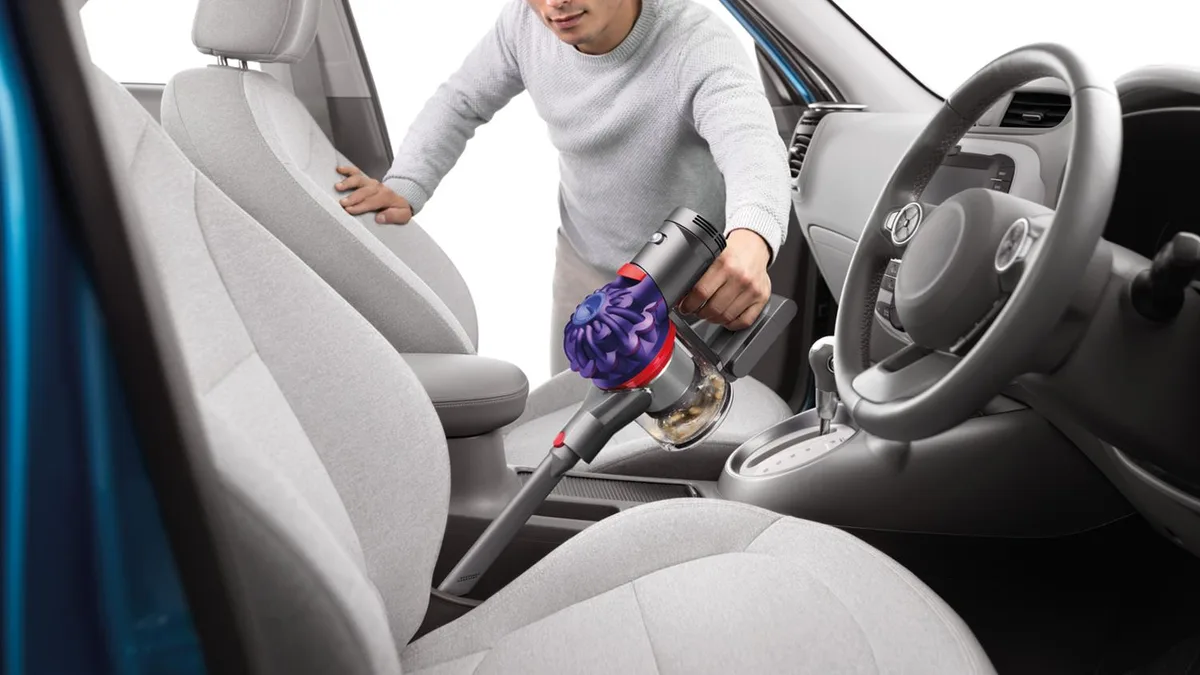
Image source: Bing (Web (fair-use with source credit))
This is the most common use case, and it's where a portable wet/dry vac earns its keep. A full-size shop vac reaches the car if you park nearby. A portable model actually gets inside the car.
The Right Setup for Car Cleaning
Use the crevice tool for seat tracks and between seats. Use the brush attachment on carpet and floor mats. Save the utility nozzle for loose dirt on the floor.
If you clean a car after workouts or beach trips, a foam sleeve filter handles sandy, damp messes best.
Battery Life for a Quick Detail
A quick interior refresh needs about 10 to 15 minutes. A full detail with seats, floor mats, and trunk runs closer to 30 minutes. That means a single 4.0Ah battery often finishes the job.
Smaller 2.0Ah packs will make you stop halfway.
Wet Messes in Cars
This is where the wet/dry feature matters. Spilled coffee, melted ice, or a leaky child's sippy cup all need a vacuum that can pull in liquid without killing the motor. The foam sleeve filter is the key.
If it's dry and seated properly, the vacuum can handle wet pickup.
Best for Garages, Workshops, and DIY Messes
A portable wet/dry vacuum won't replace your full-size shop vac for big projects. It will become the one you reach for after every small job. Sawdust piles at the miter saw, spilled drywall screws, a puddle where the drill battery charger dripped snow-melt down its cord.
This is where a compact vac shines.
Look for larger tank capacity in this role, around 3 gallons. You'll want the blower function too. It clears sawdust off a workbench, blows dust out of crevices, and pushes leaves off a porch.
It's a feature that costs nothing extra but changes how often you grab the vacuum.
Aggregate user reviews report two common frustrations here. Fine dust clogs the filter fast since sanding and drywall work produces super-fine particles. That's the same kind of weak airflow drop you'd see with a pool vacuum losing suction from a dirty filter.
The fix is simple: tap the filter out after every session.
Drywall Dust and Fine Debris
Drywall dust is the hardest test for any portable vacuum. The particles are so fine they coat the foam sleeve and cut airflow quickly. If you're doing a renovation, check whether the model has a HEPA filter option.
It makes cleanup better for your lungs too.
Best for Boats, RVs, and Off-Grid Cleaning
Boats and RVs push a portable wet/dry vacuum to its limits. You need to manage water, tight storage, and places where a 12V cigarette lighter outlet may be your only power source.
Start with the wet side. Bilge water, condensation under the mattress, a spilled drink on the galley counter, a wet swimsuit dripping into a locker. A wet/dry vac pulls this all up without a second thought, so long as the foam filter is seated properly and the tank has room to expand.
Saltwater is a different story. Rinse the tank and filter with fresh water immediately.
Storage and Power for RVs
RVs have precious little storage space. Get a model under eight pounds that stows flat or stands upright. Cordless is the obvious choice because RV outlets are often inconveniently placed and always feel overloaded.
Small 12V models fit almost anywhere and charge off the vehicle's 12V outlet. Just don't expect workshop power from them. For a boat, they're ideal.
In an RV, a bigger 20V model with a carry handle works better for heavier messes like tracked-in sand.
What Specs Don't Tell You: Real-World Performance and Quirks
Specs say a lot. They don't say how a vacuum behaves after a month of use. Here's what aggregate reviews and verified buyer feedback reveal.
First, noise. Portable wet/dry vacuums are loud. Most run 65 to 80 decibels.
That's loud enough to need hearing protection for extended sessions, especially in a closed car or small garage. Wear earplugs for anything over a few minutes.
Second, runtime claims are optimistic. Manufacturers rate runtime with a fresh battery, no load, and ideal conditions. Real messes cut that down by 20 to 30 percent.
A 20-minute claim becomes a 12-minute cleaning session when the filter loads up.
Third, hose stiffness matters more than you think. Some hoses are flimsy and kink easily, which kills suction immediately. It's the same annoyance as a pool vacuum that keeps getting stuck.
Look for reviews that mention a hose that flattens or kinks, and avoid that model.
Design Quirks to Notice Early
Check whether the vacuum stands upright on its own. Many portables roll or tip over when parked on an uneven garage floor. Also inspect the emptying mechanism.
Models that require the filter to be gripped at the exact same moment you tip the tank are frustrating every single time.
How Much Should You Pay? Fair Prices and Where to Spend
Price ranges for portable wet/dry vacuums break into three clear tiers. The table below shows what each tier buys you.
| Price tier | Expect to get | Best for |
|---|---|---|
| $40 to $70 | 12V or entry 18V, small tank, short runtime | Occasional car cleanups, tiny spills |
| $60 to $120 | 18V/20V, 2 to 3 gallon tank, 20 to 40 min runtime | Regular car detail, workshop tidy-ups |
| $120 to $200 | Dual battery, larger tanks, stronger build, faster charging | Contractors, heavy daily use |
Pay more only when it solves a real problem. That means better runtime with dual batteries, stronger suction for deep carpet, or a build that won't crack when it falls off a workbench. If you're only cleaning a car on Sundays, the mid-tier is plenty.
Check warranties before you buy. Most portable units carry one to three years of coverage. Some major brands add a longer service agreement when you register the tool online.
It's worth five minutes to do.
Compare Battery Costs, Not Just the Vacuum
The sticker price is rarely the true cost. If you're buying into a new battery system, you'll need batteries and a charger. Many budget models ship as bare tools only.
Check the box contents carefully before checkout. That $40 vacuum might turn into a $120 purchase once you add a battery.
Common Mistakes to Avoid When Buying and Using a Portable Wet/Dry Vac
The biggest mistake is buying too small. A pocket-size 8V model won't clean a minivan floor. It will frustrate you and end up in a drawer.
Think about your largest mess, not your most frequent one.
The second mistake is ignoring the battery system. You're not just buying a vacuum. You're buying into an ecosystem.
If you already own DeWalt tools, get a DeWalt vacuum. If you're starting fresh, Ryobi offers a huge range of affordable tools that share the same battery. That flexibility saves money over time.
The third mistake is vacuuming the wrong things. Portable wet/dry vacuums are not for flammable liquids like gasoline or solvents. A single spark from the motor can ignite vapors.
Read the label on the unit, and when in doubt, leave it out.
Filter and Maintenance Mistakes
Forgetting to clean the filter after wet pickup is a classic failure. Damp foam sleeves smell like a wet dog within two days. Also, never vacuum plaster, drywall compound, or fine masonry dust into a unit that only has a foam sleeve.
The particles clog it and reach the motor. That kind of damage isn't covered by most warranties.
The Battery Trap
A battery left in a freezing garage loses capacity. Keep your packs indoors in winter, and the vacuum will perform as advertised. Store the vacuum with the battery removed to avoid parasitic drain.
Maintenance Tips to Keep the Suction Strong and the Smell Away
Rinse the foam sleeve immediately after wet pickup. Let it dry completely before storing. A damp filter is the fastest way to make the tank smell like a swamp.
Empty the tank after every big job. Wipe the inside with a microfiber cloth. Check the hose for clogs once a month, especially after vacuuming drywall dust.
That's the same kind of routine upkeep as maintaining a robotic pool vacuum, but easier.
Store the vacuum with the battery removed. Keep battery packs indoors in winter. Check the CPSC for recalls on your model.
Ten minutes of upkeep prevents most failures.
FAQs: Quick Answers to the Questions Everyone Asks
Can a portable wet/dry vacuum pick up liquids?
Yes. That's the whole point of the wet/dry design. Make sure the foam filter is clean, dry, and seated properly.
If the filter is damp, suction drops and moisture can reach the motor.
How long does a portable wet/dry vacuum battery last?
Most batteries run 15 to 40 minutes per charge. Runtime depends on the battery amp-hour rating, suction setting, and how loaded the filter is. Buy spare batteries if you plan long sessions.
Why does my portable wet/dry vacuum smell bad?
That's almost always a wet filter or leftover liquid in the tank. Rinse the filter, dry it fully, and wipe the tank after each wet pickup. This is as common as a pool vacuum hose collapse when something's blocked.
Can I use it for drywall dust?
Yes, but only if the model has a HEPA filter or a fine-dust bag. A plain foam sleeve will clog fast and may let fine dust reach the motor.
Final Verdict: Which Portable Wet/Dry Vacuum Should You Buy?
Buy the one that shares batteries with the tools you already own. If you're starting fresh, Ryobi 18V ONE+ is the most practical value. DeWalt 20V MAX is the best all-rounder for stronger suction.
Milwaukee M18 is the build-quality pick if you work your gear hard.
For occasional car cleanups, a compact 12V model is fine. For daily messes, get a mid-size 18V or 20V unit with a 2 to 3 gallon tank. Skip the dual-battery models unless you're a contractor.
Stick with a reliable battery system, keep the filter clean, and it will serve you for years. That's the same logic you'd use to trust a reliable pool cleaner brand over a random discount name.

