

A central vacuum system is a significant investment for any home, offering convenience and improved air quality. At the heart of this system is the motor, the powerhouse that drives its suction. Understanding the lifespan of this crucial component is essential for maintenance and budgeting. So, how long does a central vacuum motor last? Generally, a well-maintained central vacuum motor can last anywhere from 15 to 20 years, with some units even exceeding this remarkable duration.
Several factors influence this longevity, from the quality of the initial purchase to how the system is used and cared for. By understanding these elements, you can help ensure your central vacuum motor serves your home for decades.
Factors Affecting Central Vacuum Motor Lifespan
The lifespan of a central vacuum motor isn’t fixed. It’s a dynamic figure influenced by a combination of the motor’s inherent quality and external factors.
Motor Quality And Brand Reputation
Not all central vacuum motors are created equal. Higher-quality motors, often found in premium brands, are built with more durable components. These might include better bearings, more robust windings, and superior cooling systems. Brands that have a long-standing reputation for reliability often use higher-grade materials and have more rigorous manufacturing standards.
For example, some manufacturers use steel gears in their motors, which are far more durable than plastic alternatives. This attention to detail in the build quality directly translates to a longer operational life for the motor.
Usage Patterns
How often and how intensely you use your central vacuum system plays a huge role. A home that is used frequently, perhaps with pets or children, will see more wear and tear on the motor than a seldom-used guest room.
Running the vacuum for extended periods without breaks can also cause the motor to overheat, shortening its life.
Consider a busy family with two dogs and active kids. They might use the central vacuum daily for quick cleanups and more thorough weekly sessions. In contrast, a single person in a small apartment might only use it once a month.
The former scenario will naturally put more stress on the motor.
Maintenance And Filter Care
This is arguably the most critical factor you can control. Regular maintenance is key to prolonging the life of any appliance, and a central vacuum motor is no exception. The most vital aspect of maintenance is ensuring the dust collection canister and filters are kept clean and replaced as recommended.
A clogged filter or a full canister forces the motor to work harder to pull air through. This increased strain generates more heat and puts undue stress on the motor’s components. Over time, this can lead to premature failure.
Installation Quality
While less common, an improperly installed central vacuum system can also impact motor longevity. If the piping or intake valves are not correctly sealed, air leaks can occur. These leaks can reduce suction efficiency, forcing the motor to run longer to achieve the desired cleaning power.
Environmental Factors
The environment where the central vacuum unit is installed matters. If the unit is located in a dusty, humid, or extremely hot area, these conditions can affect the motor’s performance and lifespan. For instance, a motor operating in a hot garage might overheat more easily than one in a cool, climate-controlled basement.
Understanding Motor Lifespan Metrics
When discussing motor lifespan, it’s helpful to understand the terms and figures often associated with them.
Horsepower (hp) And Amperage (amps)
These metrics indicate the motor’s power. While a higher HP or Amps motor might seem better, it doesn’t directly correlate with longevity. A powerful motor running under optimal conditions will last longer than a weaker motor struggling to perform.
However, oversized motors can sometimes overheat if not properly managed by the system’s design. The key is a balanced system where the motor’s power is appropriate for the home’s size and the vacuum’s intended use.
Motor Type
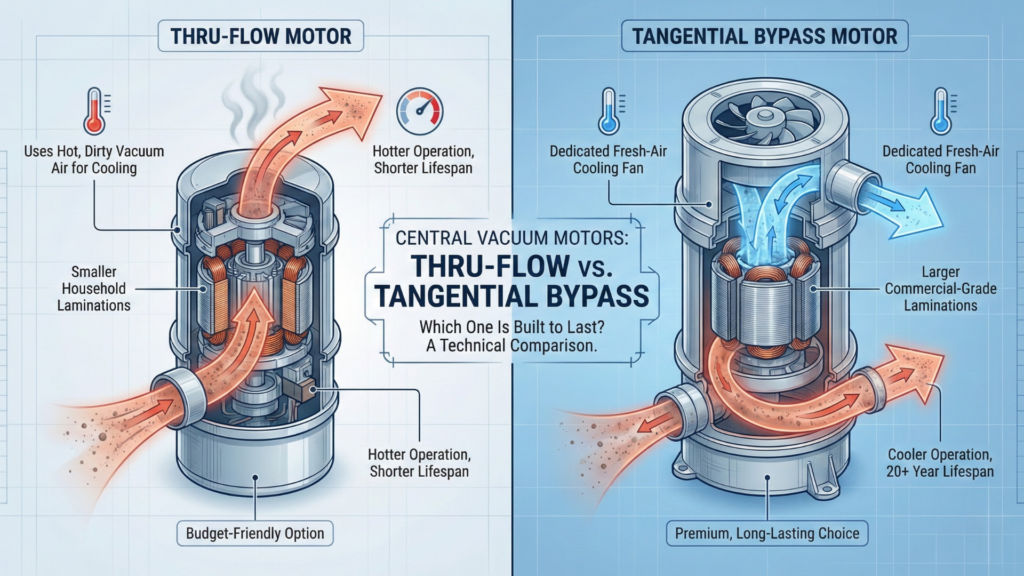
There are two main types of motors used in central vacuums: tangential bypass and dedicated flow-through.
- Tangential Bypass Motors: These are the most common. They are cooled by a separate fan, meaning the air being vacuumed does not pass over the motor itself. This design helps prevent fine dust and debris from reaching the motor, contributing to a longer lifespan.
- Flow-Through Motors: In this design, the air being vacuumed passes over the motor to cool it. While efficient, these motors are more susceptible to damage from fine dust if the filters are not meticulously maintained.
A tangential bypass motor, due to its cooling mechanism, generally tends to have a longer lifespan if maintained correctly.
Signs Your Central Vacuum Motor Might Be Failing
Catching early signs of motor trouble can save you from a complete system failure and potentially allow for repair rather than replacement.
Reduced Suction Power
The most obvious indicator is a noticeable decrease in suction. If your vacuum struggles to pick up dirt, even with a clean canister and filters, the motor might be losing power. This gradual decline is often the first sign of wear.
Unusual Noises
Listen for any new or strange sounds coming from the central vacuum unit. Grinding, whining, or rattling noises can indicate worn bearings or other internal mechanical issues. These sounds are often more pronounced than the typical operational hum.
Overheating And Smells
If the unit feels excessively hot to the touch, or if you detect a burning smell, the motor is likely overheating. This could be due to clogged filters, a failing cooling fan, or internal motor problems. Do not continue to run the vacuum if you notice a burning smell.
Intermittent Operation
The motor might start and stop unexpectedly, or it might only run for short periods before shutting off. This can be a sign of an electrical issue within the motor or a problem with the thermal overload protection.
Maximizing Your Central Vacuum Motor’s Lifespan
Proactive care is the best strategy for ensuring your central vacuum motor lasts as long as possible.
Regular Filter And Canister Maintenance
This cannot be stressed enough. Check your dust collection canister regularly and empty it before it gets too full. A good rule of thumb is to empty it when it’s about two-thirds full.
Inspect your filters according to the manufacturer’s recommendations, typically every 6-12 months. Clean them if they are washable, or replace them if they are disposable. This prevents strain on the motor and improves air quality.
Avoid Suctioning Harmful Materials
Never vacuum up liquids, fine powders like drywall dust or flour, or very hot ashes. These materials can damage the motor and its components. Use appropriate tools for specific cleaning tasks.
Periodic Professional Servicing
Consider having your central vacuum system inspected by a professional every few years. They can check for air leaks, assess the motor’s condition, and perform any necessary tune-ups. This is especially important as the system ages.
Proper Unit Location
Ensure the central vacuum unit is installed in a location with good ventilation and is protected from extreme temperatures and moisture. Avoid placing it in damp basements or uninsulated garages if possible.
Comparing Motor Lifespans: Key Differences
While the general lifespan is 15-20 years, different types of motors and systems can show variations.
| Motor Type | Typical Lifespan (Years) | Cooling Method | Key Consideration |
|---|---|---|---|
| Tangential Bypass | 15-20+ | Separate Fan | Less exposure to dust; generally more durable |
| Flow-Through | 12-18 | Airflow over motor | Requires extremely diligent filter maintenance |
| High-End/Commercial Grade | 20-25+ | Advanced cooling systems | Superior components, built for heavy-duty use |
| Budget/Low-End | 10-15 | Basic cooling | May use less durable materials; more prone to failure |
*This table provides general estimates. Actual lifespan depends heavily on maintenance and usage. *
When To Consider Replacement
If your motor is showing significant signs of failure, such as complete loss of suction, loud grinding noises, or a persistent burning smell, it might be time for a replacement.

