

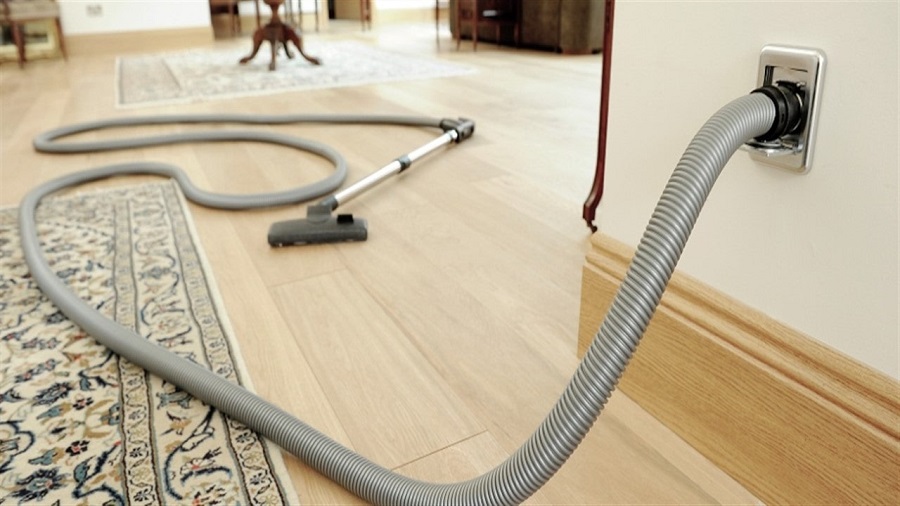
A central vacuum system offers a powerful and convenient way to keep your home clean. Unlike traditional portable vacuums, its main components are hidden within your walls, with only inlets and a hose visible in your living spaces. This setup provides superior suction power and a much quieter cleaning experience.
Central vacuums are designed for whole-house cleaning, integrating a motor unit, dust canister, and exhaust system, usually installed in a garage, basement, or utility room. This powerful unit connects to a network of pipes running through your walls, leading to inlets strategically placed in different rooms. When you need to clean, you simply attach a hose and cleaning attachments to the nearest inlet, making it a more efficient and less disruptive cleaning solution for larger homes.
How Central Vacuum Systems Work
The operation of a central vacuum system is quite straightforward, relying on a network of pipes and a powerful, stationary unit. When you plug a hose into a wall inlet, you complete an electrical circuit. This circuit activates the main vacuum unit, which starts drawing air and debris through the hose and into the system’s pipes.
The air and dirt travel through these pipes to the central power unit. Inside this unit, a motor creates strong suction. The debris is then separated from the air, typically falling into a large collection canister or bag. Finally, the filtered air is exhausted outside your home, which significantly improves indoor air quality by preventing fine dust particles from being recirculated.
The Main Components
A central vacuum system has several key parts that work together to clean your home. Understanding these components helps in appreciating the system’s efficiency and maintenance needs.
- Power Unit: This is the heart of the system, containing the motor and the dirt collection receptacle. It’s the most substantial part and is usually installed in a place where noise is not a concern, like a garage or basement.
- Piping Network: A system of PVC pipes is installed within the walls, floors, and ceilings of your home. These pipes connect the power unit to the inlets in each room.
- Inlets: These are the wall openings where you plug in the vacuum hose. They are typically located in convenient spots in each room, allowing for easy access.
- Hose and Attachments: A long, flexible hose (often 30 to 40 feet) connects to the inlet. Various cleaning attachments, such as brushes, crevice tools, and upholstery tools, can be connected to the hose for different cleaning tasks.
- Exhaust Vent: The power unit exhausts filtered air outside the home. This is a crucial feature for improving indoor air quality, as it removes fine dust and allergens from the living space.
Advantages Of Central Vacuums
Central vacuum systems offer several benefits over traditional portable vacuums, making them a popular choice for homeowners seeking a more effective and comfortable cleaning experience. These advantages range from superior performance to improved health and convenience.
Superior Suction Power
One of the biggest advantages is the stronger suction power. Because the motor is larger and more powerful than those in portable vacuums, and the unit is not confined by a small body, it can generate significantly more airflow and vacuum pressure. This deep cleaning capability is ideal for removing embedded dirt, dust, and pet hair from carpets and upholstery.
Quieter Operation
Traditional vacuums can be very loud, making cleaning a disruptive chore. With a central vacuum, the noisy motor is located away from your living areas, often in a basement or garage. This means the sound you hear in the room is primarily the airflow, making it much quieter and allowing you to clean without disturbing others, even at night.
Improved Indoor Air Quality
Unlike portable vacuums that can recirculate fine dust particles back into the air, central vacuums exhaust the air and fine debris outside your home. This process significantly reduces allergens, dust mites, and other irritants in your indoor environment. This is a major benefit for people with allergies or asthma, contributing to a healthier living space.
Convenience And Ease Of Use
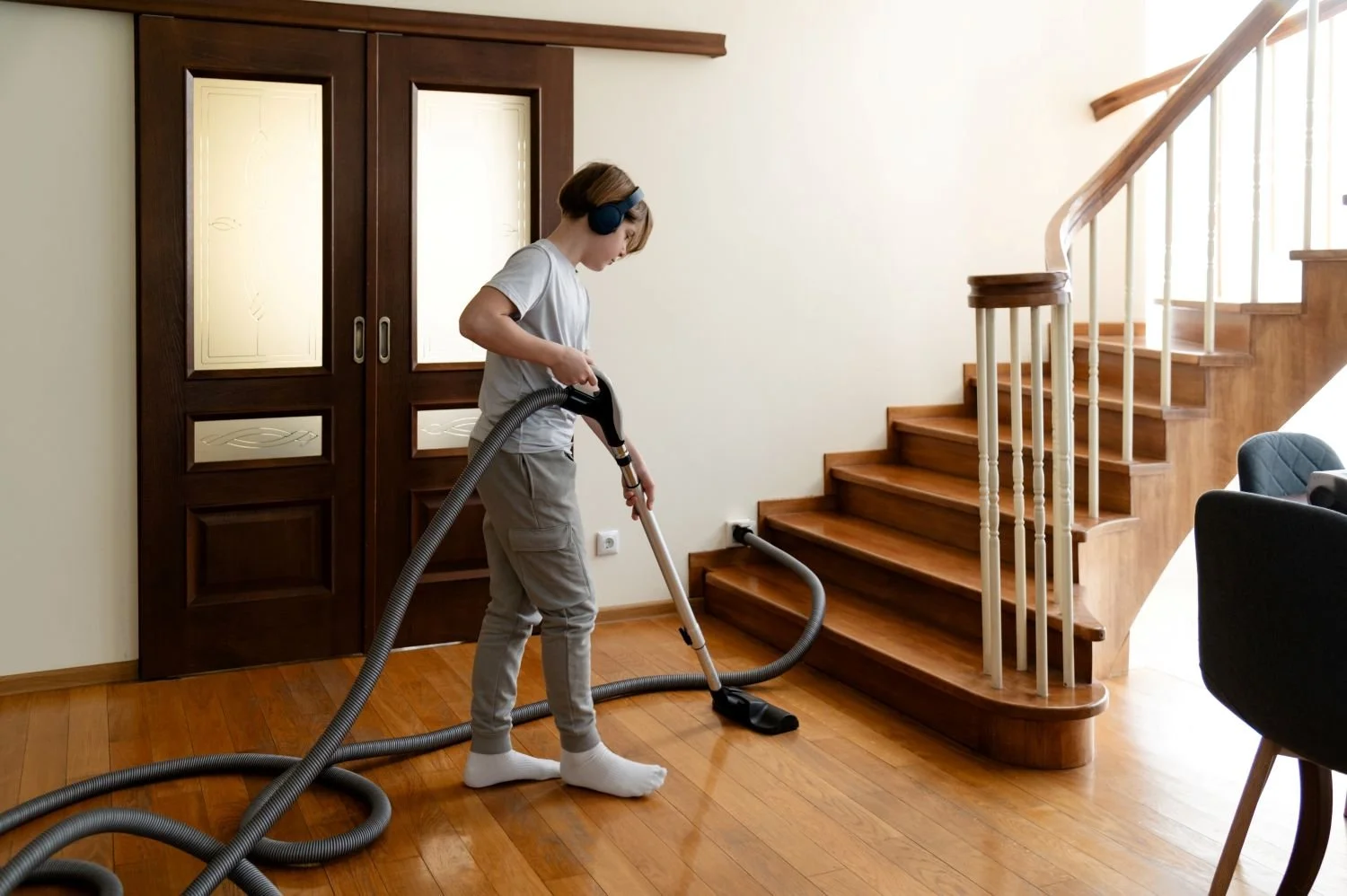
The long hoses and multiple inlets mean you don’t have to carry a heavy vacuum cleaner from room to room or plug and unplug it multiple times. You simply carry the lightweight hose and attachments. This makes cleaning more convenient and less physically demanding, especially in larger homes.
Durability And Longevity
Central vacuum systems are built with robust components and are designed to last. The stationary nature of the power unit means it can be larger and more durable than portable models. Many systems are built to last for 20 years or more, often outlasting multiple portable vacuums.
Central Vacuum System Vs. Portable Vacuums
When comparing central vacuums to their portable counterparts, several key differences emerge that impact performance, convenience, and overall value. Understanding these distinctions can help homeowners decide which type of vacuum best suits their needs.
Here’s a look at how they stack up:
| Feature | Central Vacuum System | Portable Vacuum Cleaner |
|---|---|---|
| **Suction Power** | Significantly stronger and more consistent | Varies greatly; generally less powerful |
| **Noise Level** | Very quiet in the living space; motor is distant | Can be very loud and disruptive |
| **Air Quality** | Exhausts air outside, improving indoor air quality | Often recirculates fine dust and allergens |
| **Convenience** | Lightweight hose, multiple inlets, no carrying unit | Requires carrying the unit, plugging/unplugging |
| **Maintenance** | Emptying a large canister/bag periodically | Emptying smaller bags/canisters frequently, filter cleaning |
| **Lifespan** | Typically 20+ years | Typically 5-10 years |
| **Installation** | Requires professional installation (in-wall pipes) | No installation needed |
| **Cost** | Higher upfront cost | Lower upfront cost |
A notable advantage of central vacuums is their ability to handle larger debris without clogging. The wide diameter of the pipes allows for easier passage of larger particles that might block the hoses or internal mechanisms of a portable vacuum.
Installation And Maintenance
Installing a central vacuum system is typically a job for professionals, especially in existing homes. However, understanding the basic process and maintenance requirements can be helpful.
Installation Process
For new construction, pipes are installed within the walls and floors during the framing stage. In existing homes, installers will carefully run pipes through walls, attics, or basements to connect the power unit to strategically placed inlets. This often involves cutting small openings in drywall, which are then repaired.
The installation includes mounting the power unit in its designated location and connecting the pipes to it. Finally, the inlets are installed in rooms, and the exhaust vent is fitted to the exterior of the house. The entire process can take a day or two, depending on the home’s size and complexity.
Maintenance Requirements
Central vacuums are known for their low maintenance. The primary task is emptying the dirt collection receptacle, which is much larger than that of a portable vacuum. Depending on the size of your home and how often you clean, this might need to be done only a few times a year.
Some systems use disposable bags, while others have canisters that can be emptied directly into a trash bin. It’s also important to check the filter periodically and clean or replace it as recommended by the manufacturer. Occasionally, you may need to clear a blockage in the pipe system, though this is rare due to the large pipe diameter and powerful suction.
Pro Tip: Regularly check the inlet ports for any obstructions and ensure the hose connections are secure. A simple visual inspection can prevent minor issues from becoming larger problems.
Considerations When Buying
Choosing a central vacuum system involves looking at several factors to ensure you get the right fit for your home and cleaning needs. The initial cost is higher than for most portable vacuums, so it’s important to make an informed decision.
Power Unit Size And Capacity
Central vacuum units are rated by horsepower, suction (water lift), and airflow (CFM). A larger home or one with thick carpets will require a more powerful unit. Consider the size of your home and the types of flooring

