

When your central vacuum motor suddenly stops working, it can be a frustrating experience. This powerful cleaning system, designed for convenience and efficiency, relies on its motor to create the strong suction needed to clean your home. If it’s silent, your cleaning routine is interrupted.
Understanding why your central vacuum motor is not working involves looking at a few common culprits. From simple issues like power supply problems to more complex mechanical or electrical failures, pinpointing the cause is the first step toward a solution. This guide will help you diagnose the most frequent reasons for a non-functional motor and suggest how to address them.
Power Supply Issues
The most basic reason a motor won’t work is a lack of power. Before assuming a motor failure, it’s crucial to check the power source.
Circuit Breaker Or Fuse
Central vacuum systems draw a significant amount of power, and they are connected to your home’s electrical system through a dedicated circuit. It’s common for the circuit breaker protecting the vacuum unit to trip. This happens when there’s an overload or a short circuit, which is a safety mechanism to prevent damage.
Check your home’s electrical panel for a tripped breaker. If you find one that’s in the “off” or middle position, flip it completely to “off” and then back to “on. ” If the breaker trips again immediately, there might be a more serious electrical issue that requires professional attention.
Similarly, if your system uses fuses, check if the fuse has blown and needs replacement.
Power Cord And Connections
Ensure the central vacuum unit is properly plugged into the outlet. While most central vacuums are hardwired, some portable or older models might have a power cord. If yours does, inspect the cord for any damage, such as cuts or frayed wires.
A damaged cord can prevent power from reaching the motor.
Also, verify that the outlet itself is receiving power. You can test this by plugging in another small appliance, like a lamp or phone charger. If that appliance doesn’t work, the problem lies with the outlet or the circuit, not the vacuum itself.
Blockages And Airflow Problems
A central vacuum motor needs clear airflow to operate efficiently and to prevent overheating. If the system is clogged, it can cause the motor to shut down or fail to start.
Clogged Vacuum Canister
The collection bin or canister where debris is stored can become full. Many central vacuum models have a safety feature that automatically shuts off the motor when the canister reaches capacity. This prevents overflow and potential damage.
Check the canister and empty it if it’s full. Ensure the seal is properly seated when you close the canister; a loose seal can also cause performance issues.
Blocked Hoses And Inlet Valves
Obstructions in the vacuum hose or within the inlet valves (where you plug in the hose) can severely restrict airflow. This buildup of debris forces the motor to work harder, leading to overheating and a shutdown.
Disconnect the hose from the central unit and visually inspect it for blockages. You can often dislodge minor clogs by using a broom handle or a plumber’s snake. Check the inlet valves as well; sometimes, larger items can get lodged there.
Full Or Dirty Filter
Most central vacuum systems have one or more filters designed to protect the motor from fine dust particles. If these filters become clogged with dirt and debris, they drastically reduce airflow.
Locate the filter(s) in your central vacuum unit. Consult your owner’s manual for their exact location and cleaning or replacement instructions. Some filters are washable, while others need to be replaced periodically. A dirty filter can cause the motor to overheat and shut down.
Motor And Electrical Component Failures
If power is reaching the unit and there are no apparent blockages, the issue might be with the motor itself or other electrical components.
Overheating Protection
As mentioned, central vacuum motors have thermal overload protectors. These are designed to shut off the motor if it gets too hot. This can happen due to prolonged use, restricted airflow, or internal motor issues.
If the motor shut off due to overheating, allow it to cool down completely for at least 30-60 minutes before attempting to turn it back on. If it overheats again shortly after restarting, it indicates a persistent problem that needs professional diagnosis.
Worn-out Motor Brushes
For many central vacuum motors, carbon brushes are essential components that transfer electricity to the motor’s rotor. Over time, these brushes wear down. When they become too short, they can no longer make proper contact, and the motor will stop working.
Replacing motor brushes is a common maintenance task for some vacuum models. However, this procedure can be intricate and requires some mechanical skill. If you’re not comfortable with this type of repair, it’s best to call a qualified technician.
Motor Failure
In some cases, the motor itself may have failed due to age, wear and tear, or a manufacturing defect. Motors are complex and can develop internal issues, such as damaged windings or bearing problems.
Motor failure is typically the most expensive repair. If your central vacuum unit is old, it might be more cost-effective to replace the entire unit rather than repairing or replacing the motor.
Control System And Switch Issues
The central vacuum system has controls that signal the motor to turn on and off. Problems with these can prevent the motor from activating.
Wall Inlet Switch Malfunction
The inlet valves on your walls have a switch that activates the vacuum motor when you plug in the hose. If this switch is faulty, it won’t send the signal to start the motor.
Test the switch by plugging in the hose and ensuring it’s securely connected. If multiple inlets are not working, the issue might be with the central unit’s control board. If only one inlet is affected, the switch in that specific valve is likely the problem.
Hose Switch Or Power Unit Switch
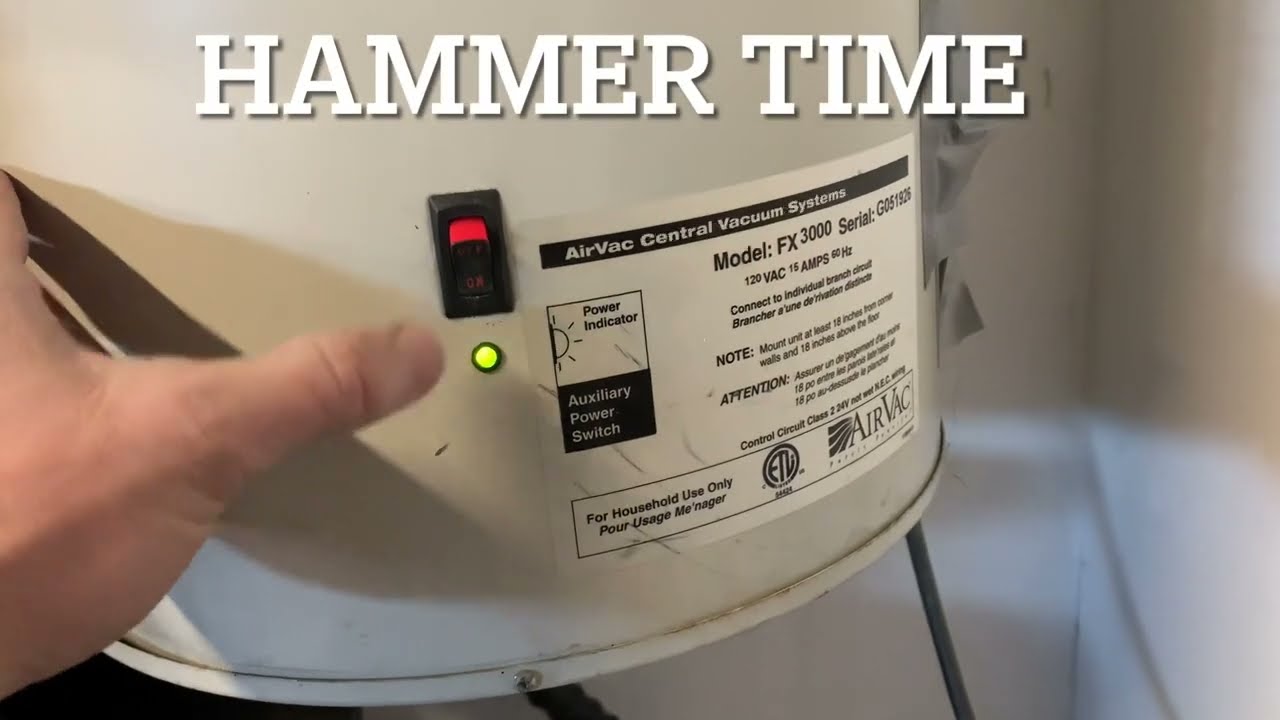
Many central vacuum hoses have a switch on the handle or wand to turn the vacuum on and off. Power units also have a main on/off switch.
Check if the switch on your hose is functioning correctly. If you have a direct-connect hose, ensure it’s properly seated in the wall inlet. Verify that the main switch on the power unit is in the “on” position.

Maintenance And Age
Like any appliance, central vacuums require regular maintenance. Neglecting this can lead to premature failure.
Lack Of Regular Cleaning
Failing to empty the canister, clean or replace filters, and check for hose blockages are common reasons for performance issues and motor problems. A well-maintained system runs better and lasts longer.
Pro Tip: Make it a habit to check your central vacuum’s canister weekly and inspect filters monthly. This simple routine can prevent many common issues.
Age Of The Unit
Central vacuum systems can last for many years, often 15-20 years or even more with proper care. However, as they age, components like the motor and electrical parts are more prone to failure. If your unit is quite old and has had frequent problems, it might be nearing the end of its lifespan.
Troubleshooting Steps Summary
When your central vacuum motor is not working, follow these steps:
- Check Power: Verify the circuit breaker or fuse is on. Ensure the unit is plugged in correctly (if applicable) and the outlet has power.
- Inspect for Blockages: Empty the canister. Check the hose and inlet valves for obstructions.
- Examine Filters: Locate and clean or replace dirty filters.
- Test Switches: Ensure wall inlet switches, hose switches, and the main unit switch are functioning.
- Allow Cooling: If the motor shut off, let it cool down completely.
If these steps don’t resolve the issue, it’s time to call a professional. Many repairs, especially those involving motor replacement or complex electrical diagnostics, are best left to experienced technicians.

Frequently Asked Questions
Why Does My Central Vacuum Turn On For A Second And Then Shut Off?
This is often a sign of overheating protection kicking in. The motor might be running too hot due to restricted airflow (clogged filters, hose, or canister) or an internal motor issue. Allow it to cool down completely, then check for blockages.

