

Central vacuum systems are known for their powerful suction and ability to clean an entire home with ease. But when it comes to a common household challenge like cleaning stairs, many people wonder if these systems are up to the task. The good news is that central vacuums can indeed clean stairs effectively, but the method and tools used are crucial for a successful and efficient cleaning experience.
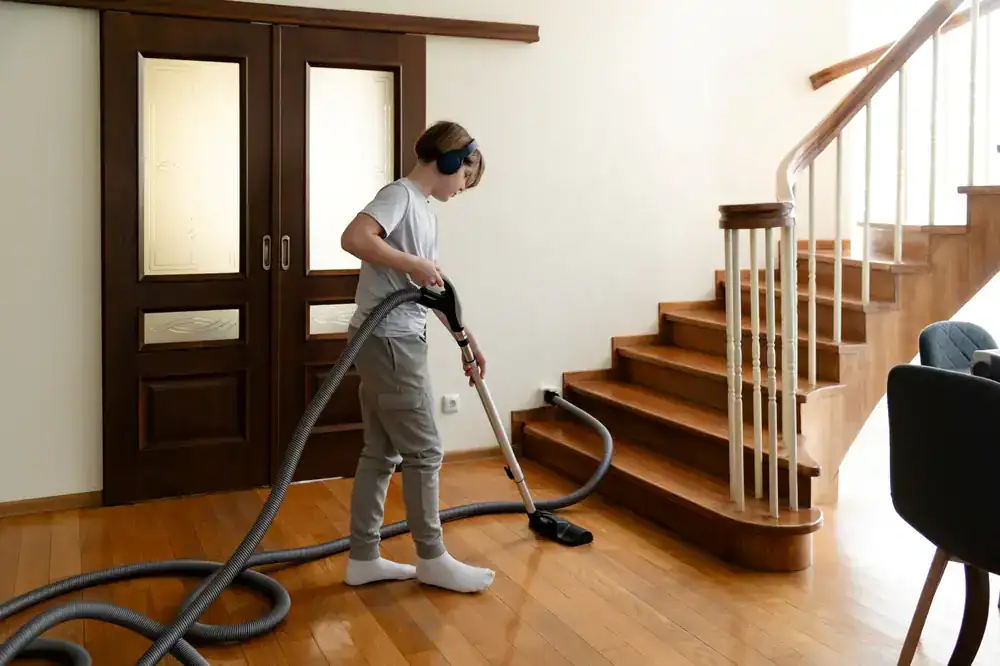
The effectiveness of a central vacuum on stairs largely depends on the accessories you use and how you approach the task. Unlike portable vacuums that you carry up and down, a central vacuum system has a long hose that reaches the cleaning area.
This can be a significant advantage on stairs, reducing the effort of moving heavy equipment. However, the length and flexibility of the hose, along with specialized attachments, play a key role in how well you can maneuver and clean every nook and cranny of your staircase.
The Advantages Of Central Vacuums For Stair Cleaning
Central vacuum systems offer several benefits when tackling dirty staircases. Their powerful suction is a major advantage, capable of pulling out deep-seated dirt, dust, and pet hair from carpeted stairs. This deep cleaning power is often superior to that of many portable vacuums.
Another significant benefit is the reduced strain on your body. Instead of lugging a heavy vacuum cleaner up and down multiple steps, you only need to manage a lightweight hose and attachment. This makes cleaning stairs much more manageable, especially for individuals with physical limitations or for homes with many flights of stairs.
The system’s quiet operation within the home is also a plus. While the central unit makes noise, the vacuuming action on the stairs is much quieter as the main motor is located away from the living space, often in a garage or basement. This means you can clean your stairs without disturbing other household members or neighbors.
Essential Tools For Cleaning Stairs With A Central Vacuum
To make stair cleaning with a central vacuum as easy and effective as possible, you need the right tools. The standard hose that comes with your central vacuum is often long enough, typically ranging from 30 to 35 feet. However, the attachments are where the magic happens.
Specialized Stair Attachments
Several attachments are designed to make stair cleaning more efficient. One of the most useful is a mini motorized brush head. This attachment has its own small motor that powers a brush roll, much like the one on a upright vacuum. It’s excellent for agitating carpet fibers on stairs to loosen dirt and hair, making it easier for the central vacuum’s suction to pick them up.
Another helpful tool is a crevice tool or dusting brush. These are essential for cleaning the edges of the stairs, the risers, and any tight corners where dirt tends to accumulate. The crevice tool’s narrow design allows it to reach into those small spaces, while the dusting brush can gently remove cobwebs or dust from railings and baseboards along the stairs.
A wide floor nozzle can also be useful for covering larger areas of carpeted stairs quickly. While not specifically designed for stairs, its width can speed up the cleaning process on the treads.
Hose Management
Managing the vacuum hose on stairs is a common challenge. A hose that is too stiff or unwieldy can be difficult to maneuver around corners and steps. Some users find that a flexible hose is much easier to handle.
Pro Tip: If your central vacuum hose feels too stiff or heavy, consider purchasing a more flexible model or a shorter hose if you primarily use it for spot cleaning or smaller areas like stairs.
Step-by-step Guide To Cleaning Stairs With A Central Vacuum
Cleaning stairs effectively with a central vacuum involves a systematic approach. Here’s how to do it:
- Assemble Your Tools: Gather your central vacuum hose, the power unit (ensure it’s turned on and the inlet valve is open), and your chosen attachments: a mini motorized brush head, a crevice tool, and a dusting brush.
- Connect the Hose: Plug the hose into the nearest wall inlet valve. Ensure the connection is secure.
- Start at the Top: Begin cleaning from the top of the stairs. This way, any dust or debris you dislodge will fall downwards, and you can vacuum it up as you work your way down.
- Use the Motorized Head: Attach the mini motorized brush head to the hose. Start vacuuming the treads, working from the back of the step towards the edge. The brush action will loosen embedded dirt and hair.
- Clean the Risers: Use the motorized head or switch to a crevice tool to clean the vertical part of each step (the riser). This area often collects dust and cobwebs.
- Edge Cleaning: Use the crevice tool to get into the tight spaces where the treads meet the risers, and along the edges of the staircase. This is where dirt often hides.
- Detailing: Use the dusting brush attachment for cleaning banisters, railings, and any decorative elements on or around the stairs.
- Work Downwards: Continue this process step-by-step, moving down the staircase. Be mindful of where you place the hose to avoid tripping.
- Final Pass: Once you’ve cleaned all the steps, make a final pass with the main attachment to pick up any remaining debris.
- Disconnect and Store: Turn off the central vacuum unit, disconnect the hose, and store your attachments properly.
Considerations And Potential Challenges
While central vacuums are great for stairs, there are a few things to keep in mind. The weight and stiffness of the hose can be a challenge, especially on winding staircases. If the hose is too long, it can become cumbersome to manage, and you might find yourself dragging it around or tripping over it.
Another factor is the reach of the inlet valve. You need to ensure that the wall inlet you use is close enough to the staircase to allow the hose to reach comfortably without being stretched too taut. For homes with multiple staircases or those located far from the central unit, you might need to install additional inlet valves.
Comparing Stair Cleaning Methods
When it comes to cleaning stairs, central vacuums stack up well against other common methods. Portable vacuums, like uprights or canisters, require you to carry the unit itself or its heavier components up and down the stairs. This can be physically demanding and less convenient.
Handheld vacuums are lightweight and easy to maneuver, but their suction power and dustbin capacity are often limited. They are best for quick touch-ups rather than deep cleaning.
Broom and dustpan methods are generally ineffective for carpets and can simply move dust around rather than capturing it.
Here’s a brief comparison:
| Cleaning Method | Pros | Cons | Best For |
|---|---|---|---|
| **Central Vacuum** | Powerful suction, lightweight hose | Hose management can be tricky, requires attachments | Deep cleaning, regular maintenance |
| **Portable Upright/Canister** | All-in-one units, good suction | Heavy to carry, can be bulky on stairs | Homes without central vacuum systems |
| **Handheld Vacuum** | Lightweight, easy to maneuver | Low power, small dustbin, not for deep cleaning | Quick spot cleaning, small messes |
| **Broom and Dustpan** | Simple, no power needed | Ineffective on carpets, can spread dust | Hard floors, quick sweeps |
Maintaining Your Central Vacuum For Optimal Stair Cleaning
Regular maintenance of your central vacuum system ensures it performs at its best, especially when tackling stairs. This includes emptying the collection bin or bag regularly. A full bin reduces suction power, making your stair cleaning less effective.
Also, check the hose and attachments for blockages or damage. A clogged hose will significantly reduce airflow and suction. Periodically inspect the brush roll on your mini motorized head to ensure it’s free of tangled hair and debris, which can hinder its performance. Keeping the system clean and well-maintained is key to efficient stair cleaning.


