

For many families, a dart board can seem like a fun addition to game rooms or social spaces. Darts is a classic activity, offering friendly competition and skill-building. But when it comes to children, questions arise about safety. Can kids use a dart board without risk? What steps should parents take to protect them? This article explores the risks, safe practices, and practical solutions for families interested in darts. If you’re considering a dart board for your home, you’ll find clear advice here.
Understanding Dart Boards And Darts
Dart boards come in various forms. The traditional type uses sharp steel-tipped darts and a board made from sisal fibers. There are also soft-tip dart boards, which use plastic darts and electronic scoring. Each kind offers a different experience and level of safety.
A standard dart board is about 18 inches in diameter and hung so the bullseye is 5 feet 8 inches from the floor. Darts are usually 6–8 inches long and weigh between 16–26 grams. When thrown, they can travel at speeds over 20 mph.
This means darts can cause injury if not used carefully.
Soft-tip boards are more common in homes with children. They reduce the risk of punctures and bruises. However, even plastic darts can cause harm if misused.
Safety Risks For Kids Using Dart Boards
Let’s look at the main risks children face with dart boards:
- Puncture wounds: Steel-tipped darts can pierce skin or eyes if thrown carelessly. According to the Consumer Product Safety Commission, over 1,500 dart-related injuries are reported in the US each year, mostly among children.
- Bruises and cuts: Even soft-tip darts can cause bruises if thrown with force.
- Eye injuries: Darts pose a risk to eyes. Eye injuries can lead to permanent vision problems.
- Choking hazards: Small parts from broken darts or boards can become choking risks, especially for kids under age 3.
- Falls and slips: Running to retrieve darts or playing in crowded spaces increases the chance of tripping.
- Aggressive play: Young children might treat darts as toys, leading to horseplay and accidents.
Non-obvious insight: Many parents overlook secondary risks like children climbing furniture to reach dart boards or stepping on fallen darts.
Age Recommendations For Dart Boards
Most dart manufacturers provide age guidelines. Generally, steel-tip dart boards are recommended for ages 12 and up. Soft-tip boards can sometimes be used by children as young as 6, but supervision is always required.
Here’s a comparison of dart board types and recommended ages:
| Type | Recommended Minimum Age | Main Safety Features |
|---|---|---|
| Steel-tip Dart Board | 12 years | Sharp darts, no safety lock |
| Soft-tip Dart Board | 6 years | Plastic tips, electronic scoring |
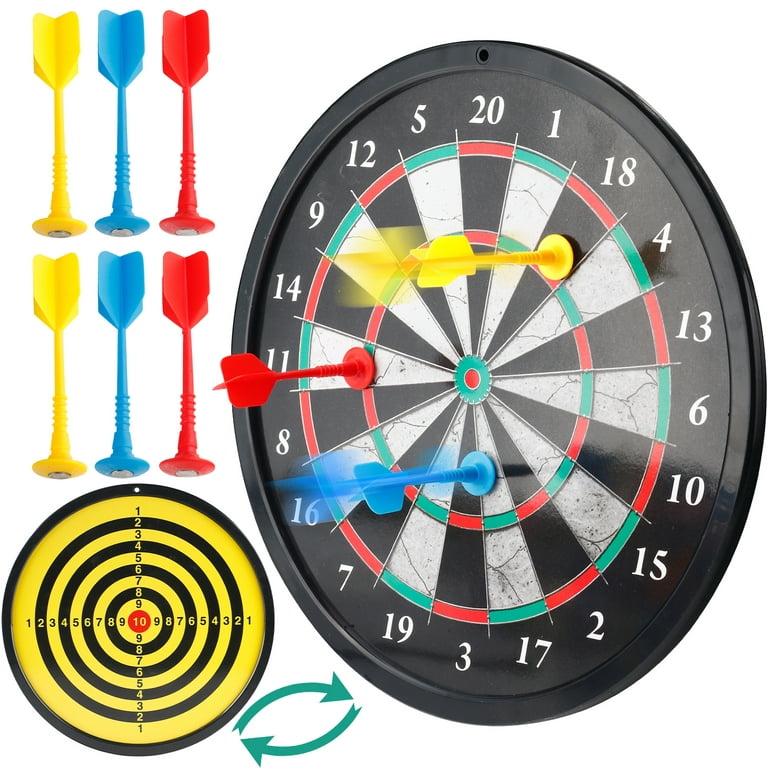
| Magnetic Dart Board | 3 years | No sharp points, lightweight darts |
Magnetic dart boards are a safer option for younger kids. These boards use darts with flat magnets, eliminating the risk of puncture wounds. However, they offer less realistic gameplay.
Choosing A Safe Dart Board For Kids
Safety starts with choosing the right equipment. Here are key factors to consider:
- Dart tip material: Prefer plastic or magnetic tips for children.
- Board material: Electronic boards often have built-in scoring and safety features.
- Size and weight of darts: Lighter darts reduce injury risk.
- Durability: Cheap darts break easily, creating sharp edges and small parts.
- Supervision requirement: Boards that require adult setup or scoring help keep kids safer.
Let’s compare the main features of popular dart boards for children:
| Feature | Steel-tip | Soft-tip | Magnetic |
|---|---|---|---|
| Tip Material | Steel | Plastic | Magnet |
| Risk Level | High | Medium | Low |
| Age Suitability | 12+ | 6+ | 3+ |
| Gameplay Realism | High | Medium | Low |
A non-obvious insight: Some electronic dart boards have automatic scoring, which reduces the need for kids to walk near the board and retrieve darts, lowering accident risk.
Setting Up A Safe Dart Board Area
The way you set up the dart board matters as much as the board itself. Here’s how to create a safe playing area:
- Choose a clear space: The area should be free of obstacles, furniture, and breakable items.
- Wall protection: Use a backboard or surround to catch missed darts. This also protects walls and reduces bounce-back.
- Distance markers: Mark the throwing line (usually 7 feet 9 inches from the board). Children should stay behind this line.
- Lighting: Good lighting helps players see clearly and avoid accidents.
- Adult supervision: Always have an adult present when young children play.
- Storage: Keep darts out of reach when not in use.
Here’s a quick comparison of safe and unsafe setups:
| Safe Setup | Unsafe Setup |
|---|---|
| Clear, open space | Cluttered area |
| Backboard or wall protector | Exposed wall |
| Marked throwing line | No distance marker |
| Adult supervision | Unattended play |
| Darts stored safely | Darts left out |
Teaching Kids Safe Dart Board Use
Children need clear instructions and rules. Here are practical steps for teaching dart safety:
- Show proper throwing technique: Teach kids to throw darts gently and aim for the board, not people or objects.
- Explain the risks: Make sure kids understand that darts are not toys.
- Enforce rules: Only one person throws at a time. Others must stay behind the thrower.
- Use safety gear: Consider safety glasses for young players, especially with steel-tip darts.
- Monitor play: Watch for signs of roughhousing or unsafe behavior.
Example: A parent can create a simple chart showing “Safe” and “Unsafe” dart actions. Kids can help fill it in, making safety more memorable.

What To Do If An Accident Happens
Even with good preparation, accidents can occur. Parents should know how to respond:
- Minor cuts and bruises: Clean the area, apply pressure, and cover with a bandage.
- Puncture wounds: If a dart punctures skin, remove it carefully, clean the wound, and seek medical advice if bleeding continues.
- Eye injuries: If a dart hits the eye, seek immediate medical attention.
- Choking: If a child swallows a dart part, call emergency services right away.
Report serious injuries to your local safety authority. This helps track risks and improves safety standards.
Benefits Of Dart Boards For Kids
Darts aren’t only about risks—they offer real benefits when used safely:
- Hand-eye coordination: Throwing darts helps develop fine motor skills.
- Math skills: Scoring requires addition and subtraction.
- Focus and patience: The game teaches kids to wait their turn and concentrate.
- Social interaction: Playing darts encourages friendly competition and teamwork.
In a 2026 survey, over 60% of parents said their kids improved their math skills after playing darts regularly. Dart boards can be a valuable learning tool if used responsibly.

Common Mistakes Parents Make
Many parents make mistakes when introducing dart boards to kids:
- Choosing steel-tip darts for young children: This greatly increases injury risk.
- Leaving darts accessible: Kids may play unsupervised.
- Skipping safety lessons: Children need clear rules.
- Ignoring setup: Poor placement leads to accidents.
- Assuming electronic boards are always safe: Plastic darts can still hurt.
Avoid these mistakes by focusing on supervision and equipment choice.
Real-world Examples
Consider these scenarios:
- A 9-year-old playing with steel-tip darts in a crowded room accidentally throws a dart that hits a sibling. The parent had not marked a throwing line or explained safety rules.
- A family uses a magnetic dart board in their living room. The kids play together safely, and no injuries occur over a year.
- An electronic dart board is installed in a garage, but darts are left out. A toddler finds them and puts one in her mouth, creating a choking hazard.
These examples show the importance of setup, supervision, and equipment selection.
Expert Recommendations
Pediatricians and safety experts agree: Kids can use dart boards safely with the right approach. The American Academy of Pediatrics suggests avoiding steel-tip darts for children under 12. Magnetic or soft-tip boards are preferred. Always supervise play and teach clear rules.
For more information on toy safety, visit the Consumer Product Safety Commission.
Frequently Asked Questions
Is It Safe For A 5-year-old To Use A Dart Board?
No, a 5-year-old should only use a magnetic dart board with adult supervision. Steel or plastic-tipped darts are not safe for young children.
Can Darts Cause Permanent Injuries?
Yes, especially if a dart hits the eye or punctures deep skin. Always use safety rules and proper equipment to reduce risk.
How Can I Make Dart Board Play Safer At Home?
Use a magnetic or soft-tip dart board, set up a clear playing area, mark the throwing line, and supervise children during play.
Are Electronic Dart Boards Safer Than Traditional Ones?
They are safer in some ways. Plastic darts reduce puncture risk, and automatic scoring lowers the need for kids to retrieve darts. But accidents can still happen.
What Should I Do If My Child Swallows A Part Of A Dart?
Call emergency services immediately. Choking is a serious risk, and medical help is needed right away.
Final Thoughts
Dart boards can be a safe, fun activity for children—with the right precautions. Choosing age-appropriate equipment, setting up a clear playing area, and teaching rules are key steps. Parents should always supervise, avoid sharp darts, and respond quickly if accidents occur.
By focusing on safety, families can enjoy darts and all its benefits without worry.

