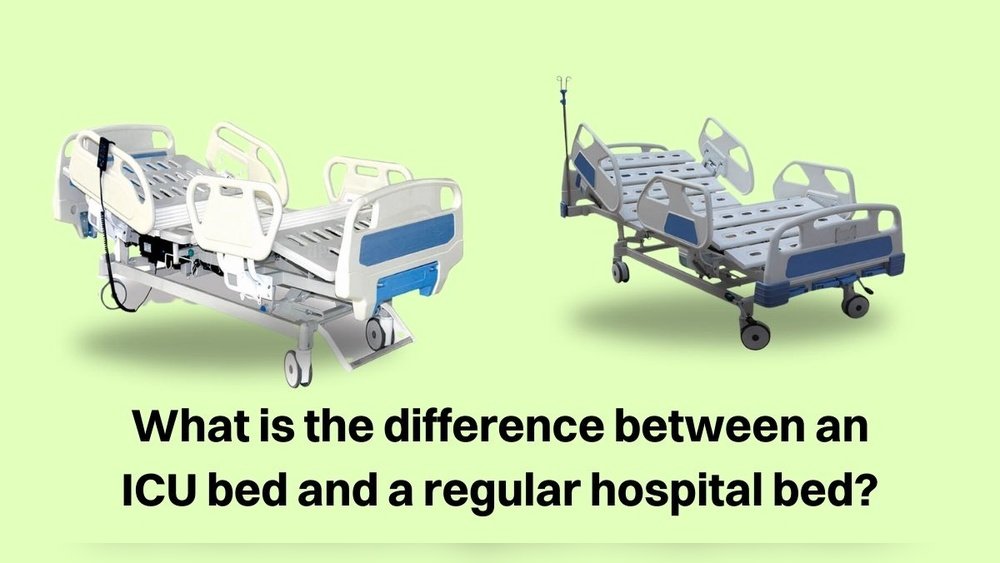
When people hear about hospital beds, most imagine a simple bed with side rails and adjustable headrests. However, not all hospital beds are the same. Two main types stand out in healthcare: the ICU bed and the regular hospital bed. These beds look similar at first glance, but their purpose, features, and technology are quite different. Understanding these differences is important, especially if you or a loved one needs medical care that could involve either type of bed.
Hospitals choose beds carefully, not only for comfort but also for patient safety and medical needs. The bed a patient uses can affect their recovery and even their chances of survival in critical situations. ICU beds and regular hospital beds are designed for different patients and medical conditions.
If you want to know why ICU beds cost more, what special features they have, or why some patients can’t use regular beds, this article will give you detailed answers.
Let’s explore what sets ICU beds apart from regular hospital beds, why it matters, and how these differences influence patient care.
What Is An Icu Bed?
An ICU bed (Intensive Care Unit bed) is a specialized hospital bed made for critically ill patients. These beds are used in intensive care units where patients need constant monitoring and advanced medical support. ICU beds are more than just places to sleep—they are essential tools for doctors and nurses to deliver life-saving care.
ICU beds are designed for patients who may be unconscious, unable to move, or need complex treatments such as ventilators, dialysis, or continuous medication. The bed’s design helps medical staff respond quickly to emergencies. An ICU bed is not just about comfort; it is a piece of high-tech medical equipment.
Key Features Of Icu Beds
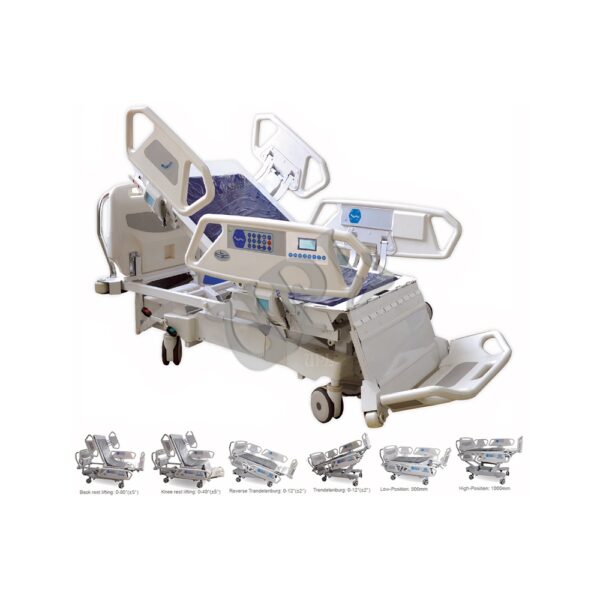
- Advanced adjustability: Head, foot, and height can be adjusted in many ways.
- Integrated monitoring systems: Some beds have built-in monitors for heart rate, oxygen, and more.
- Emergency CPR function: Quick flattening for resuscitation.
- Easy access for medical staff: Removable or collapsible side rails.
- Pressure-relief surfaces: Helps prevent bedsores for patients who can’t move.
- Weighing scales: Allows weight to be measured without moving the patient.
- Special movement options: Trendelenburg and reverse Trendelenburg positions (body tilting).
Who Needs An Icu Bed?
Patients in the ICU often have life-threatening conditions like severe infections, heart attacks, strokes, or major injuries. They may need machines to help them breathe or other life-support devices. ICU beds are crucial for these cases.
What Is A Regular Hospital Bed?
A regular hospital bed is used in general wards for patients who need medical care but are not in critical condition. These beds are for people who need rest, basic medical support, or simple treatments while recovering from surgery, illness, or injury. Regular hospital beds offer some adjustability and safety features but are less advanced than ICU beds.
These beds are suitable for patients who are stable, can move with or without help, and do not need constant, intensive monitoring.
Key Features Of Regular Hospital Beds
- Basic adjustability: Head and foot positions can be changed for comfort.
- Side rails: Usually fixed, can be raised or lowered for safety.
- Manual or electric controls: Some beds use a hand crank; others use buttons.
- Standard mattress: Less specialized for pressure relief.
- Simple design: Fewer electronics and monitoring devices.
Who Uses Regular Hospital Beds?
Most patients in general medical or surgical wards use these beds. This includes people recovering from routine surgery, mild infections, or those needing observation but not intensive care.
Direct Comparison: Icu Bed Vs Regular Hospital Bed
To make the differences clearer, here is a direct comparison of the main features and uses of both bed types.
| Feature | ICU Bed | Regular Hospital Bed |
|---|---|---|
| Patient Type | Critically ill, unstable | Stable, recovering |
| Adjustability | Highly adjustable (head, foot, height, tilt) | Basic adjustments (head, foot, sometimes height) |
| Integrated Monitoring | Often built-in monitors, alarms | Usually none |
| Mattress Type | Pressure-relieving, advanced materials | Standard hospital mattress |
| Emergency Features | CPR mode, fast flattening | Rarely included |
| Mobility | Lockable wheels, easy to move and access | Basic wheels, less focus on quick access |
| Cost | Very high | Moderate |
Why Icu Beds Are More Advanced
ICU beds are built for emergencies. Their design must support fast action and flexibility. For example, a patient in the ICU may suddenly need CPR. The bed can be flattened instantly with one button. The side rails can be removed to give doctors space to work.
In addition, many ICU beds have electrical outlets, oxygen supply ports, and even built-in X-ray trays. These features allow tests and treatments to happen without moving the patient, which can be dangerous for someone in critical condition.
Regular hospital beds do not need these features because their users are more stable. The focus is on comfort, safety, and basic care rather than constant, high-level intervention.
Bed Technology: How Icu And Regular Beds Differ
Hospital beds may look simple, but their technology can be complex. The technology inside an ICU bed is usually far ahead of that in a regular hospital bed. This difference is not just about comfort—it can be a matter of life and death.
Icu Bed Technology
- Electric motors: Allow for smooth, quiet adjustment by nurses or by remote control.
- Multiple sensors: Monitor patient movement, weight, and position.
- Integrated alarms: Alert staff if the patient tries to get up, if vital signs change, or if there is a problem with the bed.
- Connection to central monitoring: ICU beds can send patient data directly to nurses’ stations.
- Special surfaces: Mattresses can inflate or deflate to prevent pressure sores.
Regular Bed Technology
- Manual or basic electric controls: Enough for head and foot adjustments.
- Simple safety alarms: Sometimes included, mostly for fall prevention.
- Basic mattress: Designed for short-term use and simple cleaning.
Example: Movement And Turning
Some ICU beds can turn the patient side-to-side automatically. This is important for patients who can’t move themselves and need help to prevent pneumonia or blood clots. Regular beds do not have this feature because their patients are usually able to change position with help.
Patient Safety: Icu Vs Regular Beds
Patient safety is a top priority in both types of beds, but the approach is different.
Icu Bed Safety
- Continuous monitoring: Vital signs are tracked, and alarms sound for any sudden changes.
- Quick response: Features like one-touch CPR mode allow immediate action.
- Infection control: Materials are chosen to be easy to clean and disinfect.
- Fall prevention: Sensors detect movement, and side rails can be adjusted for staff access.
Regular Bed Safety
- Side rails: Raised to prevent falls, but not as flexible as ICU rails.
- Call buttons: Patients can call for help if they need assistance.
- Simple alarm systems: May alert staff if a patient tries to get up alone.
ICU beds have more safety features because their patients are less able to protect themselves.
Comfort And Recovery
Comfort is important for every patient, but ICU beds go further because their users often spend weeks without moving. Regular hospital beds are also designed for comfort but usually for shorter stays.
Icu Bed Comfort
- Pressure-relieving surfaces: Reduces risk of bedsores and pain.
- Adjustable positions: Patients can be moved into many positions to help with breathing or blood flow.
- Noise reduction: Motors and alarms are quieter to reduce stress.
- Heating and cooling: Some beds control temperature for patient comfort.
Regular Bed Comfort
- Standard mattress: Comfortable for most short-term stays.
- Basic adjustability: Head and feet can be raised for reading, eating, or resting.
- Less focus on long-term needs: Not designed for patients who can’t move for weeks.
Cost Differences
One of the biggest differences is the cost. ICU beds are much more expensive than regular hospital beds.
- ICU bed cost: Can range from $10,000 to over $40,000 per bed, depending on features and technology.
- Regular hospital bed cost: Usually between $1,000 and $5,000.
Why the big difference? ICU beds are packed with technology, advanced materials, and safety features. They also need special maintenance and training for staff. Regular beds are simpler and easier to use.
This high cost means hospitals cannot use ICU beds for all patients. Only those who truly need intensive care get an ICU bed.

Maintenance And Cleaning
Hospitals must keep beds clean and working well to prevent infection and equipment failure.
Icu Bed Maintenance
- Regular checks: All electronics, sensors, and alarms are tested often.
- Deep cleaning: Surfaces are cleaned with strong disinfectants.
- Mattress care: Special surfaces need regular checks for leaks or wear.
Regular Bed Maintenance
- Simple cleaning: Wipe surfaces after each patient.
- Basic checks: Ensure bed moves and rails work.
ICU beds require more care because failure could harm a critically ill patient.
Staff Training And Use
Using an ICU bed is not the same as using a regular hospital bed. ICU beds have more controls, features, and risks if used incorrectly.
Icu Bed Staff Training
- Detailed training: Nurses and doctors learn how to use all features.
- Emergency use: Staff must practice for quick response, such as using CPR mode.
- Tech support: Some hospitals have special teams for bed maintenance.
Regular Bed Staff Training
- Basic operation: Staff learn to adjust the bed and use side rails.
- Safety basics: Preventing falls and helping patients move.
This difference is why not every hospital worker can use an ICU bed without special instruction.
Mobility And Room Access
Moving beds is important in hospitals, especially in emergencies or when transferring patients.
Icu Bed Mobility
- Smooth wheels: Designed for easy movement over hospital floors.
- Locking systems: Beds stay stable during procedures.
- Space for equipment: ICU beds have room for ventilators, IV poles, and more.
Regular Bed Mobility
- Basic wheels: Enough for moving between rooms.
- Simple design: Less space for medical equipment.
ICU beds are heavier but easier to steer because of their advanced wheels and brakes.
Patient And Family Experience
For patients and their families, the type of bed can affect their overall hospital experience.
Icu Bed Experience
- More machines and noise: ICU beds are surrounded by monitors and devices.
- Less privacy: ICU rooms are often open or have glass walls for monitoring.
- Less movement: Patients may stay in one position for long periods.
Regular Bed Experience
- Quieter environment: Fewer machines and alarms.
- More privacy: Regular rooms are often private or shared with only one other person.
- Freedom to move: Patients can get up or adjust themselves with help.
Families may feel more comfortable visiting in a regular room, but ICU beds are critical for the sickest patients.
Infection Control And Hygiene
Infection is a serious risk in hospitals, especially for ICU patients who are already weak.
Icu Bed Infection Control
- Antimicrobial materials: Bed surfaces are designed to resist germs.
- Easy cleaning: Fewer cracks and seams where bacteria can hide.
- Disposable covers: Used to protect against body fluids.
Regular Bed Infection Control
- Standard cleaning: Wipe down after each patient.
- Less focus on antimicrobial surfaces: Suitable for lower-risk patients.
ICU beds help prevent the spread of dangerous infections, which are more common in critical care areas.
Common Myths And Misunderstandings
People often think any hospital bed can be used for any patient, but this is not true. Some common myths include:
- Myth: All hospital beds are basically the same.
- Reality: ICU beds and regular beds serve very different purposes.
- Myth: ICU beds are just more comfortable beds.
- Reality: ICU beds are advanced medical tools with features to save lives.
- Myth: Regular beds can be used in ICU if needed.
- Reality: Regular beds lack critical features for emergencies.
Another non-obvious point: Hospitals cannot simply move ICU beds to regular rooms, as these beds need special power outlets and space for equipment.

When Is An Icu Bed Needed?
Doctors decide to use an ICU bed based on the patient’s condition. Some signs a patient needs an ICU bed:
- Unstable vital signs: Blood pressure, heart rate, or breathing need constant monitoring.
- Life support: Patient needs a ventilator or dialysis machine.
- Frequent interventions: Nurses must check the patient every few minutes.
- Risk of sudden emergency: High chance the patient will need CPR or other rapid treatment.
Moving a patient from a regular bed to an ICU bed is a serious decision. The change means more attention, more machines, and a different level of care.
How Bed Choice Affects Recovery
The right bed can speed up recovery or prevent problems. For example:
- ICU beds prevent pressure sores, infections, and help with breathing for patients who can’t move.
- Regular beds give enough support and safety for patients who are stable and healing.
If a patient who needs an ICU bed is placed in a regular bed, their risk of complications rises. The reverse is also true: putting a stable patient in an ICU bed wastes resources and may make them uncomfortable.
Real-world Example
During the COVID-19 pandemic, many hospitals ran out of ICU beds. Patients who needed high-level care sometimes had to use regular beds. Studies showed that those patients had worse outcomes, higher infection rates, and slower recovery. This crisis highlighted why the difference between ICU beds and regular beds is not just about money or comfort—it is about survival.
The Future Of Hospital Beds
As technology improves, the difference between ICU beds and regular beds may change. New beds may have more features, better safety, and lower costs. Some hospitals are testing “smart beds” that adjust automatically, monitor patients, and even call nurses if there is a problem.
Still, the basic difference will remain: ICU beds are for critical care, and regular beds are for general care.
If you want to learn more about hospital bed standards and guidelines, you can visit the Hospital Bed Wikipedia page.
Frequently Asked Questions
What Makes An Icu Bed More Expensive Than A Regular Hospital Bed?
ICU beds cost more because they have advanced features like built-in monitors, electronic controls, and special mattresses. They also use high-quality materials for infection control and need regular maintenance. The technology and safety systems in ICU beds are not needed for regular beds, which is why regular beds are less expensive.
Can A Regular Hospital Bed Be Used In The Icu If No Icu Beds Are Available?
While it is possible in an emergency, regular hospital beds do not provide the same safety, monitoring, or support as ICU beds. Patients who need intensive care may be at risk if they use a regular bed, especially if they need quick interventions or life-support devices.
Are Icu Beds More Comfortable Than Regular Hospital Beds?
ICU beds are designed for comfort during long stays, with pressure-relieving mattresses and more adjustable positions. However, they are also surrounded by machines and alarms, which can be stressful. Regular beds are comfortable for short-term use but do not offer the same advanced features.
Who Decides If A Patient Needs An Icu Bed?
A doctor or medical team decides if a patient needs an ICU bed based on their condition, risk of sudden emergencies, and need for close monitoring. The decision is made carefully to make sure ICU beds go to those who need them most.
Do Icu Beds Help Prevent Infections Better Than Regular Beds?
Yes, ICU beds use special antimicrobial materials and are easier to clean. This helps reduce the risk of hospital-acquired infections, which are more dangerous for critically ill patients.
Choosing the right bed in the hospital is not a small detail—it is a decision that can save lives. Whether you are a patient, a family member, or a healthcare worker, knowing the difference between an ICU bed and a regular hospital bed helps you understand how hospitals work and why the right equipment matters.