

Preventing an above-ground pool from freezing is essential to avoid costly repairs and ensure a smooth reopening come spring. If your pool isn't properly winterized, ice expansion can crack liners, damage pumps, and even compromise the pool's structure. Learning how to do it right saves you headaches and money.
In our research, proper winterization involves a clear set of steps tailored to your climate and pool setup. For instance, manufacturer specifications for many pool pumps indicate that allowing water to freeze inside them can lead to complete failure, a risk easily mitigated by draining them thoroughly before winter. This guide will walk you through exactly what you need to do.
Quick Answer
To prevent an above-ground pool from freezing, you must winterize it properly before the first frost. This involves cleaning the pool, balancing water chemistry, draining water below the skimmer and return lines, removing equipment, and securing a winter cover. Using pool antifreeze and an air pillow helps protect against ice expansion.
Why Winterizing Your Above-Ground Pool Matters
Ignoring winterization is like leaving your car out in a blizzard without any antifreeze. The problem isn't just a little frost; it's the destructive power of expanding ice. When water freezes, it expands by about 9%, a force strong enough to rupture pipes, crack plastic components, and even warp metal frames.
For an above-ground pool, this can mean a ripped liner, a broken pump or filter, or a compromised frame that will need significant, expensive repairs come spring.
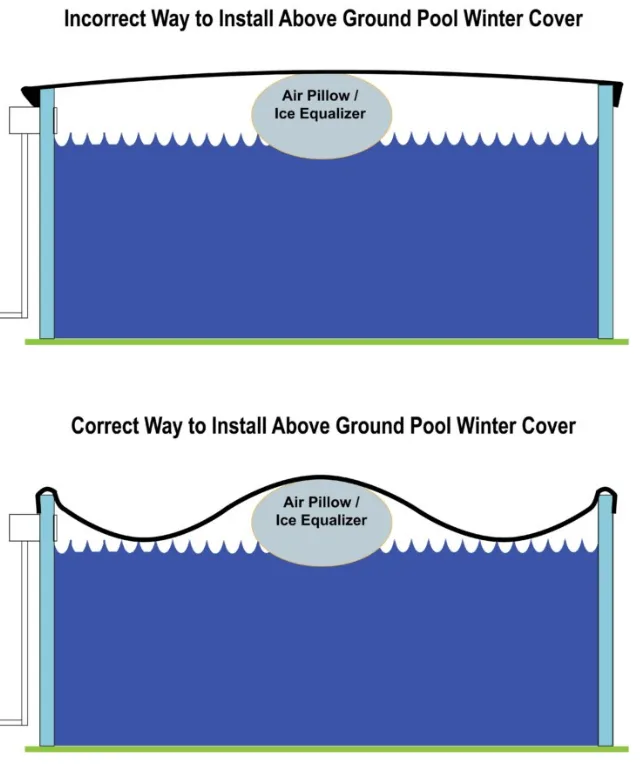
Beyond structural damage, improper winterization can lead to a swampy mess in the spring. Algae can bloom unchecked, and stagnant water can become a breeding ground for bacteria. Essentially, good winterizing practices protect your investment and make opening your pool in the warmer months a much more pleasant experience.
Problems You Face Without Proper Winterizing
- Liner Tears: Ice expansion can easily stress and tear the vinyl liner, a costly replacement.
- Equipment Ruin: Pumps, filters, and heaters can suffer catastrophic damage from freezing water trapped inside.
- Frame Damage: The metal or plastic frame of the pool can bend, warp, or break under pressure from ice.
- Plumbing Splits: Skimmer and return lines, if not properly drained, are highly susceptible to cracking.
- Spring Opening Nightmares: Dealing with algae blooms, debris, and damaged equipment can turn your first swim of the season into a major repair project.
- Financial Loss: Repairing or replacing damaged components or the entire pool can easily run into hundreds or thousands of dollars.
Your Pool's Freezing Point Protection: Key Decisions to Make
Before you grab your tools, a couple of crucial decisions shape your winterization approach. These aren't just minor details; they dictate how much work is involved and how well your pool will survive the cold.
Deciding: Do You Need to Winterize? (Climate & Usage Factors)
This might seem obvious, but let's be clear: if you live anywhere that experiences freezing temperatures, you absolutely need to winterize your above-ground pool. This isn't just for places with snowstorms; even a few nights dipping below 32°F (0°C) can cause problems.
Consider these factors:
- Your Local Climate: Are freezes common and prolonged, or just occasional dips? Areas with consistent sub-freezing temperatures require more robust winterization.
- Pool Usage: Are you closing the pool for the season, or do you plan to use a pool heater to extend your swimming days? If you plan to keep it heated, the winterizing process differs significantly, often involving keeping the pump running.
- Equipment Sensitivity: Some pool equipment, especially pumps and filters, are more sensitive to cold than others. Check your manufacturer's manual for specific temperature recommendations.
If you're in a region that consistently drops below freezing for extended periods, skipping winterization is a high-risk gamble.
Deciding: How Much Winterizing is Enough? (Full vs. Partial)
There are generally two main approaches: full winterization and partial winterization.
- Full Winterization: This is the most common and recommended method for most above-ground pools in areas with freezing winters. It involves draining most of the water, removing equipment, and protecting the plumbing. This method aims to prevent any water from freezing within the pool structure or its essential components.
- Partial Winterization (or "Freeze Protection"): This approach is typically for milder climates where temperatures only occasionally dip below freezing for short durations, or for pools designed for year-round use with a robust heating and circulation system. It might involve leaving some water in the pool and relying on a circulation system and freeze protection devices to keep water moving and prevent ice formation. For most of us, full winterization is the safer bet.
Step-by-Step: How to Winterize Your Above-Ground Pool
Alright, let's get down to business. This is the core process to protect your pool. It’s a good idea to have your pool closing kit and all necessary tools ready before you start.
Preparing the Pool: Cleaning and Chemistry
You can't just shut down a dirty pool and expect it to be fine. Starting with a clean slate is key.
- Clean Thoroughly: Skim all leaves and debris from the surface. Brush the walls and floor to loosen any dirt or algae. Vacuum the pool to remove any settled debris. The cleaner the water, the less organic matter there is to cause problems over winter.
- Balance Water Chemistry: This is critical. You need to adjust your water chemistry before adding winterizing chemicals.
- pH: Aim for 7.2-7.6. This ensures your winterizing chemicals will work effectively.
- Alkalinity: Maintain between 80-120 ppm. This helps stabilize your pH.
- Chlorine: Shock the pool to bring chlorine levels up, killing any bacteria or algae. Let the chlorine level return to a normal range (1-3 ppm) before adding winterizing chemicals, usually a day or two later.
- Add Winterizing Chemicals: Your pool store will sell "winterizing kits" or individual chemicals. These typically include:
- Winter Algaecide: This prevents algae growth throughout the cold months. Follow the dosage instructions on the product label, as it’s usually based on your pool's gallon capacity.
- Shock Treatment: A final dose of shock can help sanitize the water.
- Stain and Scale Preventative: This helps keep your pool surfaces clean and free of mineral buildup.
- Enzyme-based cleaners: Some people add these to break down non-living organic materials like oils and lotions, further reducing potential for staining or cloudiness.
Allow the chemicals to circulate for at least a few hours, or as recommended by the product instructions.
Draining Water and Removing Accessories
Lowering the water level is one of the most important steps to prevent damage to your skimmer and return lines.
- Lower Water Level: For most above-ground pools, you’ll need to drain the water to a level about 4-6 inches below the skimmer opening. This prevents water from entering the skimmer and freezing, which could crack its housing. You can use your pool pump or a submersible pump for this. If you have a multi-port valve on your filter, you might be able to set it to "waste" or "drain" to remove water.
- Remove Accessories: Take out ladders, steps, solar covers, toys, and anything else that isn't a permanent part of the pool structure. These items can trap debris or become damaged themselves. Store them in a dry, safe place.
Protecting Your Equipment and Plumbing
This is where you prevent your expensive pump and filter from becoming ice blocks.
- Drain the Pump and Filter:
- Pump: Disconnect the pump from the power supply. Remove the drain plug(s) on the pump housing (often at the bottom) to allow all water to escape. If there’s a small drain cap on the filter, remove that too.
- Filter: For sand filters, you might need to remove the drain plug at the base. For cartridge filters, remove the cartridge and clean it, then drain the housing.
- Drain Hoses and Plumbing: Disconnect hoses that run from the pump to the filter and from the filter to the pool. Blow out any remaining water from the skimmer and return lines using a shop vac or a specialized air blower. Plug the skimmer opening with a threaded winterizing plug or a gizmo (a device designed to compress if ice forms). Plug the return jet opening as well.
- Store Equipment: Bring your pool pump, filter (if easily removable and small enough), and any other electrical components indoors to a dry, climate-controlled space like a garage or basement. This protects them from extreme temperatures and moisture.
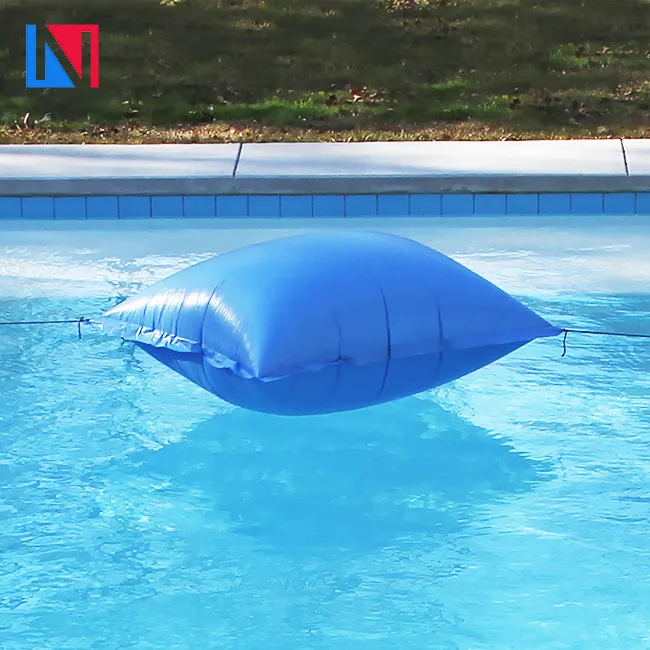
- Install an Air Pillow (Optional but Recommended): Place an inflatable air pillow in the center of the pool before you put the cover on. It sits under the winter cover and absorbs the pressure of expanding ice, creating a pocket of air that protects the cover and reduces ice buildup against the pool walls.
Covering Up: The Right Pool Cover for Winter
The winter cover is your pool's primary defense against the elements. It keeps out leaves, dirt, and debris, and also helps prevent sunlight from encouraging algae growth.
- Types of Covers:
- Winter Cover: These are typically made of a heavy-duty, woven material designed to block light and shed water. They are secured around the pool's perimeter with a cable and winch system, or sometimes water bags.
- Safety Cover: These are more robust and are anchored directly to the deck or pool frame, designed to support significant weight (like a person or animal) to prevent accidental falls into the pool. While excellent for safety, they can be more expensive and are usually a more permanent installation.
- Securing the Cover: Ensure the cover is pulled taut and secured all the way around. Any gaps can allow wind-blown debris to enter. If using a cable and winch, tighten it securely. If using water bags, make sure they are filled properly and placed correctly. For safety covers, follow the manufacturer's specific anchoring instructions.
Add Pool Antifreeze (If Necessary)
In colder climates, or if you couldn't completely drain your plumbing, adding a non-toxic pool antifreeze is a good idea. This lowers the freezing point of any residual water left in your pipes, preventing them from bursting.
- Dosage: Follow the antifreeze product’s instructions carefully. It's usually a specific amount per gallon of water in your plumbing system.
- Application: You typically pour it into the plumbing lines after blowing them out. Ensure it circulates as much as possible to protect all areas. Make sure you are using a product specifically labeled as "pool antifreeze", never use automotive antifreeze, as it is toxic.
Mistakes That Will Cost You
Even with the best intentions, a few common missteps can undo all your hard work and lead to costly damage. Avoiding these is just as important as following the steps correctly.
Common Winterizing Errors and How to Fix Them
- Error: Not draining the water low enough.
- Consequence: Water freezes in the skimmer throat or return line, cracking the plastic or plumbing.
- Fix: Before covering, double-check that your water level is indeed below the lowest point of the skimmer opening. If you’ve already covered it, you may need to partially uncover and drain more water.
- Error: Leaving the pump or filter with water inside.
- Consequence: Frozen water expands and cracks the pump housing or filter tank.
- Fix: Always remove drain plugs and ensure all water is out. Store pumps indoors.
- Error: Not balancing water chemistry before adding winter chemicals.
- Consequence: Winter algaecide and other treatments won't work as effectively, leading to algae growth.
- Fix: Test and adjust pH, alkalinity, and sanitizer levels as the first step of winterization.
- Error: Using a cover that doesn't block sunlight.
- Consequence: Sunlight penetrating the water can still encourage algae growth, even in winter.
- Fix: Invest in a dark-colored, opaque winter cover specifically designed to block UV rays.
- Error: Not securing the cover properly.
- Consequence: Wind can lift the cover, allowing debris and animals into the pool, or the cover itself can get damaged.
- Fix: Use all the provided hardware (cables, winches, water bags, clips) to create a secure seal around the entire pool perimeter.
- Error: Using automotive antifreeze.
- Consequence: Toxic chemicals contaminate your pool water, making it unsafe for swimmers and requiring extensive flushing and cleaning in spring.
- Fix: Always use EPA-approved, non-toxic pool antifreeze.
Essential Pool Winterizing Tools and Chemicals
Having the right gear makes the job much easier and ensures you don't miss critical steps.
Here's a breakdown of what you'll likely need:
| Tool/Chemical | Purpose | Notes |
|---|---|---|
| Pool Water Test Kit | To balance pH, alkalinity, and chlorine levels. | Liquid kits or reliable test strips are fine. |
| Pool Chemicals | Winter algaecide, shock, stain/scale preventer. | 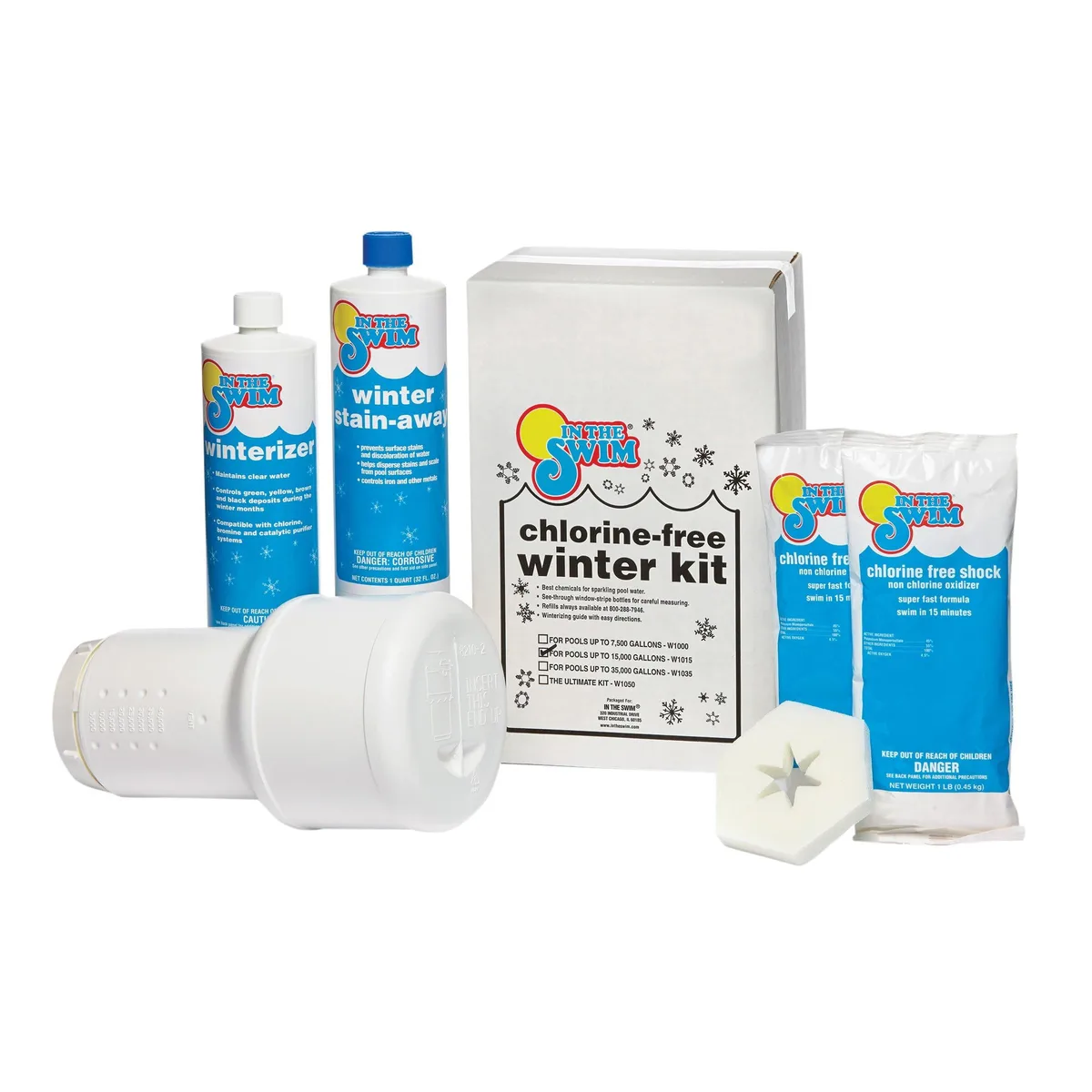 Purchase a reputable pool closing kit. Purchase a reputable pool closing kit. |
| Pool Pump | To drain water from the pool. | Or a submersible pump if your main pump isn't suitable for draining. |
| Shop Vacuum | To blow water out of skimmer and return lines. | Set to "blow" or use a specialized air blower. |
| Winterizing Plugs/Gizmos | To seal skimmer and return lines. | Essential to prevent water entry and ice damage. |
| Pool Winter Cover | To protect the pool from debris and sunlight. | Choose a heavy-duty cover appropriate for your pool size. |
| Cover Cable and Winch | To secure the winter cover tightly around the pool. | Often comes with the cover or is sold separately. |
| Air Pillow(s) | To absorb ice expansion pressure under the cover. | Placed in the center of the pool before the cover goes on. |
| Skimmer Plate (Optional) | Used to block off the skimmer opening when draining. | Some systems use this instead of plugs. |
| Wrench/Screwdriver Set | For removing drain plugs and other components. | Varies by pool and equipment model. |
| Pool Antifreeze | To prevent freezing in exposed plumbing lines (if needed). | Use only non-toxic, pool-specific antifreeze. |
| Buckets | For carrying chemicals or storing small parts. | Always useful around the pool. |
When to Call a Pro
While winterizing an above-ground pool is a manageable DIY task for many, there are times when calling a professional pool service is the smarter choice.
- You're Overwhelmed: If the process seems too complicated or you lack the time, a service professional can handle it efficiently.
- Complex Equipment: If you have an elaborate heating system, saltwater generator, or other advanced equipment, a pro will know the specific winterization requirements.
- Extreme Climates: In areas with very harsh winters and frequent deep freezes, professional winterization might offer an extra layer of security and expertise.
- You've Had Damage Before: If you've experienced damage from freezing in the past, a professional might identify weaknesses in your setup or methods that you missed.
- Uncertainty About Draining: If you're unsure about how to properly drain your pool or protect its plumbing without causing damage, it's best to get expert help.
Hiring a professional ensures the job is done right, offering peace of mind. It's an investment that can save you significant repair costs down the line.
Real Scenarios: How Pool Owners Navigate Winter
We've covered the steps, but seeing how it plays out in different situations can be really helpful. For instance, consider a family in Michigan. They have a 24-foot round above-ground pool.
Their main concern is a severe winter with weeks of sub-zero temperatures.
For them, the process starts in mid-October. They begin by thoroughly cleaning the pool, often vacuuming multiple times in the weeks leading up to the final closing. Water balancing is critical, as they aim for precise chemical levels before adding winterizing algaecide and shock.
They then drain the water about six inches below the skimmer.
Their pump and filter are disconnected, drained, and stored in their garage. They use a shop vac to blow out the skimmer and return lines, then plug them securely. A large air pillow is placed in the center, and a heavy-duty winter cover is anchored down with a cable.
They always add pool antifreeze to the lines just in case.
Contrast this with a homeowner in Georgia. Their winters are milder, with only occasional dips below freezing. They still clean and balance their pool water, but they might only drain it a couple of inches below the skimmer.
They still disconnect and drain their pump and filter, but sometimes store them in a protected shed rather than bringing them inside. The focus here is more on preventing damage from brief cold snaps rather than prolonged freezing.
Final Recommendation: Protecting Your Investment Year-Round
When it comes to preventing an above-ground pool from freezing, there's no room for guesswork. It's about following a proven process to safeguard your pool and its equipment from the destructive forces of ice. The investment in proper winterization pays dividends by preventing costly repairs and ensuring you're ready for a refreshing dip as soon as warmer weather arrives.
Your decision to fully winterize or implement freeze protection depends heavily on your climate and pool setup. For most regions experiencing consistent freezing temperatures, a full winterization protocol, including draining, chemical treatments, and secure covering, is your best defense. Always refer to your pool and equipment manufacturer’s specific winterization guidelines for the most accurate advice tailored to your system.

