

Deciding where to place an above-ground pool can feel a bit like setting up for a science experiment. You’ve probably wondered, "How level does the ground need to be for an above ground pool?" It’s not just about aesthetics; getting this part right is absolutely crucial for the safety and longevity of your pool.
Manufacturer specifications consistently point to the need for a stable, level surface. For example, many pool manufacturers, like those adhering to ASTM standards for backyard pools, recommend a maximum deviation of 1 inch over the pool's diameter for smaller models, and up to 2 inches for larger ones. This strict requirement ensures water distribution is even and the structure isn’t put under undue stress.
Quick Answer
Your above ground pool needs to sit on as level ground as possible. While perfect flatness isn't always achievable, a maximum of 1-2 inches of slope across the pool's diameter is generally accepted. Too much unevenness can cause structural damage, leaks, and unsafe water levels.
Always check your specific pool manufacturer's manual for exact guidelines.
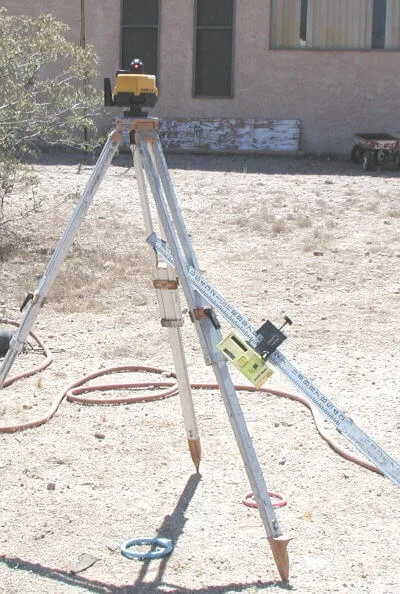
Image source: Bing (Web (fair-use with source credit))
What Does "Level" Actually Mean for a Pool Site?
When we talk about a "level" site for an above-ground pool, it's not about achieving perfectly engineered, laser-flat conditions like you’d find in a laboratory. Instead, it means minimizing any significant tilt or slope across the area where the pool will sit. Think of it as creating a stable, consistent foundation that can support the immense weight of water without shifting or straining.
The Ideal: Perfectly Flat
In an ideal world, the ground would be absolutely, perfectly flat. This scenario means there’s zero difference in elevation from one edge of the pool footprint to the opposite edge. This perfect flatness ensures that the water pressure is distributed evenly around the entire pool wall, and the weight of the water is supported uniformly by the base.
This is the gold standard that manufacturers strive for with their recommendations.
The Reality: Slight Tolerances
However, our reality often involves backyards with natural contours. That’s why manufacturers provide acceptable tolerance ranges. For most above-ground pools, this tolerance is quite small, often no more than 1 inch of difference over the entire diameter of the pool for smaller units, and potentially up to 2 inches for larger, more robust models.
This slight allowance acknowledges that achieving absolute flatness can be challenging for many homeowners. The key takeaway is that "level enough" means staying within these manufacturer-defined limits to prevent issues down the line.
Measuring Your Pool Site for Levelness
Knowing how to measure your intended pool site is the first crucial step. You can’t fix a problem if you don’t know it exists, and you certainly don’t want to discover a significant slope after you’ve assembled your brand-new pool. This process involves a few basic tools and a systematic approach to ensure you’re working with accurate measurements.
Tools You'll Need
You don't need a surveyor's toolkit for this. Most of what you’ll need is probably already around your home or easily obtainable from a hardware store.
- Long Spirit Level: A 4-foot or 6-foot spirit level is ideal. The longer the level, the more accurate your readings will be over a longer distance.
- Measuring Tape: To measure the distance between points and the difference indicated by the level.
- Stakes or Markers: To mark out the pool area and specific measurement points.
- Optional: Laser Level: For larger areas or if you're aiming for extra precision, a laser level can be very helpful, though a good spirit level is sufficient for most situations.
How to Check the Slope: Step-by-Step
Once you have your tools, you can start the measurement process. It’s best to do this after you've roughly marked out the pool's footprint so you know the area you’re concerned with.
- Mark Your Pool Area: Use stakes or spray paint to outline the exact perimeter where your pool will sit.
- Place the Level: Position your spirit level across the diameter of the marked area.
- Check the Bubble: Look at the bubble in the spirit level. If it's perfectly centered, that section is level. If it’s off, you know there’s a slope.
- Measure the Difference: If the bubble is off-center, place shims or small objects of known thickness under the lower end of the level until the bubble centers. Measure the height of these shims. This is your slope measurement for that specific line.
- Measure Across Diameters: Repeat this process across the entire diameter of the pool footprint. You’ll want to check at least one diameter (for round pools) or the longest dimension (for oval pools). For larger or irregularly shaped pools, checking multiple lines across the center is a good idea.
- Document Findings: Note down the maximum slope you find. This number is critical for deciding whether your site needs leveling.

Image source: Bing (Web (fair-use with source credit))
How Much Slope is Too Much? The Critical Numbers
The question of "how much slope is too much" is one of the most important you’ll face. It directly impacts the safety, stability, and lifespan of your above-ground pool. There isn't a single universal number that applies to every pool; it depends heavily on the manufacturer and the pool's specific design.
However, there are some widely accepted benchmarks and critical considerations to keep in mind.
Manufacturer Guidelines: Your First Stop
The absolute best source of information for slope tolerance is your pool's specific installation manual. Manufacturers design their pools with certain structural parameters in mind, and they know what their products can handle. As of 2026, many reputable manufacturers recommend that the ground be level within a very tight tolerance.
For instance, many vinyl-lined pools, like those from popular brands, state that the ground should not deviate more than 1 inch over a 10-foot span, or no more than 1-2 inches across the entire diameter of the pool. Exceeding these limits can void your warranty.
Image source: Bing (Web (fair-use with source credit))
Understanding the Impact of Slope on Your Pool
Why are these numbers so critical? An uneven surface puts asymmetrical stress on the pool's structure.
- Uneven Water Distribution: If one side is lower, that side will hold more water, creating increased pressure on the wall and the ground beneath it. The higher side will have less pressure.
- Structural Strain: This uneven pressure can cause the pool walls to bow outwards or collapse inward, especially on the lower side where the water weight is concentrated. The frame and supports can also be compromised.
- Water Leaks: An uneven surface can strain the liner, leading to premature wear and tear and potential leaks. The water itself might also pool more deeply on one side, exacerbating these issues.
- Pump & Filter Issues: Sometimes, an uneven water level can affect the operation of your pool's pump and filtration system, leading to inefficient circulation or even damage.
Common Pool Installation Ground Prep Mistakes to Avoid
Many people get so excited about the idea of a pool that they rush through the preparation phase, which is a big mistake. The ground itself is the foundation, and if that foundation is weak, the whole structure is at risk. We’ve seen a few recurring errors that can turn a dream pool into a costly problem.
Overlooking the Site Selection
This is more than just picking a spot with sun. You need to consider drainage, proximity to trees (roots and falling debris), and overhead electrical lines. A location that looks great but is prone to water pooling will become a swamp around your pool, undermining the base.
Our research indicates that sites with natural drainage away from the pool area are always preferable.
Not Compacting the Base Properly
Often, people just rake the ground flat and start assembling. This is not enough. The soil needs to be compacted to create a dense, stable base.
If you skip compaction, the ground can settle unevenly once the pool is filled with thousands of gallons of water, leading to sagging or tilting. Aggregates like a thin layer of compacted sand can help, but the underlying soil must be firm.
Ignoring Drainage
Even if the site itself is level, how does water drain away from the pool area? If rainwater or splash-out water pools around the base of the pool, it can saturate the ground, weaken the soil’s bearing capacity, and eventually lead to foundation issues or corrosion of metal components. Consider how water will flow off the site during heavy rain.
When to Get Serious About Leveling: A Decision Guide
So, you’ve measured your site, and you’ve got a number. Now what? Deciding whether your ground is "level enough" or if you need to take corrective action hinges on comparing your measurement to the manufacturer’s recommendations and understanding the risks involved.
This isn't a guessing game; it’s a crucial step in ensuring a safe and successful pool installation.
What to Do with Minor Slopes
If your measurements fall within your pool manufacturer's specified tolerance (typically 1-2 inches over the pool's diameter), you're generally in good shape. You might still want to ensure the area is firm and well-drained. For slopes at the very edge of tolerance, some homeowners opt to add a thin, compacted layer of sand or a specialized pool pad to create a more uniform surface.
This can add an extra layer of protection for the liner and help distribute weight evenly. Always double-check that this addition doesn't effectively increase the overall slope beyond the limit.
When You Need Major Leveling Work
If your measurements exceed the manufacturer's limits, meaning you have more than 1-2 inches of slope across the pool’s footprint, you absolutely must level the ground. Ignoring this can lead to:
- Structural Failure: The pool wall on the lower side will bear significantly more weight, potentially leading to bulging or collapse.
- Liner Damage: A strained liner is prone to tears and leaks.
- Uneven Water Depth: This not only looks bad but can create safety hazards and affect filtration.
For significant leveling, you’ll likely need to excavate the higher side and/or build up the lower side with compacted soil or appropriate fill material. This is often a job best handled by a professional landscaper or a contractor experienced in pool installations, especially for larger pools. It's worth investing in professional help if your site requires substantial grading to prevent costly repairs and potential safety incidents down the road.
Expert Tips for a Stable Pool Foundation
Getting the ground truly ready for your above-ground pool is more than just making it look flat. It's about creating a resilient foundation that can withstand the immense pressure of thousands of gallons of water, plus the constant activity of swimmers. Drawing from manufacturer insights and common installation practices, here are a few key tips to ensure your pool’s base is as stable as can be.
Using Sand vs. Other Base Materials
Many DIY guides recommend a layer of sand as a base for above-ground pools. Sand can be useful for creating a smooth, level surface, especially over a well-compacted sub-base. It conforms well to the pool's liner and can provide a cushioning effect.
However, our research suggests sand alone isn't always the best solution.
- Sand Pros: Easy to level, provides a smooth surface, conforms to liner.
- Sand Cons: Can wash away or shift, especially if drainage is poor. It doesn't offer much structural support on its own if the underlying soil is soft.
Alternative or complementary materials can include finely crushed stone (like paver base or stone dust), which compacts more firmly and offers better drainage. Some manufacturers even offer specialized pool pads made from geotextile or foam materials that provide cushioning and help protect the liner from ground debris. Whichever you choose, the key is that it's compacted well and provides a consistently level surface that allows water to drain away from the pool's base.
Seasonal Considerations
The time of year you choose to prepare your site can also play a role. Trying to level ground when it's waterlogged from heavy rain can be nearly impossible, as the soil won't compact properly and might even turn into mud. Conversely, preparing a site in extremely dry, hot weather might mean the soil is too hard to work with or compact effectively without sufficient moisture.
- Spring/Fall: These seasons often offer more moderate weather, making ground preparation easier. Soil is usually moist enough to compact well without becoming too muddy.
- Summer: Can be challenging if your area experiences heatwaves and drought. You might need to lightly water the soil before compacting to achieve proper density.
- Winter: Generally not recommended due to frozen ground or excessive moisture, both of which make leveling difficult and can lead to settling issues once the weather warms.
If you're preparing the ground in the fall for a spring installation, be mindful of how winter weather might affect your site. Ensure any leveling work is protected from erosion and significant settling before you’re ready to set up the pool.
Ultimately, a well-prepared, level site is the bedrock of a safe and enjoyable above-ground pool experience.
Frequently Asked Questions About Pool Ground Level
Can I put an above ground pool on a slight hill?
While it's tempting to use a natural slope, most manufacturers strictly advise against it. Even a slight hill can cause uneven water pressure, putting stress on the pool walls and potentially leading to collapse or liner damage. The acceptable slope is very minimal, usually just 1-2 inches across the entire pool diameter, so a noticeable hill is almost always too much.
How do I level the ground myself?
You'll need a long spirit level (4-6 feet is good), a measuring tape, and stakes. Mark out your pool area. Place the level across the diameter and measure how much difference there is by centering the bubble with shims or by marking high/low spots.
You can then excavate the high spots or build up the low spots with compacted soil or sand, re-measuring frequently until you're within the manufacturer's tolerance. For significant slopes, consider professional help.
What happens if my pool isn't level?
An unleveled pool can suffer from several serious problems. The most common are uneven water pressure on the walls, which can cause the pool to bow or collapse, and strain on the liner leading to leaks. It can also affect water circulation and filtration, and make the pool look unsightly with water pooling on one side.
In severe cases, it can lead to the pool failing completely.
Do I need a professional to level my yard?
For minor adjustments that fall within the manufacturer's stated tolerance, you can likely handle the leveling yourself with basic tools and some effort. However, if your yard has a significant slope, or if you're installing a very large or expensive pool, hiring a professional landscaper or excavation service is highly recommended. They have the equipment and expertise to ensure the ground is perfectly level and stable, preventing potential damage and ensuring your pool's longevity.

