

Finding the best car vacuum can make a big difference in keeping your vehicle’s interior clean and tidy. A good car vacuum should be powerful enough to suck up dirt, dust, and crumbs from various surfaces like carpets, upholstery, and floor mats. It should also be lightweight and easy to handle, with attachments that can reach tight spaces.
When choosing a car vacuum, consider its suction power, battery life (if cordless), size, and type of filters. Some vacuums are designed specifically for cars, offering compact designs and specialized tools for automotive cleaning. Others are versatile enough for both home and car use.
Key Features To Look For In A Car Vacuum
Several factors contribute to a car vacuum’s effectiveness and user-friendliness. Understanding these features will help you make an informed decision that suits your needs.
Suction Power
This is perhaps the most crucial aspect of any vacuum cleaner. For car interiors, you need enough suction power to lift embedded dirt, pet hair, and stubborn debris from car carpets and seats. Suction power is often measured in Air Watts (AW) or Pascals (Pa). Higher numbers generally mean stronger suction.
Cordless Vs. Corded
Cordless car vacuums offer great convenience and portability. You don’t need to worry about finding a power outlet or managing a long cord. However, they rely on batteries, so battery life and charging time are important considerations. Corded vacuums, on the other hand, usually offer consistent, strong suction without the worry of running out of power, but they require access to a power source, which can be limiting.
Filtration System
A good filtration system is vital for trapping fine dust and allergens, preventing them from being recirculated into the air. Look for vacuums with HEPA filters or multi-stage filtration systems. This is especially important if you or your passengers suffer from allergies.
Attachments And Accessories
Different parts of your car require different cleaning tools. Look for vacuums that come with a variety of attachments, such as:
- Crevice tools: For reaching narrow gaps between seats and in console areas.
- Brush nozzles: To agitate and lift dirt from carpets and upholstery.
- Extension hoses: To extend your reach into harder-to-access areas.
Size And Weight
Since you’ll be maneuvering the vacuum around your car, a lightweight and compact design is highly beneficial. A heavy or bulky vacuum can make cleaning a chore, especially when trying to clean the trunk or under seats.
Top Car Vacuum Options And Their Strengths
Here are some popular types of car vacuums, each with its own advantages.
Handheld Car Vacuums
These are typically small, lightweight, and easy to use for quick cleanups. They are ideal for tackling spills, crumbs, and general dust. Many are cordless, offering excellent portability.
Pro Tip: For pet owners, look for handheld vacuums with specialized pet hair attachments that can effectively remove fur from car seats and carpets.
Portable Wet/dry Vacuums
These versatile vacuums can handle both dry debris and liquid spills. This makes them perfect for dealing with accidental spills of drinks or mud. They often have a larger capacity than handheld vacuums.
Stick Vacuums For Automotive Use
While often designed for home use, some lightweight stick vacuums can be effective for car cleaning. Their longer handles can make it easier to reach the floor of the car and the trunk without bending over as much.
Central Vacuum Systems (less Common For Cars)
Some RVs or larger vehicles might have integrated central vacuum systems. These are built-in and offer powerful suction but are not a typical option for standard cars.

Comparing Popular Car Vacuum Models
To give you a clearer picture, let’s look at some general specifications and features of different types of car vacuums.
| Feature | Handheld Vacuum (Cordless) | Portable Wet/Dry Vacuum | Stick Vacuum (Lightweight) |
|---|---|---|---|
| **Power Source** | Rechargeable Battery | Corded or Battery | Corded or Battery |
| **Portability** | Excellent | Good | Good |
| **Suction Power** | Moderate to High | High | Moderate to High |
| **Capacity** | Small | Medium to Large | Medium |
| **Best For** | Quick cleanups, tight spots | Spills, deep cleaning | General car cleaning |
| **Attachments** | Crevice tool, brush | Various nozzles | Multi-surface brush |
Evaluating Suction Power And Filtration
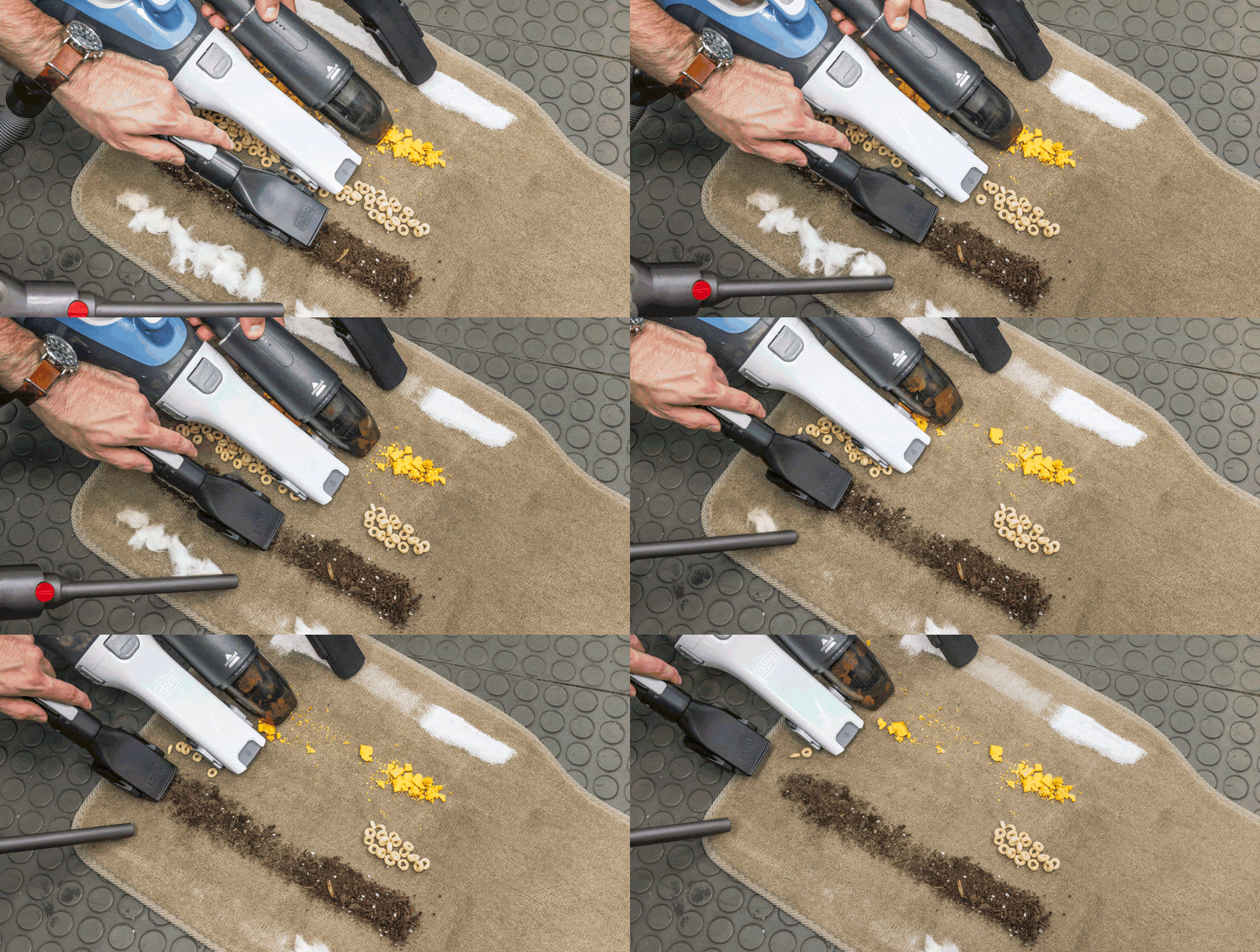
When comparing vacuums, pay close attention to the suction power. While manufacturers may list figures, real-world performance can vary. Look for reviews that discuss how well a vacuum handles common car messes like sand, pet hair, and food crumbs.
The filtration system is also key. A vacuum with a washable filter can save you money on replacements, but ensure it’s effective at trapping fine particles. A HEPA filter is the gold standard for allergen removal.
Here’s a look at common filtration types:
| Filter Type | Description | Effectiveness Against Allergens | Maintenance |
|---|---|---|---|
| **Standard Filter** | Basic filter, traps larger debris. | Low | Replace or clean often |
| **Multi-Stage** | Uses several layers to trap progressively smaller particles. | Medium | Clean or replace |
| **HEPA Filter** | Captures 99.97% of particles 0.3 microns in size. | High | Clean or replace |
| **Washable Filter** | Can be rinsed and reused, often found in various filter types (Standard, HEPA). | Varies by type | Rinse and dry thoroughly |
Cordless Vs. Corded: Making The Right Choice
The decision between a cordless and corded car vacuum often comes down to personal preference and how you plan to use it.
Cordless models offer unparalleled freedom. You can easily move around the car, clean the trunk, and even take it to a public car wash without needing an extension cord. However, you are limited by battery life. A typical runtime might be 15-30 minutes, which may not be enough for a deep clean.
Charging can also take several hours.
EV Battery Lifetimes are a good example of how battery technology is advancing, but for smaller devices, check the specific runtime and charge time.
Corded vacuums provide consistent power and are often more affordable for the same level of suction. They are a good choice if you have easy access to a power outlet, perhaps in your garage. The main drawback is the hassle of managing the cord, which can get tangled or limit your reach.
Maintenance Tips For Your Car Vacuum
To ensure your car vacuum performs well for a long time, regular maintenance is essential.
- Empty the dustbin regularly: Don’t wait until it’s completely full. An overflowing dustbin reduces suction power.
- Clean or replace filters: Follow the manufacturer’s instructions. Clogged filters significantly impact performance and air quality.
- Check attachments: Ensure they are free of debris and properly connected.
- Store properly: Keep your vacuum and its accessories in a dry place, away from extreme temperatures.
Frequently Asked Questions
What Is The Most Important Feature Of A Car Vacuum?
The most important feature is suction power. Without strong suction, a vacuum will struggle to pick up dirt, sand, and debris common in car interiors.

How Long Should A Cordless Car Vacuum’s Battery Last?
Ideally, a cordless car vacuum should offer at least **20-30 minutes of

