

If you've ever tried sucking up a spilled bucket of water with a regular vacuum, you already know how that ends. Wet carpet, a sputtering motor, and a burnt-out machine.
What is a wet/dry vacuum cleaner? It's the one machine built to handle both liquid spills and dry debris without flinching. You'll find it in garages, workshops, and construction sites rather than living rooms.
Most residential models hold between 4 and 12 gallons, and even budget units pull strong suction through a 1.25-inch hose.
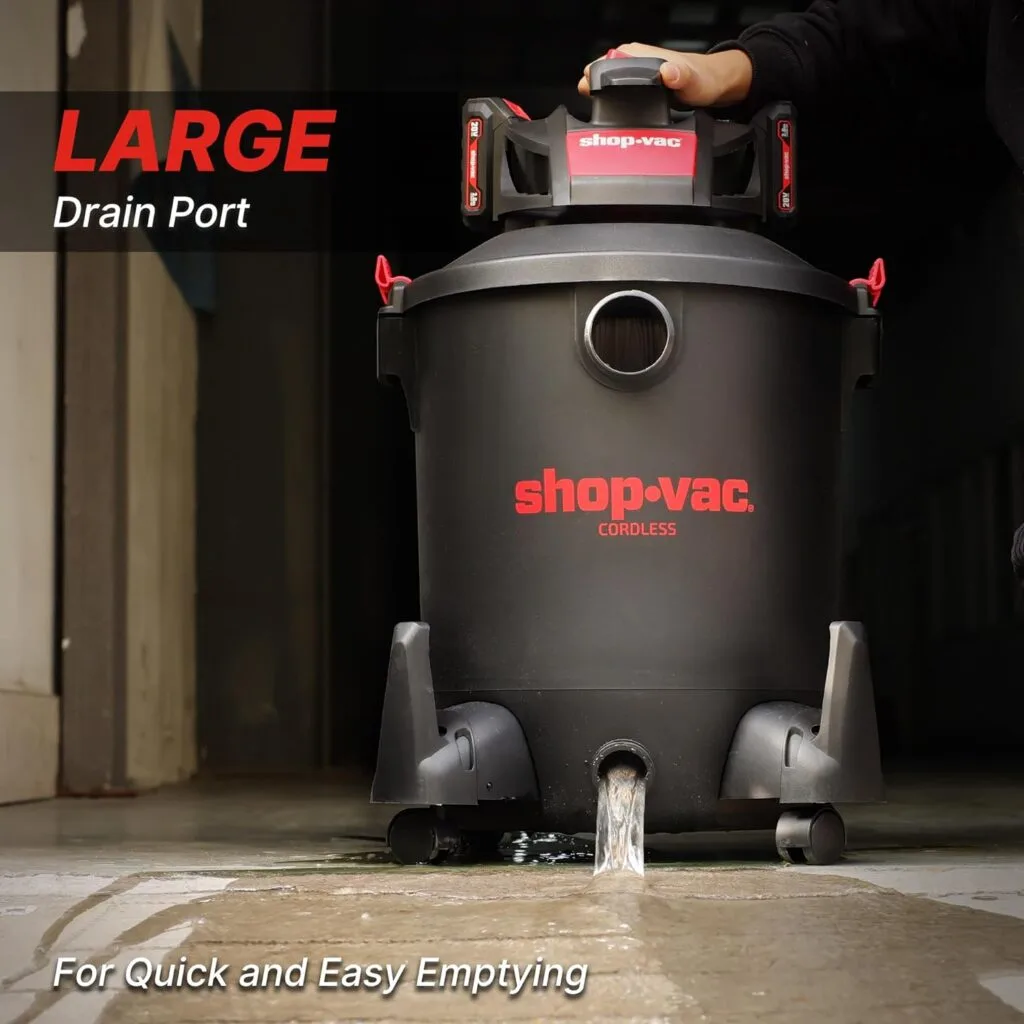
Image source: Web (Bing) / smartvacguide.com (Web image (fair-use with source credit))
Quick Answer
A wet/dry vacuum cleaner is a utility vacuum that collects both liquids and dry debris. It uses a large tank, a bypass motor, and a float shut-off valve. These parts let it safely pick up water without damaging the motor.
Most models also work as a blower. It's not meant for carpet cleaning. It's meant for rough messes.
Why This Comparison Matters
Most people don't realize how different a wet/dry vac is from the machine they use on their living room rug. They look similar from a glance, but inside they're completely different animals. A regular vacuum is a delicate, specialized tool for a narrow job.
A shop vac is a brute-force machine built to survive the messiest parts of life.
This distinction matters because the wrong choice wastes money and creates frustration. If you buy a regular vacuum for garage cleanup, you'll destroy it within a month. If you buy a wet/dry vac expecting it to replace your upright for weekly carpet cleaning, you'll be disappointed.
The two tools serve different purposes.
Brands like RIDGID, Shop-Vac, DeWalt, and Craftsman dominate the market, but they all operate on the same core principle. A motor pulls air through a hose, debris and liquid drop into a large tank, and filters keep the motor safe. That simplicity is why they're so effective.
It's also why they're loud, bulky, and tough to maneuver in tight spaces.
What a Wet/Dry Vacuum Actually Is (And How It Differs from a Regular Vacuum)
A wet/dry vacuum cleaner is a utility-grade machine that collects debris and liquids into a large tank instead of a small bag or a dust cup. The tank, usually made of stainless steel or blow-molded polyethylene, sits on wheels and doubles as the base of the unit. The motor mounts on top, drawing air through the hose and into the tank.
The biggest difference sits in the motor design. Regular vacuums use a motor that pulls air through the filter and the fan. That's why water kills them.
The water hits the paper filter and soaks the motor. Wet/dry vacs use a bypass motor where the cooling air flows separately from the suction path. That's a huge deal.
Even if water gets past the filter, the motor survives long enough for the float valve to stop the suction.
Here's how a typical dry run works:
- You attach the hose to the intake port.
- Air and debris get pulled into the tank.
- Debris drops to the bottom as air slows down.
- The cartridge filter catches fine dust before it reaches the motor.
- Air then exits through the exhaust.
For wet pickup, you swap the cartridge filter for a foam sleeve. That foam sits directly over the filter cage and bubbles along the water surface once the tank fills. The float valve inside the tank rises as the liquid level gets high, and it eventually seals off the inlet.
That keeps water from entering the motor. Without that float, your shop vac becomes a very expensive water fountain.
What's Inside: Tanks, Motors, Filters, and Hoses Explained
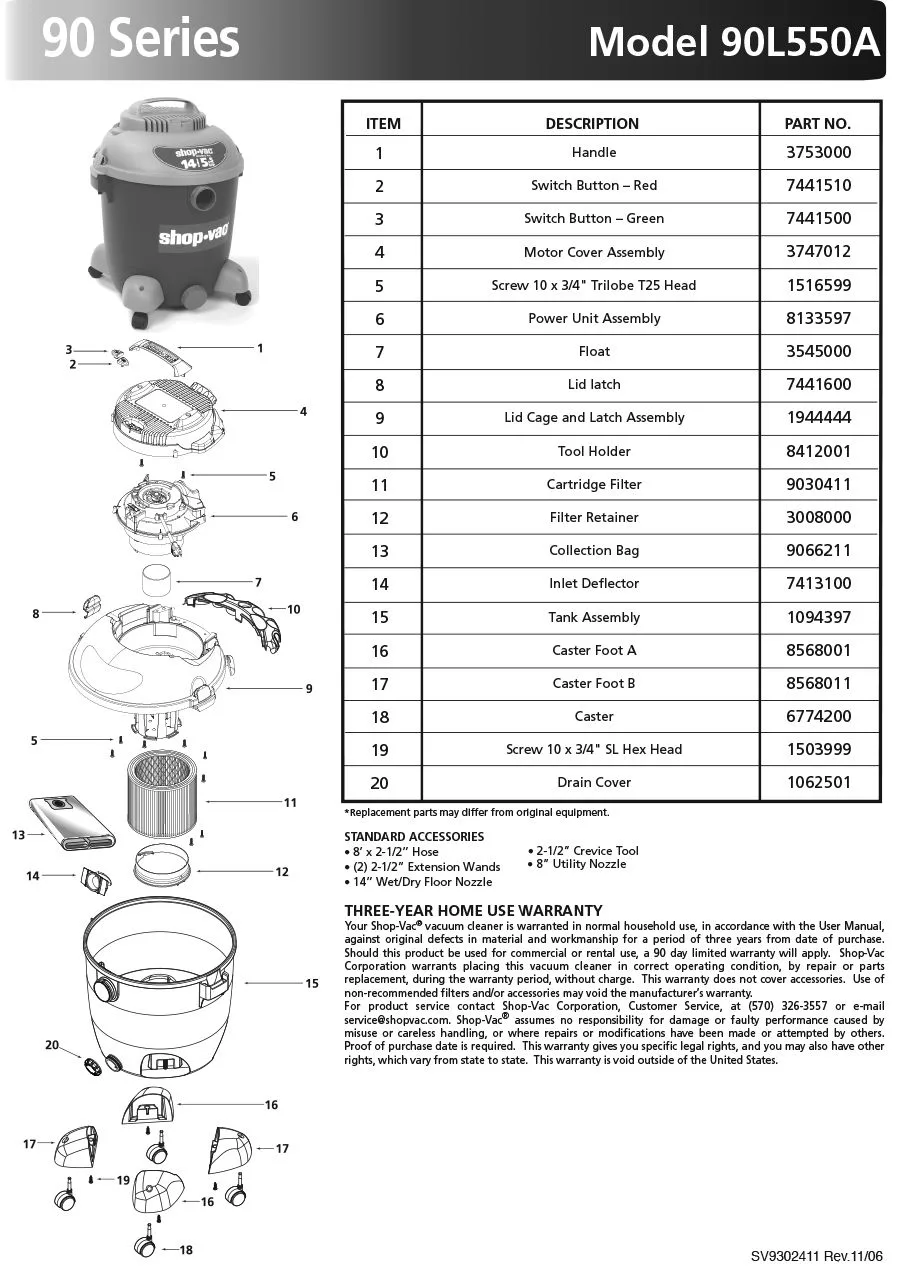
Image source: Web (Bing) / storage.googleapis.com (Web image (fair-use with source credit))
The Tank
Tank capacity ranges from 2 gallons on compact cordless units to 55 gallons on industrial beasts. The most common homeowner sizes sit between 4 and 12 gallons. Bigger tanks hold more mess, but they also weigh more and take up serious garage floor space.
Polypropylene tanks are cheaper and corrosion-resistant, which makes them ideal for wet use. Stainless steel tanks handle rougher abuse and never crack, though they're heavier.
The Motor
Manufacturers advertise "peak horsepower", a marketing number that measures a brief spike, not sustained performance. A 6.5 HP peak rating might only deliver around 5 amps of continuous draw, which is what you actually feel at the nozzle. Airflow, measured in CFM (cubic feet per minute), matters more for bulky debris.
Water lift, measured in inches, matters most for suction power and wet pickup. Look for at least 100 CFM and 60 inches of water lift for general home use.
The Filters
You'll deal with three main filter types:
- Cartridge filter: A cylindrical pleated filter for standard dry debris. Some are washable, and most are rated for fine dust.
- Foam filter sleeve: A slip-on cover used for wet pickup. It lets water pass through while protecting the motor from droplets.
- Paper filter bag: Placed inside the tank for extremely fine dust like drywall compound or soot. These must be removed before wet pickup.
The Hose
Hose diameter directly affects performance. Home units often use a 1.25-inch hose, which handles light debris well. Professional units use a 1.5-inch or 2.5-inch hose, which moves heavier materials like gravel or sawdust much faster.
If you plan to connect power tools like a table saw, check that the hose fits your tool's dust port.
Wet/Dry Vac vs Regular Vacuum: The Side-by-Side Breakdown
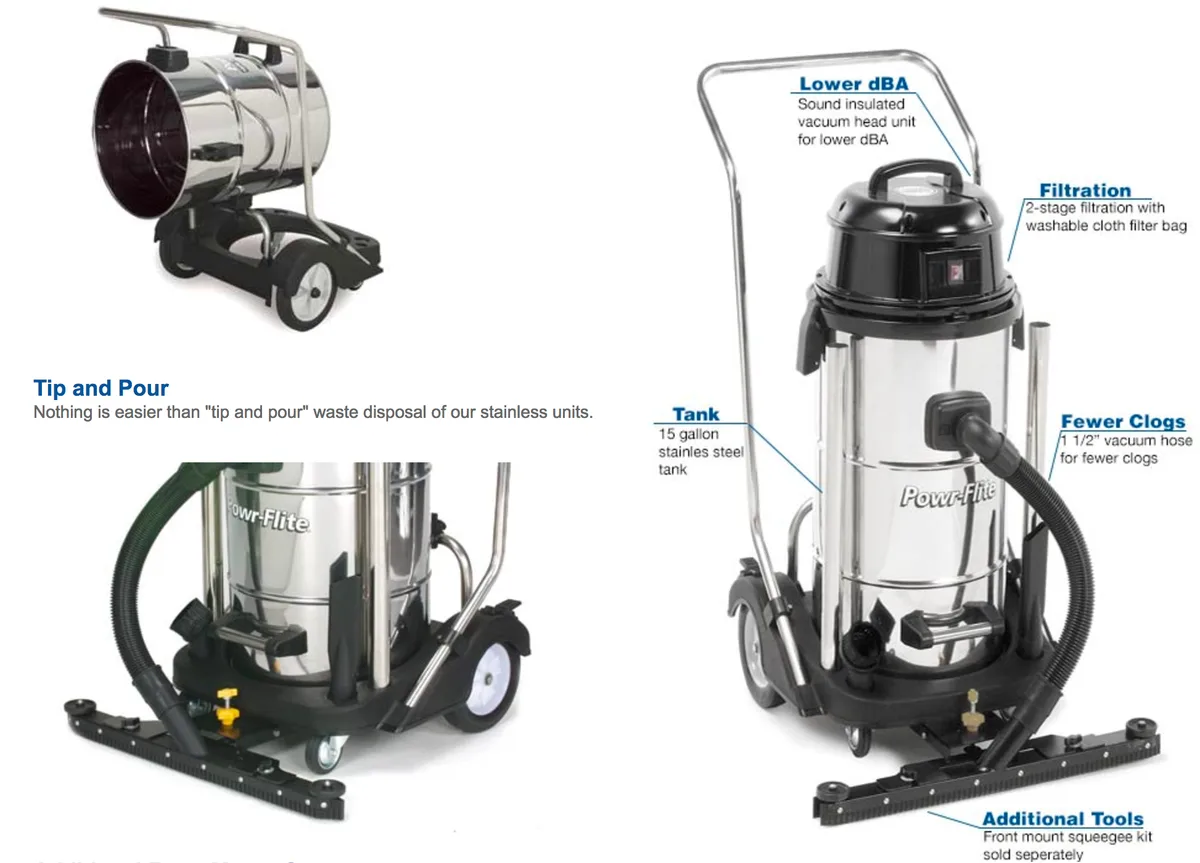
Image source: Bing (Web (fair-use with source credit))
| Feature | Wet/Dry Vac | Regular Vacuum |
|---|---|---|
| Wet pickup | Yes, with foam sleeve | No, destroys motor |
| Tank capacity | 4-20+ gallons | 0.5-1.5 liters dust cup |
| Bagless option | Yes, most are bagless | Varies, many bagged |
| Fine dust filtration | Basic to HEPA-rated | Usually HEPA standard |
| Carpet cleaning | Poor, no brushroll | Excellent |
| Hard floor cleaning | Good, standard nozzle | Very good, softer brush |
| Accessories | Limited, larger tools | Wide variety for home |
| Noise level | 70-85+ dB, very noisy | Generally quieter |
| Mobility | Heavy, wheeled tank | Lightweight, portable |
| Blower function | Yes, built-in | No |
| Price | $30-$300+ | $100-$1000+ |
The biggest takeaway is that these vacuums solve different problems. A wet/dry vac dominates in the garage, workshop, or basement. It picks up nails, wood chips, wet leaves, and even a flooded water heater drain without complaint.
But it does a mediocre job on carpets because it lacks the rotating brush that digs pet hair and dust out of fibers.
Conversely, a regular vacuum excels on carpet and finished floors. It's quieter, lighter, and offers attachments designed for upholstery, curtains, and crevices. But it fails the moment liquid enters the picture.
Even a few ounces of water can ruin a motor and void the warranty.
Who it's for: Choose a wet/dry vac if you've got a garage, workshop, or renovation projects ahead. Choose a regular vacuum if your home is carpet-heavy and you rarely need to pick up liquids.
Wet/Dry Vac vs Cordless Stick Vacuum vs Carpet Extractor
The market gets confusing because cordless stick vacuums have gotten seriously capable. Models like the Dyson V15 or the LGU2 offer strong suction, long battery life, and convenience. But they still can't handle water.
| Feature | Wet/Dry Shop Vac | Cordless Stick Vac | Carpet Extractor |
|---|---|---|---|
| Suction source | Corded (usually) | Battery-powered | Corded (usually) |
| Wet pickup | Yes | No | Yes, but only detergent water |
| Runtime | Unlimited | 20-60 minutes | Unlimited |
| Tank size | 4-12 gallons | 0.5-0.8 liters | 1-2 gallons |
| Main use | Debris + spills | Quick household messes | Deep-cleaning carpets |
| Best for | Workshop, garage | Apartments, quick pickups | Homes with pets and carpets |
A cordless stick vacuum is fantastic for daily crumbs and pet hair. It's lightweight, wall-mountable, and perfect for quick kitchen or car cleanups. But it won't survive a basement flood, and you can't use it to blow sawdust out of your garage corners.
A carpet extractor, like a Bissell or Rug Doctor, works with solution and water. It sprays cleaning solution into carpet fibers, agitates with a brush, then vacuums the dirty water back into a tank. That's a different tool entirely.
It's not meant for general debris or spills. It's meant solely for deep-cleaning carpets.
If you want one machine to cover the widest range of messes, a wet/dry vac wins. It's not the best at any single job, but it's the only one that handles both liquid and dry without needing ten spare parts. In summary, it's the most versatile option for anyone who values capability over convenience.
The Big Trade-Off: Where a Wet/Dry Vac Wins and Where It Falls Short
A wet/dry vac is the ultimate utility player. It handles flooded basements, spilled paint, drywall dust, and a box of screws that ended up all over the garage floor. Its large tank means you're not emptying it every five minutes.
The blower feature lets you clean out a shed or push leaves off the patio. There's no other household machine that covers this much ground.
But it's not a carpet vacuum. It lacks the motorized brushroll that lifts pet hair and embedded dirt from fibers. Running a shop vac over wall-to-wall carpet feels like dragging a heavy cart across a shag rug.
The noise is another issue. Most units hit 75 to 85 decibels, which is loud enough to cause hearing damage with prolonged exposure. The regular vacuum in your hallway closet is quieter, lighter, and far easier to use for daily household messes.
| Strengths | Weaknesses |
|---|---|
| Handles wet and dry | Poor on carpet |
| Huge capacity | Heavy and bulky |
| Pick up heavy debris | Loud (70-85 dB) |
| Doubles as a blower | Limited attachments |
| Built to last | Filters need frequent care |
Here's the simpler way to think about it. If a mess would ruin a regular vacuum, a wet/dry vac is the right tool. If the mess is just normal household dust and pet hair on floors, stick with what you already have.
Who Should Buy One (And Who Really Shouldn't)
A wet/dry vac is a great investment for anyone with a garage, workshop, or basement. DIYers and weekend renovators rely on them for sawdust, drywall debris, and unexpected plumbing spills. Contractors and tradespeople basically need one for every job site.
Auto detailers use them to pull loose dirt out of floor mats and grab stray fluid spills. Even general homeowners benefit from having one around for flood cleanup or post-renovation messes.
You might not need one if your home is all carpet and you never tackle projects that get dusty. Apartment dwellers with little storage space will find a 12-gallon tank hard to justify. A cordless stick vacuum covers daily crumbs and cat hair far more conveniently.
If that sounds like you, skip the shop vac and save the floor space.
That said, even occasional renters and condo owners can justify a compact 2-to-4-gallon cordless model. It tucks into a closet, handles the odd water spill, and can even hook up to your car. The right size depends on your space and how many messes you actually create.
How to Choose the Right Size, Power, and Features
Start with tank size. An 8 to 12-gallon model works for most households. A 4 to 6-gallon unit is fine for apartments and small workshops.
Anything over 16 gallons is overkill unless you're doing serious renovation work or running a professional operation.
| Tank Size | Best For |
|---|---|
| 2-4 gallons | Apartments, light garage duty, car cleaning |
| 5-8 gallons | General home, medium workshops |
| 9-16 gallons | Renovations, basements, heavy DIY |
| 20+ gallons | Contractors, industrial use |
Next, look at airflow and water lift, not the "peak horsepower" number on the box. Airflow, measured in CFM, tells you how much volume the vacuum moves. Water lift, measured in inches, tells you how hard it sucks.
For most home jobs, you want at least 100 CFM and 60 inches of water lift. More is better for heavy debris and thick liquids.
Features that actually matter include a drain port for emptying the tank without lifting it, a blower function, and a built-in power outlet for plugging in your tools. A cartridge filter that can be cleaned from outside the tank saves you messy filter changes. Onboard accessory storage keeps the hose and nozzles organized.
As of 2026, cordless options are better than ever, but they still can't match corded runtime. A corded unit runs as long as you need, which is why most professionals stick with them.
Common Mistakes to Avoid: Wet Filter, Fine Dust, and Neglected Maintenance
The most common mistake is leaving the paper filter bag in during wet pickup. That bag turns into a soggy mess and ruins the motor's suction. Always remove the paper filter and slip on the foam sleeve when you're collecting liquid.
The second mistake is using only a dry cartridge filter for fine dust. Drywall compound, concrete dust, and soot slip right through standard cartridges and blow back into the air. For that kind of work, you need a HEPA-rated filter or a filter bag specifically designed for fine particles.
The OSHA guidance on respirable silica dust makes it clear that basic shop vacs aren't enough for hazardous dust exposure.
Third, don't let the tank sit full of dirty water. That's how you get that awful mildew smell that's almost impossible to wash out. Empty it after every wet use, rinse the tank, and let the foam sleeve dry completely before storing.
Neglected filters are another culprit. A clogged cartridge cuts suction dramatically, so check it regularly and clean it when it looks loaded.
The same logic applies to your other equipment. A clogged filter kills performance on any machine, from a shop vac to a pool cleaner. Even hose collapse issues come down to airflow, which is the same thing that makes a shop vac stall.
What It Costs: Entry-Level to Professional
Wet/dry vacuums run the gamut from under $30 to over $600. The cheapest units are small, corded, and basic, fine for occasional dust and the odd spill. Mid-range models in the $80 to $200 range offer larger tanks, better filters, and useful extras like a blower and drain port.
Professional and HEPA-rated units start around $200 and climb quickly.
| Price Range | What You Get | Best For |
|---|---|---|
| $30-$80 | 2-4 gallon tank, basic filter, loud motor | Occasional light use |
| $80-$200 | 5-12 gallon tank, blower, drain port, better filtration | Most homeowners and DIYers |
| $200-$600+ | HEPA filtration, larger capacity, quieter operation, pro build | Contractors, renovations, fine dust work |
Think about how often you'll use it and what you'll collect. A $40 vac might save your carpet after a toilet overflow, but it won't handle a serious construction cleanup. Spending a bit more on a mid-range model gets you a machine that lasts for years and doesn't leave you coughing on fine particles.
It's worth it.
Quick Maintenance Guide: Keeping It From Smelling Like a Mildew Pit
Empty the tank after every wet job. Rinse it with clean water and a few drops of dish soap. Then let the foam sleeve air-dry completely before you store it.
A dry cartridge filter can also hold dust and odors. Tap it out after heavy use, or rinse it with water if it's washable. Never store the vacuum with the hose coiled on top of the tank, that traps moisture inside.
| After Dry Use | After Wet Use |
|---|---|
| Tap out filter | Empty tank completely |
| Empty tank if full | Rinse tank with soapy water |
| Check hose for clogs | Wash foam sleeve |
| Store in a dry area | Air-dry every part fully |
If you already own a robotic pool cleaner, the maintenance routine for robotic models is similar in spirit: rinse, dry, and store properly.
Real-World Scenarios: Flooded Basement, Renovation Cleanup, Car Interior
A burst water heater can leave 2 inches of water across a basement floor. A 12-gallon wet/dry vac with a foam sleeve and squeegee nozzle pulls it up quickly. The float valve stops suction when the tank fills, so you just drain and keep going.
After sanding drywall, fine dust settles everywhere. A HEPA-rated filter or a filter bag keeps particles from blowing back into the room. The same principle applies to pool vacuums.
If you want to capture tiny particles, a suction-side design works well in water, just like a fine dust filter in a shop vac.
For car interiors, a wet/dry vac with a crevice tool reaches under seats. It grabs gravel, stray fries, and spilled drinks. The blower function clears leaves out of the trunk and door jams.
Frequently Asked Questions
Can a wet/dry vacuum pick up water from a toilet overflow?
Yes. Remove the paper filter bag and install the foam sleeve first. Then vacuum up the water, and empty the tank outdoors.
Disinfect the tank and hose afterward.
Is a shop vac the same as a wet/dry vacuum?
Yes. "Shop vac" is simply a common brand name that became the generic term for a wet/dry vacuum. They're the same type of machine.
Do I need a HEPA filter on a shop vac?
Only for fine dust like drywall, concrete, or lead paint. For standard sawdust and garage debris, a regular cartridge filter is fine. If you have dust allergies, a HEPA filter is worth the upgrade.
Why does my wet/dry vacuum smell bad?
A dirty tank or a damp filter is the cause. Empty the tank after every use and dry the filter fully. If the smell lingers, wash the tank with vinegar and water.
The Bottom Line: Which Wet/Dry Vacuum Is Right For You?
Choose a wet/dry vacuum if you have a garage, workshop, or any space where spills and heavy debris happen. For most homeowners, an 8 to 12-gallon corded model with a blower and drain port gives the best value. Skip it if you only clean carpet, and stick with a regular vacuum instead.
If you're dealing with a pool cleaner, similar troubleshooting steps can save you a service call. Check the filters, seals, and airflow first. That same logic applies to any suction tool, including your wet/dry vac.

