

Are wet/dry vacuums worth it? The honest answer depends on what you clean, where you store tools, and how you handle midnight messes. If you’ve ever stared at a flooded basement, a pile of drywall dust, or a car full of pine needles, you know a standard vacuum can’t handle all three.
That’s the gap a wet/dry vacuum tries to fill.
Manufacturer specifications show that even entry-level corded units move 100 to 200 cubic feet per minute (CFM), with water lift frequently above 60 inches. Those two numbers decide whether a machine can pull sludge, nails, and standing water without choking. Here’s how to know if one belongs in your garage.
Quick Answer
Yes, but only for the right buyer. A wet/dry vacuum earns its space if you own a garage or basement. It handles liquids and heavy debris that regular vacuums can’t.
If you only clean carpets, skip it.
Is a Wet/Dry Vacuum Actually Worth It? (It Depends on These 3 Things)
Three variables decide the answer: mess type, storage space, and total cost. If you regularly face wet spills or construction dust, a wet/dry vacuum is the only home vacuum built for that. Regular vacuums short out when they ingest water.
A wet/dry vac uses a sealed tank and a float valve to handle liquids without killing the motor.
The second variable is space. A typical 5-gallon unit is about the size of a small trash can. A 16-gallon model is huge, heavy, and awkward on stairs.
If you don’t have garage or basement floor space, a compact cordless portable might fit your life better.
The third variable is budget. As of 2026, solid homeowner units cost between $40 and $150. That’s cheap for a tool that can pump out a water heater leak.
The hidden expenses are filters, hoses, and attachments. Those add up faster than people expect.
Still, if you only vacuum carpets and hardwood, this machine is overkill. It’s loud, bulky, and not made for living-room duty. If you never face construction dust or an inch of water, skip it and save the floor space.
The Two-Minute Decision Test: Are You In Group A, B, or C?
Answer these three group descriptions and the verdict basically writes itself.
Group A: You have a garage, workshop, or frequent small disasters.
Buy one. Every drywall project, oil spill, or leaf pile lands in your lap at least once a month. A corded 5 to 8 gallon model gives you enough power and tank size without becoming a storage problem.
This group gets the strongest “yes.”
Group B: You only need it once a year, but that once is a flood.
If you live in a house with a sump pump, water heater, or basement, a small portable wet/dry vac is cheap insurance. A 5-gallon unit costs less than one emergency plumber visit. It can pull standing water, empty a clogged sink, or help after a pipe crack.
Buy one, keep it in a closet, and hope you rarely use it.
Group C: You clean mostly carpets and indoor living spaces.
Then pass on it. A shop vac is loud, bulky, and bad at fine dust on carpet. A regular upright, a canister vacuum, and a mop handle everything you need.
If your outdoor mess is mostly pool debris, a suction-style pool cleaner does that job better than any wet/dry vac ever will.
The deciding question is simple. Do you ever need to move liquid or cut through heavy debris? If yes, a wet/dry vacuum outperforms every standard household vacuum.
If no, you’re just buying another plastic thing to store.
Wet/Dry Vac vs. Regular Vacuums: What You Actually Gain (and Give Up)
The biggest difference is airflow and tank design. A regular vacuum moves 50 to 100 CFM in typical consumer models. A wet/dry vac pushes 100 to 200 CFM, and some contractor units go well beyond that.
That airflow translates directly to how fast heavy debris moves through the hose.
| What matters | Regular vacuum | Wet/dry vacuum |
|---|---|---|
| Liquids | Not designed for liquids | Float valve allows wet pickup |
| Debris | Fine dust, carpet fibers | Nails, sawdust, screws, dirt |
| Airflow | 50–100 CFM typical | 100–200 CFM typical |
| Tank style | Bag or small bin | 1 to 16 gallon tank |
| Noise | Moderate | Louder, often 75–85 dB |
| Where it works | Whole house | Garage, workshop, basement |
Water lift matters too, especially for floods. That’s the suction depth measured in inches, and most wet/dry vacs deliver 50 to 100 inches. A regular vacuum simply doesn’t pull water that hard.
The trade-off is refinement. Shop vacs are loud, plastic, and never meant for daily living-room duty. But that’s not their job.
You also gain durability. A wet/dry tank is built to take nails, screws, and wet sawdust without shredding a bag. A regular vacuum chokes on that stuff.
If you’re renovating, detailing a car, or clearing a garage, this is the tool that survives.
The Biggest Reasons People Regret Buying One (and How to Avoid Their Mistakes)
Most regret stories follow the same patterns. The first is buying a machine that’s too big. A 16-gallon tank eats floor space and weighs over 30 pounds empty.
A 5 to 8 gallon model handles 95 percent of home jobs without making you fight the stairs.
The second mistake is mixing filters. Use a dry-only pleated cartridge filter for wet pickup and it soaks through, clogs, and smells. Many machines come with a dedicated foam sleeve for wet jobs.
Actually swap it. That single habit prevents most “my shop vac stinks” complaints.
The third mistake is ignoring battery limits. Cordless wet/dry vacs are genuinely convenient, but runtime often drops to 15 minutes under heavy load. For a flooded floor, corded wins every time.
A long flexible hose can also kink under strong suction. The same physics causes pool vacuum hoses to collapse when airflow gets blocked. Keep hoses straight and clear.
The fourth mistake is forgetting the outlet. Some models only empty by lifting the tank and pouring. Others have a bottom drain port.
If you’ll vacuum water regularly, a drain port saves your back and your floors.
Finally, don’t buy on “peak horsepower” numbers. That metric is marketing, not measured performance. Look at real motor amps, CFM, and water lift instead.
What’s the Real Cost? Fair Prices, Specs, and the Hidden Fees
The good news is that entry-level wet/dry vacs are cheap. The bad news is that the accessory pile can double the price if you’re not careful. Here’s the realistic pricing picture.
| Tier | Price range | Typical size | Best for |
|---|---|---|---|
| Entry-level | $40–$90 | 1–5 gallons | Car cleaning, tiny spills |
| Mid-range | $100–$250 | 5–10 gallons | Garages, renovations, floods |
| Premium | $300–$700+ | 10–16 gallons | Contractor work, dust extraction |
Entry-level units work fine for occasional use. They usually have smaller motors, shorter hoses, and filters that clog faster with fine dust. Mid-range models are the sweet spot for homeowners, with better suction, drain ports, and a longer warranty.
Premium prices don’t make sense unless you need HEPA certification for hazardous dust or you’re running a real workshop. That’s the line between a shop vac and a certified dust extractor. OSHA’s combustible dust guidance explains why a standard wet/dry vac is not a certified collection system.
Hidden costs are where people get stung. Replacement filters run $10 to $30, a longer hose costs $20 to $50, and attachment kits add another $20 to $60. Budget for those upfront.
Battery-powered models also need replacement packs eventually, and those can cost $80 to $150. If you buy cordless for convenience, plan for that expense.
Wait: Can’t a Carpet Extractor or Mop Do This?
No, and here’s why. A carpet extractor sprays hot water and shampoo into carpet, then sucks the dirty solution back out. It’s designed for upholstery and floorcoverings, not construction debris.
A wet/dry vac is built for nails, sawdust, and standing water.
A mop works for routine floor cleaning, but it can’t pull water out of a basement or collect drywall dust. It just pushes water around. The same goes for a robot vacuum.
A robotic pool vacuum is a great tool for pool surfaces, but none of these overlaps with heavy-duty dry pickup and flood extraction.
So the comparison isn’t really about which is better. It’s about which jobs each tool is built to do. If you need one machine for wet messes, dry debris, and car interiors, a wet/dry vac is the only one on this list that covers all three.
The Wet/Dry Vac Catalog: What to Look For in Every Price Range
Under $100.
These are your best bets for casual garage duty and car cleaning. Look for a 4 to 6 gallon tank, a 16 to 20 foot hose, and a washable foam filter. You won’t get a drain port at this price, but you’ll get enough suction for weekly messes.
$100 to $250.
This is the value zone. You get better filters, longer hoses, drain ports, and sometimes a blower port. Some models include a detachable portable blower for leaves and garage dust.
For most homeowners, this range is the practical sweet spot. It’s also where you’ll find the durability to handle renovations without dying mid-project.
$250 and up.
Prosumer and contractor-grade features start here. You’ll see higher CFM, lower noise, HEPA options, and better tool connectors. If you run a real workshop or you’re doing daily construction cleanup, this is where the cost makes sense.
Cordless vs. corded.
Corded models deliver consistent power for unlimited runtime. Cordless models are easier to grab and go, but battery life drops fast under heavy suction. If you’re choosing one, decide whether max power or quick convenience matters more.
Step-by-Step: How to Use a Wet/Dry Vac for the 3 Most Common Messes
Mess 1: Flooded basement or water heater leak.
First, switch to wet mode. Remove the paper cartridge filter and install the foam sleeve. Then vacuum water until the float shuts off.
Drain through the bottom port or lift the tank outside. Dump the water, rinse the tank, and let the foam filter dry.
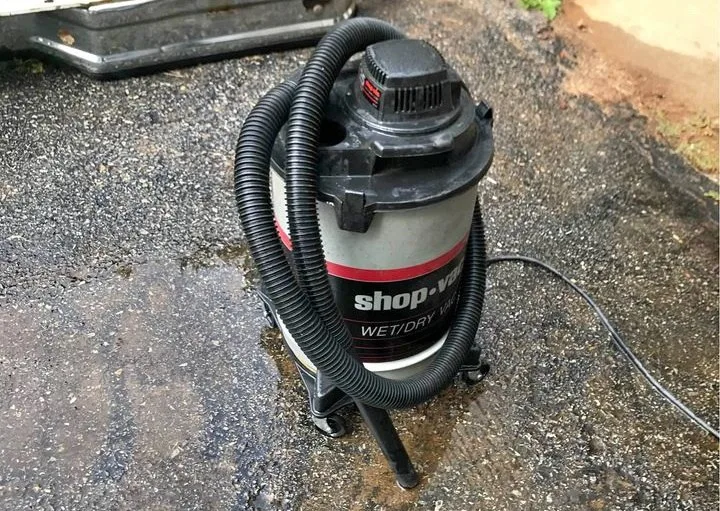
Image source: Bing (Web (fair-use with source credit)).
Mess 2: Drywall dust after a renovation.
Dry mode works best here. Use a pleated cartridge filter or a paper bag if your model takes one. Fine dust loads filters fast, so empty the tank before it feels full.
Wear a dust mask and open windows while you work.
Mess 3: Car interiors and garage cleanups.
Use a 1.25-inch hose for tighter access. A crevice tool reaches under seats and between cushions. For gravel, dirt, and screws, keep the suction low enough that debris doesn’t ricochet in the hose.
Empty the tank before it reaches capacity.
| Mess | Filter mode | Key tool |
|---|---|---|
| Flooded basement | Wet (foam sleeve) | Squeegee attachment |
| Drywall dust | Dry (pleated filter) | Crevice or wall brush |
| Car interior | Dry (pleated filter) | Crevice tool, brush |
The Maintenance Rules: Keep It From Smelling Like a Sewer
The number one smell mistake is leaving a damp tank closed. After every wet pickup, rinse the tank with clean water. Wipe it dry with a towel.
Then leave the lid open for a few hours or overnight.

Image source: Web (Bing) / homedepot.com (Web image (fair-use with source credit)).
Filters need attention too. Wash a foam sleeve with mild soap and water, then dry it completely. Tap a cartridge filter against a garbage bin to knock off loose dust.
If the filter stays stained or smells even after washing, replace it. The same habit applies to any machine that runs wet, including robotic pool vacuum filters that collect algae and debris.
Hoses can trap moisture and mold. After a wet job, run the hose under fresh water, drain it, and hang it up. Store the machine with the lid cracked open so air moves through the tank.
Safety First: What You Should Never Suck Up
Gasoline, solvents, and anything flammable are off-limits. A wet/dry vac can create sparks from the motor, and igniting fuel vapor is a real risk. Never vacuum combustible liquids, no matter how careful you think you are.
Fine hazardous dust is a separate issue. Asbestos, lead paint dust, and silica need a certified HEPA vacuum. A standard shop vac won’t contain those particles safely.
Follow EPA lead renovation guidance if you’re working on older painted surfaces.
Always use a GFCI outlet when vacuuming water. That protects you if the motor gets wet inside. And if a vacuum accidentally pulls in water with the dry filter still installed, stop.
Empty the tank, dry the motor, and replace the filter before using it again.
Mold and sewage water are another limit. A wet/dry vac can remove the water, but it can’t sanitize the area. If a flood included sewage or heavy mold growth, call a professional water damage service instead of handling it yourself.
Your Final Verdict: Yes, No, or Maybe
If you’re in Group A, buy one. Get a corded 5 to 8 gallon model with a drain port, and expect to spend around $100 to $150. That’s the sweet spot for garages, workshops, and regular renovation messes.
If you’re in Group B, buy a cheap model. A $50 portable unit sits in a closet and shows up once a year. That’s still cheaper than a plumber or a water extraction service.
If you’re in Group C, skip it. You have the right tools already. And if you’re already happy with a robotic pool vacuum for your outdoor water cleaning, you don’t need another machine.
Here’s the one-sentence answer. Wet/dry vacuums are worth it if you regularly face wet spills, heavy debris, or flood-like recovery. They’re not worth it if you only clean dry indoor floors.
Frequently Asked Questions
Can a wet/dry vacuum pick up water from carpet?
Yes, but slowly. Hold the nozzle slightly above the carpet and work in overlapping passes. A squeegee attachment helps pull water out of the fibers.
The carpet will still need time to dry and may need professional extraction if it’s soaked.
Can you use a shop vac to unclog a drain?
Yes, for minor clogs. Use a narrow hose attachment and create a seal around the drain opening. The suction can pull out hair or debris near the surface.
It won’t replace a drain snake for deep blockages.
How do you get wet smell out of a shop vac?
Clean the tank and hose with warm soapy water. Wipe everything dry, then leave the lid open overnight. Wash the foam filter or replace the cartridge filter if it smells.
Store the unit with the lid open or cracked.
Are wet/dry vacuums good for car detailing?
Yes, they’re excellent. The strong suction removes dirt and water from seats, carpets, and floor mats. A crevice tool reaches tight spaces.
Just keep the filter dry and empty the tank before it gets full.
Is a wet/dry vacuum good for sawdust?
It works for shop cleanup, but fine dust clogs filters quickly. Use a pleated cartridge filter and empty the tank often. For heavy woodshop use, a certified dust extractor with cyclone separation is better.

