

Image source: Web (Bing) / ebay.ca (Web image (fair-use with source credit))
You've just spent an afternoon sanding oak, and now every flat surface in your garage wears a fine gray film. What is the best shop vacuum for sawdust?
It's the right question to ask, but the answer isn't a single brand or model. Manufacturer specifications indicate that a decent mid-range shop vac moves 80 to 150 CFM at the end of the hose. HEPA filtration catches 99.97% of particles down to 0.3 microns.
That number matters more than any horsepower claim. Let's cut through the marketing and see what actually works.
Why Picking a Sawdust Vacuum Feels Overwhelming
The shop vacuum aisle looks simple at first. Then you notice the horsepower claims, the tank sizes, the "pro" models, and the cordless options. It gets messy fast.
Part of the problem is that different tools make completely different kinds of sawdust. A table saw throws chunky curls across the floor. An orbital sander produces fine dust that hangs in the air long after you stop working.
The best tool for one job can be useless for the other.
The biggest trap is comparing vacuums by peak horsepower. Those numbers come from an empty tank, a clean filter, and no hose attached. Real-world suction depends on the filter, the hose diameter, and whether the bag is already half full.
Manufacturer specs confirm the same pattern across most models. A modest motor with a clean filter and a wide hose often beats a flashy peak-HP rating paired with a restrictive filter.
The Short Answer: Match the Vacuum to the Sawdust, Not the Brand
As of 2026, the market comes down to three main routes. Once you know which route fits your workshop, the brand choice gets much easier.
- For sanding, trimming, or any tool that makes fine dust: choose a HEPA-rated dust extractor with around 120 CFM or more. Filtration matters more than tank size here.
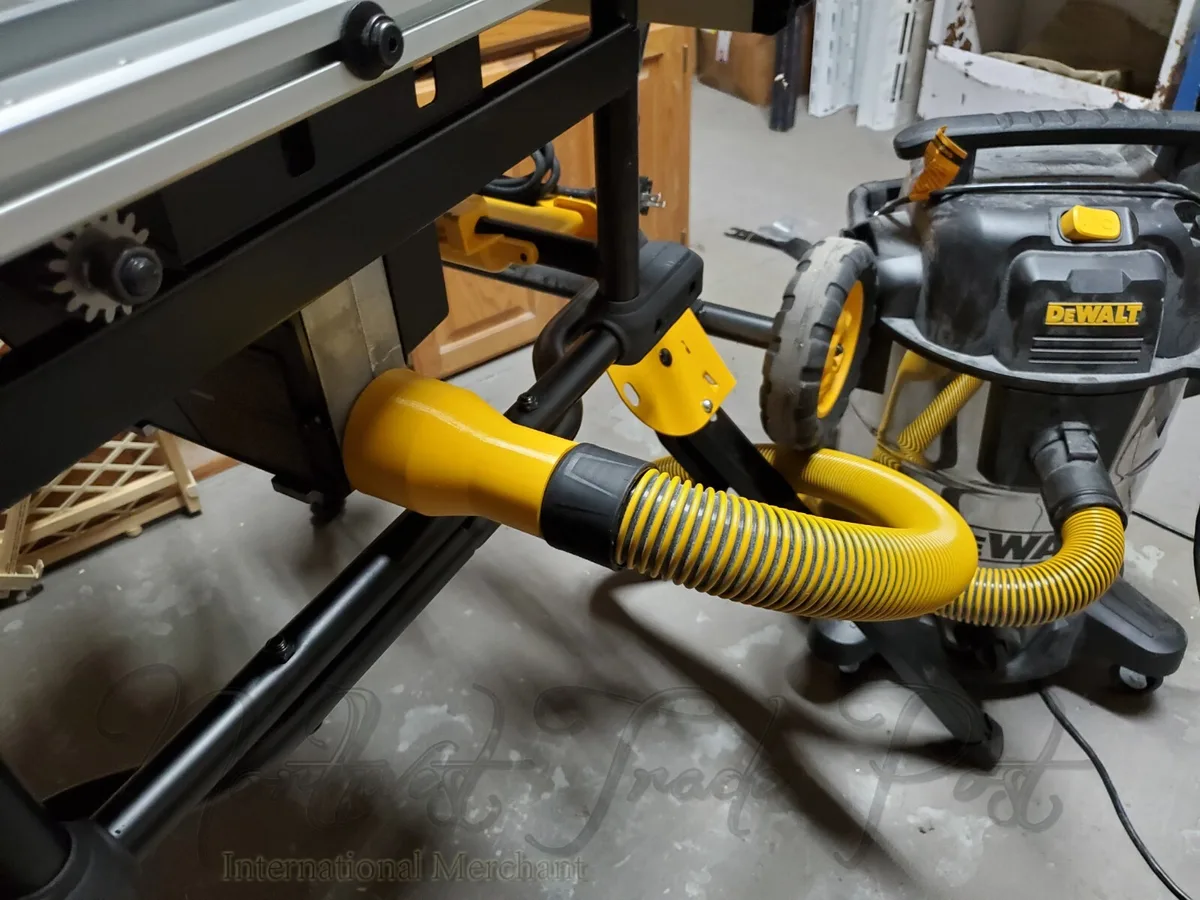
- For table saws, miter saws, jointers, and planers: look for a wet/dry vacuum with solid CFM and a 2-1/2 inch hose. Add a cyclone separator, and the filter stays clean much longer.
- For job-site work without a wall plug nearby: a cordless vacuum on a major battery platform works. Check runtime before you trust it for full-day projects.
In short, the best shop vacuum for sawdust is the one that matches airflow, filtration, and portability to the specific dust you create. You don't need the most expensive machine. You just need the right combination of specs.
What Actually Matters: CFM, Water Lift, and Filtration
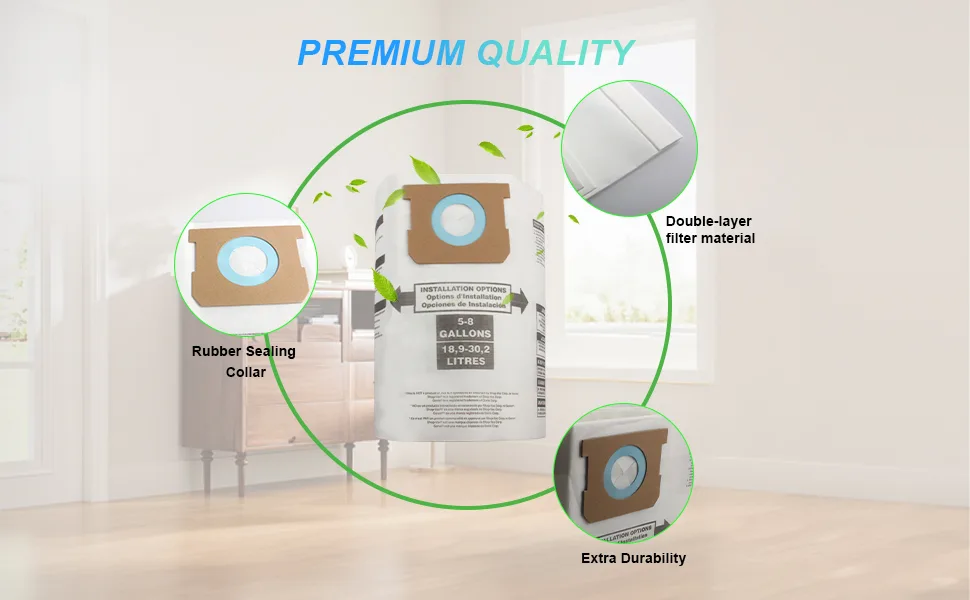
Image source: Web (Bing) / amazon.com (Web image (fair-use with source credit))
There are only three specs worth your time. CFM measures airflow volume. Water lift measures suction pressure.
The filter determines how much fine dust ends up back in the air.
CFM, or cubic feet per minute, is the volume of air moving through the open end of the hose. This is what drags chips from the saw blade to the tank. Water lift is the vacuum's ability to hold a column of water.
It tells you how much pulling power you have at the nozzle.
Both numbers matter. High water lift with weak CFM can hold a sock against the hose, but it won't move a pile of shavings across the floor. High CFM with poor water lift struggles with dust packed tight in a tool port.
Why Peak Horsepower Is a Marketing Number, Not a Performance Spec
Peak horsepower is the number printed in huge letters on the box. It's measured under ideal conditions with no hose, no filter, and no load. Real workshops don't run that way.
Attach a standard hose and a cartridge filter, and the airflow drops noticeably. Add a clogged bag, and it drops again. Educated shoppers ignore peak HP and look at CFM, water lift, and filter type.
If a manufacturer lists only peak horsepower, that's a sign the real numbers aren't flattering. It's like a car advertisement quoting engine power without mentioning how much reaches the wheels. The difference is just as dramatic here.
The Real Difference Between HEPA, M-Class, and Standard Filters
Standard filters catch coarse sawdust and rougher debris. They work fine for table saw chips and general cleanup, but they let most of the fine dust blow straight back into the room.
HEPA filters catch 99.97% of particles at 0.3 microns. That's the certified HEPA standard. It matters for anyone who sands wood regularly.
Sanding produces respirable dust that hangs in the air and settles on every surface you own.
Some pro-level extractors carry an IEC dust-class M rating. It's a European certification that measures filtration efficiency differently, but the practical goal is the same: keep fine dust contained. If you spend hours sanding, check the NIOSH guidance on respirable dust exposure.
The short version is that fine sawdust isn't just messy, it's worth taking seriously.
One more thing. A HEPA label only works if the vacuum's seals and gaskets are tight. A HEPA filter inside a flimsy lid won't do much.
That's why build quality matters as much as the filter spec.
The Three Main Routes: Budget Wet/Dry, Cordless, and HEPA Dust Extractors
Every shop vacuum sold for sawdust work falls into one of these three categories. They overlap a little, but each has a clear strength.
Budget wet/dry vacuums. These are the classic garage workhorses. They're loud, affordable, and great at sucking up chips and debris. Most ship with a pleated cartridge filter and work as both wet and dry machines.
Their weakness is fine dust. A standard budget vac recirculates a lot of the ultrafine particles that come off a sander.
Cordless shop vacuums. These shine when you're moving around a job site or working somewhere without an outlet. They pair well with battery-powered tools, especially if they support tool-triggered starting. The downside is runtime.
A cordless vac can drain a battery fast when you're sanding for long stretches. They're a convenience tool, not a replacement for a serious dust extraction setup.
HEPA dust extractors. These are the high-end option, and they're what professional woodworkers buy. They offer better filtration, lower noise, and auto-start features that turn the vacuum on whenever your tool fires up. They cost more, but they're the only route that truly protects your lungs from fine sanding dust.
For most home shops, the practical answer sits between the first and third routes. A quality wet/dry vacuum with a HEPA cartridge filter and a cyclone separator handles a surprising amount of work. You don't need to jump straight to a professional extractor unless you're doing serious fine-dust work every day.
Specs Compared: CFM, Capacity, Filter Type, and Real-World Fit
Here's how the three routes stack up on paper. These are typical ranges from manufacturer documentation, not guarantees for every model on the market.
| Route | Typical CFM | Water Lift | Best For |
|---|---|---|---|
| Budget wet/dry | 80 to 110 CFM | 60 to 80 inches H2O | Chips, garage cleanup, occasional sanding |
| Cordless shop vacuum | 50 to 90 CFM | 40 to 70 inches H2O | Portable cleanup, job-site touch-ups |
| HEPA dust extractor | 120 to 190 CFM | 90 to 120 inches H2O | Fine sanding dust, finish work, daily shop use |
Look closely at the cordless row. The lower CFM and water lift mean it'll struggle with heavy chip production from a planer or jointer. But for quick miter saw setups and small job-site cleanups, those numbers are completely fine.
The budget wet/dry row is honest about its limits. It'll handle the big stuff without complaint, but you'll want a decent filter if you value your lungs. Many budget models accept HEPA-rated replacement filters.
Check before you buy.
The HEPA extractor row is where everything clicks. Higher CFM moves chips effectively. Good water lift keeps nozzles gripping.
True filtration prevents fine dust from becoming a permanent haze in your shop.
For the home woodworker who does a mix of sawing, routing, and sanding, a wet/dry vacuum with a HEPA filter and a cyclone separator covers the most ground. It won't be the cheapest option, but it's the most balanced one.
Best Picks by Situation: Planer Chips, Sander Fine Dust, Job-Site Cleanup
For a Home Garage with a Table Saw and Miter Saw
Start with a wet/dry vacuum in the 8 to 12 gallon range. Pair it with a cyclone separator and a 2-1/2 inch hose. That combo gives you enough airflow to pull chips off a table saw blade and enough capacity to avoid emptying the tank every ten minutes.
A HEPA-rated cartridge filter is worth the upgrade. It keeps the fine dust from recirculating when you do light sanding. You're not running a production shop, so you don't need a professional extractor.
For a Cabinet Shop or Full-Time Furniture Maker
Step up to a HEPA dust extractor with tool-activated start. When the vacuum turns on with the sander, you get consistent extraction without bending over to flip a switch. The higher CFM range of 120 to 190 CFM handles everything from a hand sander to a jointer.
The filtration matters more than the tank size. Fine dust from finishing work is a health issue. A certified HEPA filter is the only real protection in this class.
For a Mobile Contractor or Finish Carpenter
Go cordless if you're bouncing between job sites without reliable power. Stick with the same battery platform as your other tools so you're not managing two charging systems. Expect shorter runtime and use it for lighter cleanup between cuts.
A compact 5 gallon cordless vac with tool-triggered startup handles trim work and miter saw stations beautifully. Keep a corded HEPA unit in the shop for heavy days.
Five Mistakes That Ruin Sawdust Vacuum Performance
Plenty of decent vacuums end up in the corner because of avoidable mistakes. Here's what our research and aggregate buyer feedback repeatedly surface.
- Trusting peak horsepower. The motor sounds strong, but the filter clogs and suction dies. Real-world CFM matters more than a marketing number.
- Using the narrow hose as the main line. A 1-1/4 inch hose strangles chip flow from a table saw. Step up to 2-1/2 inches for anything that makes chunky debris.
- Skipping the cyclone separator. Without it, the filter loads up with fine dust constantly. A cheap cyclone keeps the filter clean and preserves suction.
- Forgetting to check the seals. A HEPA filter is useless if the lid gasket leaks. Loose latches and cracked tanks ruin filtration efficiency fast.
- Running the vacuum after the tool stops. The hose holds a column of sawdust. Letting the vac run for five seconds clears the line so dust doesn't fall out when you lift the hose. A stalled machine isn't always broken. Sometimes it's just a clogged hose that needs a minute of attention.
These are easy to avoid once you know they exist. Every single one has a simple fix.
How to Set Up a Cyclone Separator and Hose Adapters That Fit
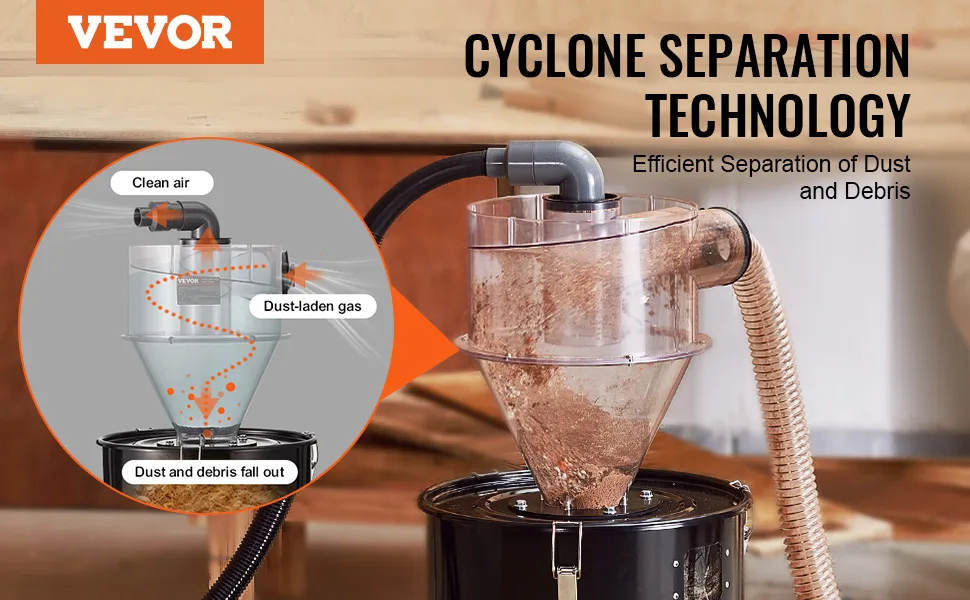
Image source: Web (Bing) / vevor.com (Web image (fair-use with source credit))
A cyclone separator sits between the hose and the vacuum tank. It spins the incoming air so heavy debris drops into a separate bucket before reaching the filter. The filter stays nearly clean, and suction stays strong for hours.
Setup takes about fifteen minutes. Most kits include a lid that replaces your vacuum tank lid. You attach one hose from the tool to the cyclone inlet.
A second short hose connects the cyclone outlet to your vacuum.
- Fit the cyclone lid to a sturdy 5 gallon bucket or the vacuum's included catch bin.
- Push the rubber hose adapter onto the cyclone's inlet port.
- Connect the tool's dust port to the cyclone with the main 2-1/2 inch hose.
- Run a short section of hose between the cyclone and your shop vacuum.
- Seal any gaps with the included O-rings or tape to prevent air leaks.
Hose adapters handle the rest. Most shop vacuums come with a 2-1/2 inch hose, but your sander and router have smaller ports. A stepped adapter set covers you.
One small fitting mismatch can kill suction entirely. That's a universal rule. It's the same reason a suction cleaner fails when a hose collar doesn't seat properly.
A little attention to the connection points fixes both. Reading through a suction cleaner troubleshooting guide reinforces that habit.
Budgeting and Pricing: What Each Tier Really Costs
Pricing tracks the performance tiers we've been comparing. You get what you pay for, but you don't need to buy the top shelf to work safely.
| Tier | Price Range | What You Get |
|---|---|---|
| Basic wet/dry | $50 to $100 | Coarse filtration, solid chip pickup, heavy noise |
| Mid-range wet/dry with HEPA | $150 to $250 | Better filtration, larger tanks, decent hose selection |
| Cordless shop vac | $100 to $300 | Portability, battery platform compatibility, lighter suction |
| Pro HEPA extractor | $400 to $900 | Certified filtration, low noise, tool-activated start, auto-clean filters |
The mid-range tier is the sweet spot for most home woodworkers. A $200 wet/dry vacuum with a HEPA filter and a $60 cyclone separator outperforms a $500 extractor for chip-heavy work.
The pro tier earns its money when you sand professionally for hours at a time. The filtration certifies to higher standards, and the lower noise keeps you functional past lunchtime. For everyone else, the mid-range route leaves budget for better hoses and accessories.
Keep Suction Strong: Filter Care, Bag Changes, and Clog Checks
A vacuum that loses suction gradually feels like a dying tool. Most of the time, it's just neglected.
Tap out the cartridge filter after every heavy session. Let the dust fall off the pleats instead of letting it cake into the fabric. Replace the filter when the pleats crack or the foam degrades.
For bagged models, change the bag when it's two-thirds full. A full bag starves the motor of airflow and burns extra electricity. The vacuum seems fine, but the motor labors harder every minute.
Check the hose for clogs at the same time. Look for a compressed plug of sawdust at the tool end. It only takes a minute to clear.
The same habit of inspecting your hose prevents tangles and clogs. It transfers directly to shop vacuums.
A clean filter also protects the motor. Restricted airflow makes the motor run hotter, which shortens its life. Ten minutes of maintenance every few weeks is far cheaper than replacing a motor.
What Woodworkers Actually Say After a Year of Use
Aggregate reviews reveal a clear pattern after twelve months of real shop time. Owners who paired a mid-range vacuum with a cyclone separator are consistently satisfied. Those who chased the lowest price often complain about lost suction and filter headaches.
Noise is the top long-term complaint. Many buyers run their vacuum only during cuts and use hearing protection the rest of the time. Filter replacement costs surprise some, especially on HEPA models where genuine filters run $40 to $80 apiece.
That longevity question is the same one you'd ask about how long any tool lasts. The pattern holds. Spend for the right system upfront and the ownership experience changes completely.
The Bottom Line: My Verdict for Most Home Shops
The best shop vacuum for sawdust is a mid-range wet/dry model with a HEPA filter and a cyclone separator. You get strong chip pickup, controlled fine dust, and a price that leaves room for quality hoses and adapters.
If you do only sanding and finishing work, step up to a HEPA dust extractor. If you work mobile, grab a cordless unit on your existing battery platform. Match the machine to your dust, and you can't go wrong.
Just like picking the right tool for the job when cleaning a pool, your shop vacuum choice hinges on what you're trying to capture. Big chips and fine dust demand different setups. Respect that difference and you'll buy the right machine the first time.
Quick Answers Around Noise, Dust, and Compatibility
How loud is a shop vacuum for sawdust?
Most wet/dry vacuums run between 70 and 85 dBA. That's loud enough to require hearing protection for extended sessions. HEPA extractors run quieter, often staying under 70 dBA.
Can I use the same vacuum for wet cleanup?
Yes, most wet/dry models handle liquids when you swap in the foam filter. Remove the paper bag and cartridge filter first. Dry the tank afterward to prevent rust and odors.
Will it connect to my sander and router?
Standard adapter kits cover nearly every tool port. Look for a set with stepped rubber sleeves from 27mm to 36mm. These sizes fit most sanders, routers, and track saws without fuss.

