

Keeping your home clean can feel overwhelming, especially when life gets busy. But what if you had a simple plan to follow that makes cleaning easy and stress-free?
Creating a house cleaning schedule is the secret to staying organized and enjoying a fresh, tidy space without wasting time. You’ll discover practical steps to build a schedule that fits your lifestyle perfectly. Ready to take control of your home and free up your time?
Let’s get started.
Benefits Of A Cleaning Schedule
Creating a cleaning schedule brings many benefits to your home and life. It helps keep your space tidy and reduces stress. A clear plan saves time and effort. Your home feels fresher and more inviting every day.
Regular cleaning prevents dirt build-up and keeps germs away. This protects your family’s health. A schedule also helps you stay organized. You know exactly what to clean and when. No tasks get forgotten or piled up.
Improves Time Management
A cleaning schedule breaks big chores into small tasks. You clean a little each day. This stops cleaning from taking up your whole day. You get more free time for fun or rest.
Reduces Stress And Overwhelm
Knowing what to clean and when lowers anxiety. No more last-minute rushes or mess panic. You feel calm and in control of your home.
Keeps Your Home Healthier
Cleaning on a regular basis removes dust and germs. This lowers allergies and illness risks. Your home stays a safe and healthy place.
Maintains A Neat And Tidy Space
A schedule keeps clutter and dirt from piling up. Your home looks clean and welcoming all the time. Visitors notice the neatness instantly.
Creates Good Habits
Cleaning regularly becomes a simple routine. You build habits that last. This makes keeping your home clean easier in the long run.
Assessing Your Cleaning Needs
Assessing your cleaning needs is the first step in creating a practical house cleaning schedule. It helps you focus on areas that need more attention and decide how often to clean each space. This assessment saves time and keeps your home tidy without feeling overwhelming.
Identify High-traffic Areas
High-traffic areas get dirty quickly. These include entryways, kitchens, and living rooms. Dirt, dust, and spills build up fast here. Spotting these spots helps you clean them more often. This keeps your home fresh and welcoming.
Determine Cleaning Frequency
Not all rooms need the same cleaning schedule. Bathrooms may need daily or weekly cleaning. Bedrooms might only need weekly or biweekly care. Setting the right frequency keeps your home clean without extra work.
Consider Household Size And Lifestyle
The number of people in your home affects cleaning needs. More people means more mess and faster dirt buildup. Pets also add to the cleaning tasks. Think about your daily routines and habits. This helps create a schedule that fits your life well.
Choosing The Right Tools And Supplies
Choosing the right tools and supplies makes house cleaning easier. Good products save time and effort. They help keep every room fresh and spotless. You do not need many items, just the useful ones. Focus on quality and suitability for your home.
Essential Cleaning Products
Start with basic cleaners for all surfaces. A multi-surface spray works well in most rooms. Glass cleaner keeps windows and mirrors clear. Use disinfectant wipes for quick germ removal. Keep sponges, scrub brushes, and microfiber cloths handy.
Eco-friendly Options
Eco-friendly products protect your health and the planet. Choose cleaners with natural ingredients and no harsh chemicals. Vinegar and baking soda work as natural cleaners. Look for biodegradable soaps and recycled packaging. These options reduce waste and avoid strong smells.
Organizing Your Supplies
Keep cleaning tools in one easy-to-reach place. Use bins or caddies to carry supplies from room to room. Label containers to find items quickly. Store chemicals out of children’s reach. A tidy setup speeds up your cleaning routine.
Creating Your Weekly Cleaning Plan
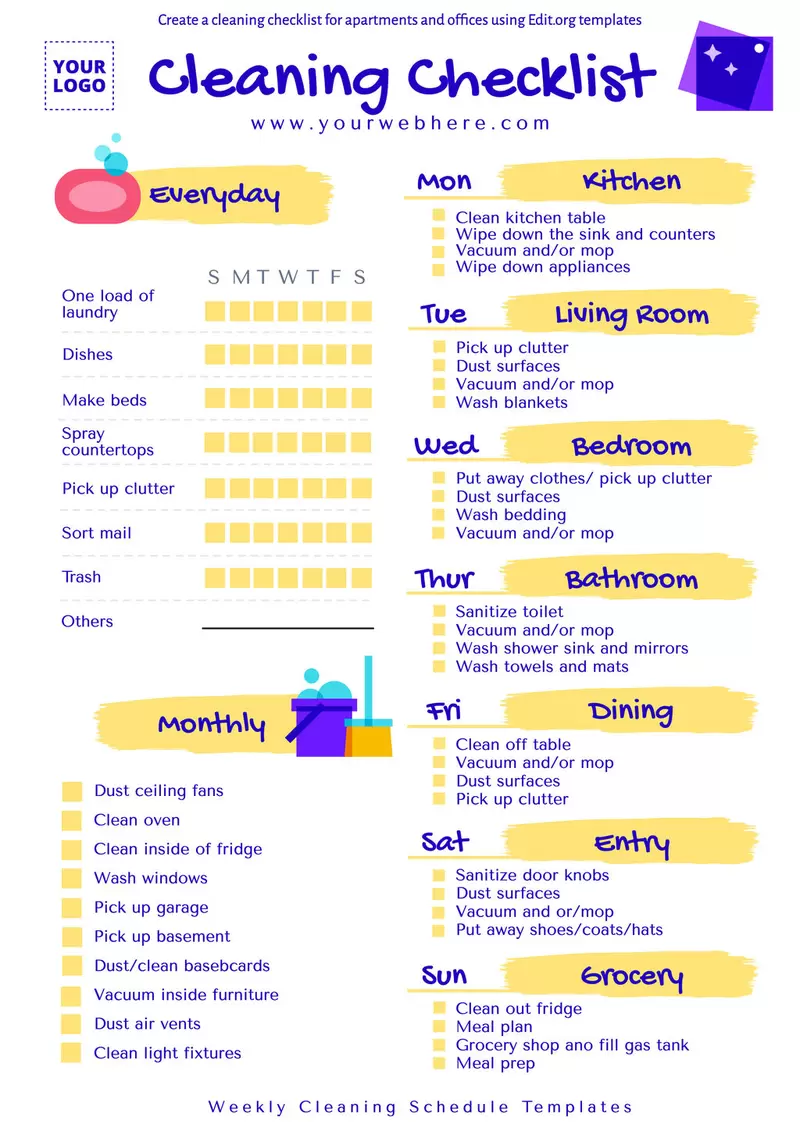
Creating a weekly cleaning plan helps keep your home neat and tidy. It breaks big chores into small, easy tasks. This plan saves time and reduces stress. Everyone knows what to do and when to do it. Let’s explore how to build a plan that fits your home and schedule.
Daily Tasks
Daily tasks keep your home clean every day. These chores take little time but make a big difference. Examples are washing dishes, wiping counters, and making beds. Sweep floors in busy rooms to avoid dirt build-up. Doing these tasks daily stops mess from growing.
Weekly Deep Cleaning
Weekly deep cleaning tackles bigger jobs that need more time. Clean bathrooms, mop floors, and dust furniture thoroughly. Change bed sheets and vacuum carpets. These chores keep your home healthy and fresh. Pick specific days for these tasks to build a habit.
Assigning Tasks To Family Members
Sharing chores makes cleaning faster and fair. Give simple tasks to children, like picking up toys or dusting shelves. Adults can handle heavier jobs like vacuuming or cleaning bathrooms. Use a chart or app to track who does what. Teamwork helps keep the home clean and everyone responsible.
Using Digital And Physical Planners
Creating a house cleaning schedule becomes easier with the right tools. Both digital and physical planners help organize tasks clearly. They keep you on track and reduce stress. Choose the method that fits your style best. Some prefer apps, others like paper lists. Combining both can also work well.
Apps For Scheduling
Many apps help plan cleaning tasks. They allow you to set daily or weekly chores. Some apps show reminders at set times. You can check off tasks once done. Apps work well on phones and tablets. They sync across devices for easy access anywhere.
Printable Checklists
Printable checklists offer a simple way to track chores. You can find many free templates online. Print one and place it on your fridge or wall. Mark tasks with a pen or pencil as you finish. This method suits people who like visible reminders. It also feels satisfying to see progress on paper.
Setting Reminders
Reminders make sure cleaning tasks are not forgotten. Use phone alarms or calendar alerts for this. Set reminders for daily, weekly, or monthly cleaning jobs. Choose sounds or notifications that catch your attention. This helps build a regular cleaning habit over time.

Sticking To Your Schedule
Sticking to your house cleaning schedule helps keep your home tidy and stress-free. It takes effort and consistency to make cleaning a regular part of your life. Small steps every day build long-lasting habits. Staying on track also means handling interruptions and making changes when needed. This approach helps you stay organized and motivated.
Building Cleaning Habits
Start with small, simple tasks. Clean one room or area each day. Doing a little daily avoids big messes. Set a specific time for cleaning to create routine. Repeat tasks regularly until they feel natural. Use reminders or alarms to keep on track. Celebrate progress to stay motivated. Habits form faster with steady practice.
Dealing With Interruptions
Interruptions happen often. Children, work, or unexpected guests can disrupt plans. Pause cleaning without stress. Resume as soon as possible. Keep cleaning supplies ready for quick touch-ups. Break tasks into smaller parts to fit short breaks. Avoid feeling guilty about delays. Flexibility helps maintain progress over time.
Adjusting Your Plan As Needed
Life changes, so your cleaning plan must change too. Review your schedule weekly or monthly. Note what works and what does not. Shift cleaning days or tasks to suit your routine. Add or remove chores based on needs. Stay realistic about your time and energy. A flexible plan stays useful and easy to follow.
Tips For Speedy And Effective Cleaning
Speedy and effective cleaning saves time and effort. It helps keep your home fresh and tidy without stress. Using smart habits makes cleaning easier. Here are tips to clean faster and better.
Multitasking Techniques
Do simple tasks together to save time. For example, spray cleaner on surfaces first. While it works, wipe other areas. Clean windows while waiting for floors to dry. This way, work moves quickly without waiting.
Use tools that help multitask. A vacuum with attachments cleans floors and furniture fast. Choose cleaning products that work on many surfaces. This reduces the need to change tools often.
Decluttering Before Cleaning
Clear items from floors and counters first. It makes cleaning easier and faster. Put toys, clothes, and dishes in their places before wiping or sweeping. Decluttering helps you reach every spot without moving things multiple times.
Organize belongings in bins or boxes. This keeps clutter under control daily. Less clutter means less dust and mess build-up. It also improves your cleaning flow.
Maintaining Cleanliness Daily
Spend a few minutes each day cleaning small areas. Wipe kitchen counters after cooking. Sweep floors in high-traffic spots. This stops dirt from piling up and reduces deep cleaning time.
Make daily habits like putting shoes away or washing dishes right after use. These small actions keep your house cleaner longer. They make weekend cleaning much easier.
Frequently Asked Questions
How Often Should I Clean Different Rooms In My House?
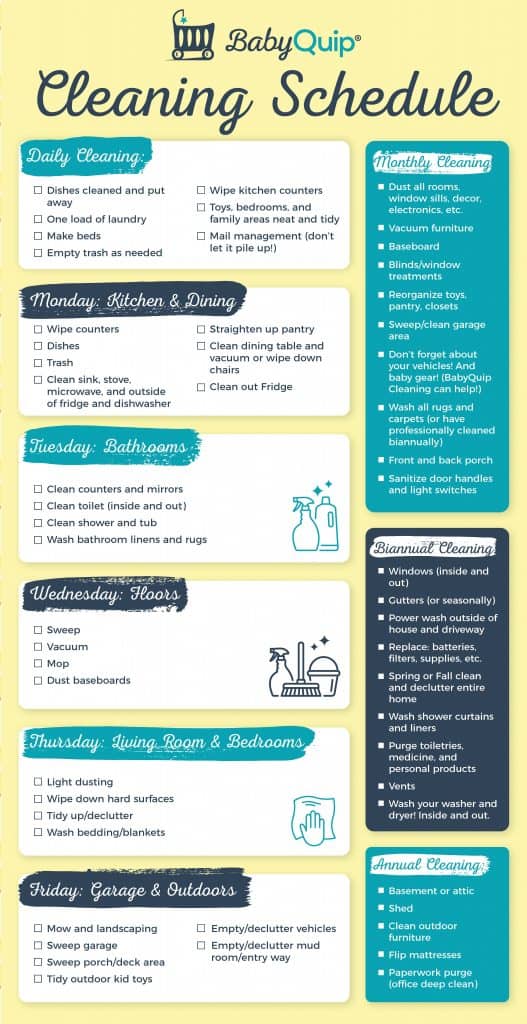
Cleaning frequency depends on room usage. Kitchens and bathrooms need weekly cleaning. Living rooms and bedrooms can be cleaned bi-weekly. High-traffic areas may require more frequent attention. Adjust your schedule based on your lifestyle and household needs for the best results.
What Are The Key Steps In Creating A Cleaning Schedule?
Start by listing all cleaning tasks. Prioritize tasks by importance and frequency. Allocate specific days for each task. Use a planner or app to track progress. Regularly review and adjust your schedule to stay organized and efficient.
How Can I Make Cleaning Less Overwhelming?
Break tasks into small, manageable parts. Spread chores throughout the week. Use timers to stay focused. Involve family members to share responsibilities. Consistency helps maintain cleanliness without stress.
What Tools Help Maintain An Effective Cleaning Schedule?
Use calendars, planners, or cleaning apps for organization. Set reminders to stay on track. Keep cleaning supplies accessible in each area. Checklists can boost motivation and ensure no task is missed. Choose tools that fit your lifestyle.
Conclusion
Creating a house cleaning schedule helps keep your home neat and tidy. Small daily tasks prevent big messes later. Consistency makes cleaning easier and faster over time. Adjust your plan as needed to fit your life. A simple schedule reduces stress and saves energy.
Everyone in the home can join to share the work. Start today and enjoy a cleaner, more organized space.

