

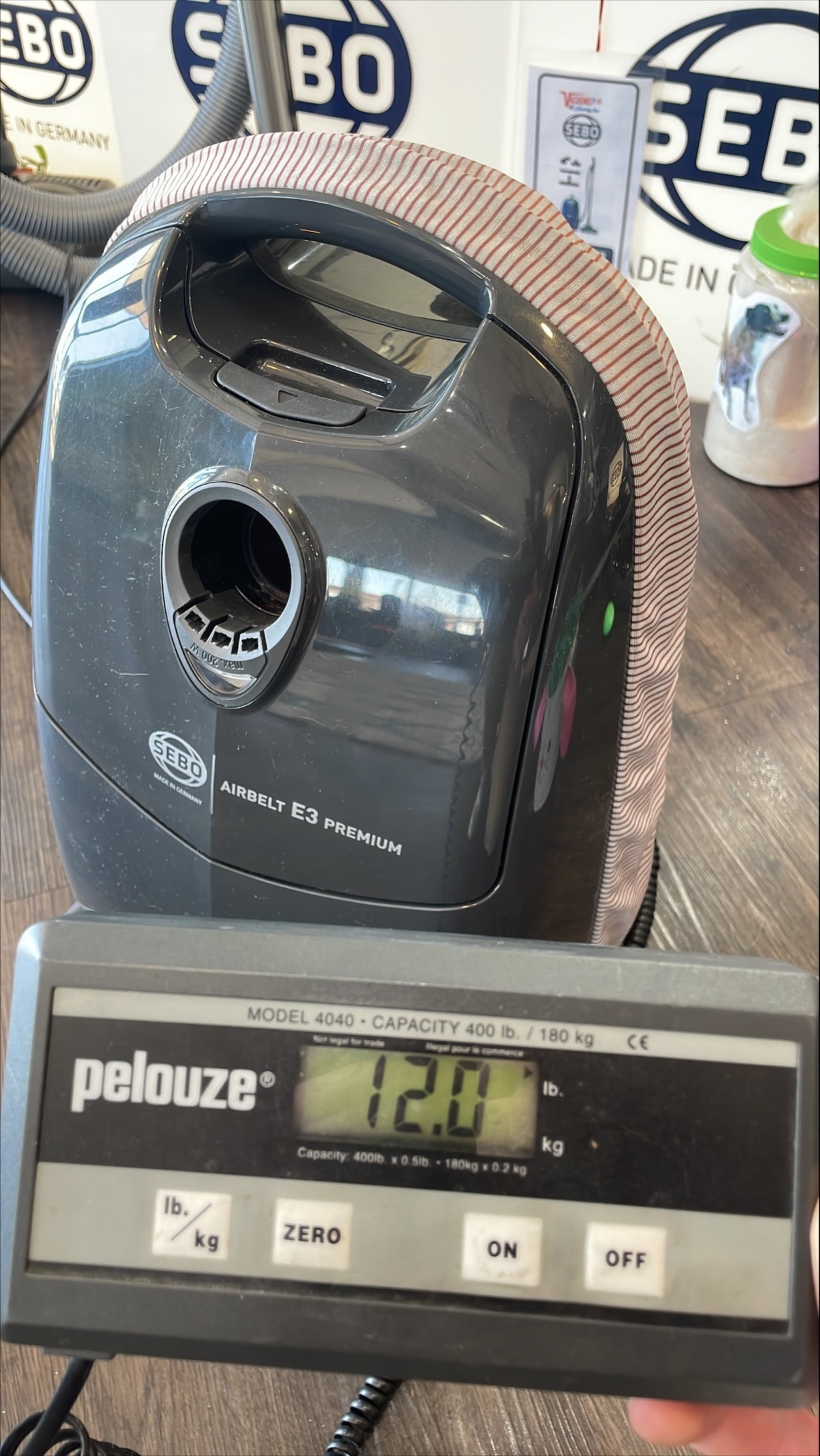
A canister vacuum usually weighs 8 to 20 pounds, depending on the model and features.
Today's Exclusive Deals
Limited-time Exclusive Deals. Check current discount on Amazon.
Check Price on Amazon As an Amazon Associate I earn from qualifying purchases.A canister vacuum may seem simple, but its weight changes a lot based on motor size, dust capacity, hose length, and build quality. If you are comparing models for stairs, apartments, or whole-home cleaning, knowing how much a canister vacuum weighs can save you from buying one that feels awkward or tiring to use.
What affects how much a canister vacuum weighs?
Canister vacuum weight is not random. It depends on the parts inside and the way the vacuum is built. In my own testing and use over the years, I have found that two vacuums that look similar on a store shelf can feel very different once you pick them up.
A few main things affect the weight:
Today's Exclusive Deals
Limited-time Exclusive Deals. Check current discount on Amazon.
Check Price on Amazon As an Amazon Associate I earn from qualifying purchases.• Motor size: Bigger motors usually mean more suction, but also more weight
• Dust bin or bag size: Larger capacity adds bulk
• Body materials: Plastic keeps weight down, while metal parts add more
• Filtration system: HEPA filters and extra layers can add a little weight
• Attachments and storage: Some models carry tools on board, which makes them heavier
• Cord reel and hose design: These features can change the balance and total weight
Most canister vacuums keep the heaviest parts in the rolling canister, while the cleaning wand and hose stay light in your hand. That is why a canister vacuum can feel easier than an upright, even if the total weight is similar.

Average canister vacuum weight ranges
If you are shopping for one, it helps to think in ranges instead of a single number. The average canister vacuum weighs about 8 to 20 pounds, but the useful range depends on the style and purpose.
Today's Exclusive Deals
Limited-time Exclusive Deals. Check current discount on Amazon.
Check Price on Amazon As an Amazon Associate I earn from qualifying purchases.Here is a simple breakdown:
• Compact canister vacuums: about 6 to 10 pounds
• Standard home canister vacuums: about 10 to 15 pounds
• Heavy-duty or premium canister vacuums: about 15 to 20+ pounds
Compact models are easier to carry up stairs and store in small closets. Standard models are the most common for everyday cleaning. Heavy-duty units often have stronger motors, larger bags, and better filtration, but they can feel bulky when you need to move them often.
In real life, the number on the box does not tell the whole story. A 13-pound model with smooth wheels and a flexible hose may feel easier to use than a 10-pound model with poor balance. That is one of the biggest lessons I learned when comparing machines for different floor plans.

Why canister vacuum weight matters
Weight matters because it affects comfort, speed, and how often you will actually use the vacuum. A machine that feels too heavy can turn a quick cleanup into a chore.
The weight affects several things:
• Portability: You may need to carry it from room to room or up stairs
• Maneuverability: A lighter canister is easier to roll and turn
• Storage: Heavier models may feel harder to lift onto shelves
• Cleaning fatigue: Less weight often means less strain on your arms and back
• Travel between floors: Apartment dwellers and multi-story homeowners notice this the most
If your home has stairs, weight matters even more. You may be lifting the canister with one hand while guiding the wand with the other. A few extra pounds can make that job much harder than it sounds.
This is also where ergonomics come in. Some vacuums are light but poorly balanced, which makes them feel worse than a slightly heavier model with a better handle and wheel design. In my experience, balance often matters as much as raw weight.
Lightweight vs. heavy canister vacuums
Not all canister vacuums are built for the same job. A lightweight model is best for quick cleaning and easy carrying, while a heavier model may be better for deep cleaning and larger homes.
Lightweight canister vacuums
These usually weigh under 10 pounds, though some may be a bit above that. They are a smart pick if you want easy lifting and simple storage.
Best for:
• Small homes and apartments
• Older adults or anyone with limited strength
• Quick pickups and light messes
• Homes with lots of stairs
Trade-offs:
• Smaller dust capacity
• Less power in some models
• Fewer premium features
Heavy canister vacuums
These usually weigh 15 pounds or more. They often offer stronger suction, more durable parts, and better filtration.
Best for:
• Large homes
• Deep carpet cleaning
• Allergy control
• Long cleaning sessions
Trade-offs:
• Harder to carry
• Takes up more storage space
• Can feel tiring on stairs
A good rule of thumb is this: choose the lightest model that still meets your cleaning needs. That keeps your routine simple without forcing you to give up too much performance.

Canister vacuum weight compared with other vacuum types
Many shoppers ask how canister vacuums compare with other vacuum types. The answer is that canister vacuums often split the weight better, even if the total weight is not always lower.
Here is a general comparison:
• Stick vacuums: often 4 to 8 pounds
• Handheld vacuums: often 2 to 6 pounds
• Canister vacuums: often 8 to 20 pounds
• Upright vacuums: often 12 to 20 pounds or more
Canister vacuums are special because the motor and dust collection stay on the floor behind you. That means your hand only carries the wand and hose, not the whole machine. This is why many people find canister vacuums easier to use on stairs, under furniture, and around tight corners.
Compared with uprights, canisters often feel less tiring for detailed cleaning. Compared with sticks, they are usually heavier overall, but they often make up for that with stronger suction and better cleaning power.

How to choose the right weight for your home
The best canister vacuum weight depends on your home, habits, and strength. There is no single perfect number for everyone.
Use these tips to narrow it down:
- If you live in an apartment, look for a model under 10 pounds
- If you have stairs, focus on balance and carry comfort, not just low weight
- If you clean large rooms, a 12 to 15 pound model may be a good middle ground
- If you have pets or thick carpet, you may need a heavier model with stronger suction
- If storage is tight, check both the weight and the size of the canister
I always suggest thinking about how you will use the vacuum most days, not just on deep-clean days. A powerful but bulky machine can look great on paper and still end up sitting in the closet. A smaller model that gets used often is usually the better buy.
Also pay attention to the carrying handle and wheel quality. A vacuum that rolls well can feel much lighter than one with stiff wheels. That simple detail often gets overlooked.
Features that can add weight
Some features improve performance but also increase weight. That is not a bad thing, but it is worth knowing before you buy.
Common weight-adding features include:
• HEPA filtration systems
• Larger dust bags or dust bins
• Metal wand sections
• Stronger motors
• Extra tools stored on the body
• Automatic cord rewind systems
• Premium sound insulation
These features can be useful, especially if you want cleaner air or deeper cleaning. But every added feature comes with a small trade-off. When I tested several premium models, I noticed that the heavier ones often felt more stable, but they also took more effort to lift into a closet or carry between floors.
If you want a vacuum that is easy on the body, look for a balance between performance and portability. The lightest option is not always the best one.

Practical tips for handling a canister vacuum
Even a well-designed vacuum can feel awkward if you use it the wrong way. A few simple habits can make a big difference.
Try these tips:
• Keep the canister behind you so the hose stays smooth
• Use the shoulder strap only if the model is built for it
• Empty the dust bag or bin before it gets too full
• Move slowly around corners to avoid tipping
• Lift with both hands when carrying upstairs
• Check the wheel design before buying if you have hard floors
One mistake I see often is people choosing a vacuum only by suction power. Suction matters, but if the unit is too heavy or clumsy, people stop using it as often. The best vacuum is the one you can use comfortably week after week.
Another tip is to test the hose reach. A long hose can reduce how often you need to move the canister, which makes even a heavier vacuum feel easier. That little detail can save a lot of effort in real homes.

What manufacturers and product specs usually mean
When you read product listings, the weight may be listed in different ways. This can be confusing if you are comparing models.
You may see:
• Product weight: the weight of the vacuum itself
• Shipping weight: includes packaging and is not useful for daily use
• Cord length and hose length: not weight, but important for ease of use
• Carry weight: sometimes the best clue for stair use
Always check whether the listed weight includes tools or accessories. Some brands list the canister alone, while others include the wand or hose. That can make one model look lighter on paper than it feels in your home.
For trustworthy comparison, use the same type of weight measure across all products. If one vacuum lists shipping weight and another lists product weight, the comparison is not fair. That is a common shopping mistake.
Frequently Asked Questions of How much does a canister vacuum weigh?
How much does a canister vacuum weigh on average?
Most canister vacuums weigh between 8 and 20 pounds. Compact models are lighter, while premium and heavy-duty models are usually on the heavier side.
Are canister vacuums lighter than upright vacuums?
Not always in total weight, but they often feel lighter to use because the motor sits on the floor. You only hold the wand and hose, which reduces arm fatigue.
What is the best canister vacuum weight for stairs?
For stairs, a model under 10 to 12 pounds is usually easier to manage. Balance and handle comfort matter just as much as the number on the scale.
Do heavier canister vacuums clean better?
Sometimes they do, mainly because they may have stronger motors, larger filters, or better build quality. But weight alone does not guarantee better cleaning.
Is a lightweight canister vacuum good for pet hair?
Yes, if it has strong suction and the right brush tool. A lightweight model can still handle pet hair well if the design is built for it.
Conclusion
How much a canister vacuum weighs depends on design, power, and the features you need most. In general, a canister vacuum weighs about 8 to 20 pounds, but the best choice is the one that feels easy to carry, roll, and use in your space.
If you are shopping for one, look past the number alone and think about balance, hose length, storage, and stair use. A smart choice will make cleaning feel less like a workout and more like a quick part of your routine. Take a few minutes to compare models carefully, and you will likely end up with a vacuum that fits your home and your hands much better.
If this guide helped, explore more cleaning tips, compare a few models side by side, and leave a comment with the vacuum weight you are considering.

