

HEPA filters trap far more fine dust and allergens, while standard filters handle bigger debris well.
Today's Exclusive Deals
Limited-time Exclusive Deals. Check current discount on Amazon.
Check Price on Amazon As an Amazon Associate I earn from qualifying purchases.If you are comparing HEPA vs standard vacuum filter, you are probably trying to solve a real home problem: less dust, fewer allergy flare-ups, and a cleaner floor that actually stays clean. I have tested both types in homes with pets, carpets, and hard floors, and the difference is not just marketing. The right vacuum filter can change how much dirt stays in the machine, how much gets blown back into the air, and how comfortable your home feels after cleaning.
What a vacuum filter actually does
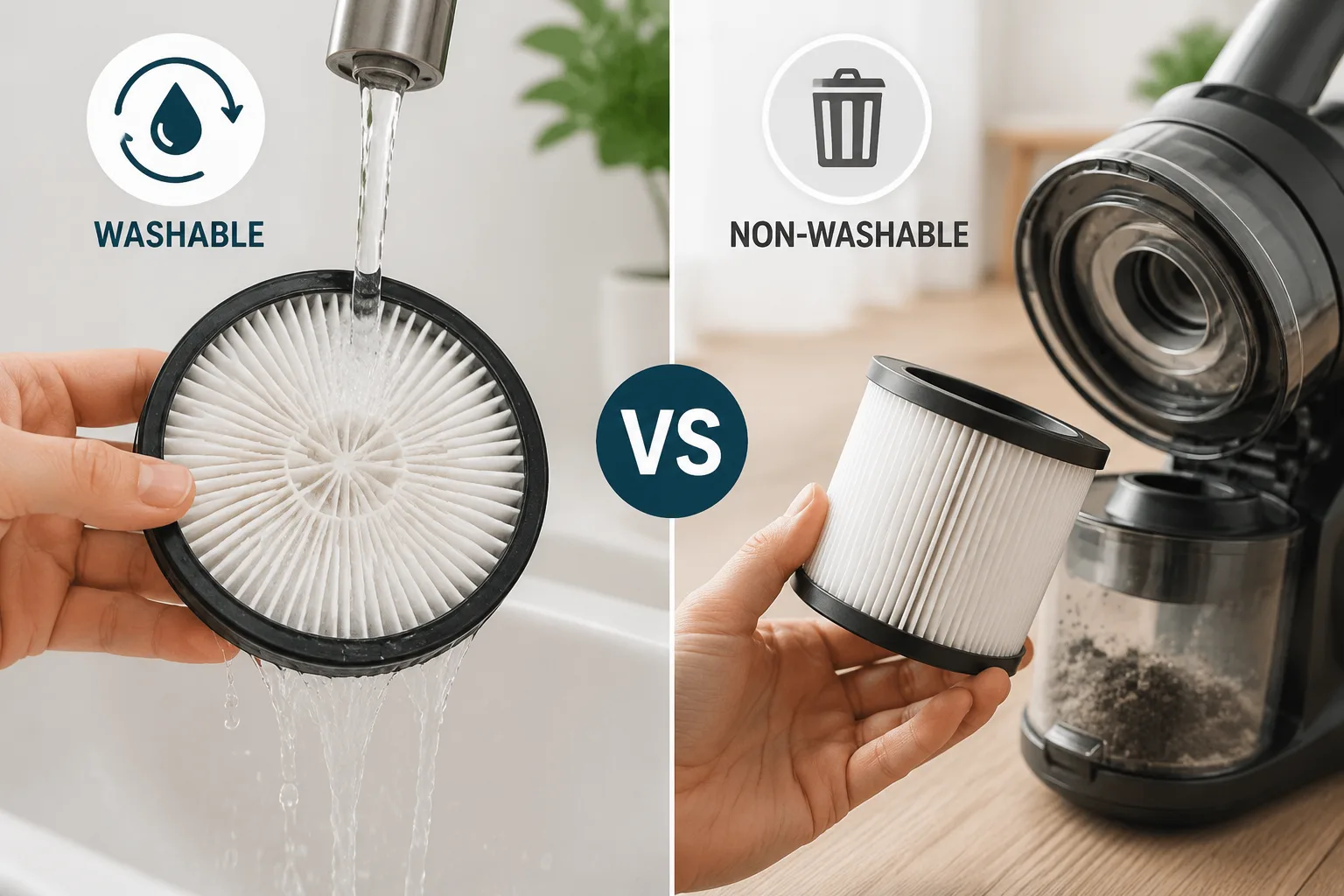
A vacuum filter is like a gatekeeper. It catches dirt, dust, and tiny particles before they move through the machine and back into your room. Without a good filter, a vacuum may pick up visible crumbs but still leak fine dust into the air.
Today's Exclusive Deals
Limited-time Exclusive Deals. Check current discount on Amazon.
Check Price on Amazon As an Amazon Associate I earn from qualifying purchases.That matters more than people think. The floor may look clean, but the air can still hold tiny particles from pet dander, pollen, and dust mite waste. A better filter helps keep those particles trapped inside the vacuum instead of recirculating them.
HEPA vs standard vacuum filter: the main difference
The biggest difference in the HEPA vs standard vacuum filter debate is particle capture. A true HEPA filter is designed to trap at least 99.97% of particles as small as 0.3 microns. A standard vacuum filter usually captures larger particles but may let more fine dust pass through.
In simple terms, a HEPA filter is built for cleaner air, while a standard filter is often built for basic dust control. That does not mean standard filters are useless. It means they are better for light cleaning needs, while HEPA is the stronger choice for allergies, asthma, and fine indoor dust.
How HEPA filters work
HEPA stands for High-Efficiency Particulate Air. These filters use a dense fiber mesh to catch tiny particles through several capture methods, not just by acting like a screen. Particles get trapped by direct impact, interception, and diffusion.
Today's Exclusive Deals
Limited-time Exclusive Deals. Check current discount on Amazon.
Check Price on Amazon As an Amazon Associate I earn from qualifying purchases.That design is why HEPA filters are trusted in air purifiers, medical spaces, and many premium vacuums. In the real world, this means less dust escaping when you empty the bin or run the vacuum. If you have ever noticed that dusty smell after vacuuming, a HEPA system often reduces that problem.
How standard vacuum filters work
Standard vacuum filters vary a lot. Some are simple foam or cloth filters that catch larger debris and protect the motor. Others are pleated filters or multi-stage systems that do better than basic models, but still do not match true HEPA performance.
I have used plenty of standard-filter vacuums in quick cleanup jobs, and they can be perfectly fine for daily crumbs, pet hair, and surface dirt. The issue shows up when the mess gets finer, like drywall dust, pollen, or very small allergens. That is where standard filters can start to feel like a leaky net.
HEPA vs standard vacuum filter for allergies and asthma
If allergies are part of your life, the HEPA vs standard vacuum filter choice matters a lot. HEPA filters are widely recommended in homes where dust mites, pet dander, or pollen are a concern. They help reduce the amount of fine particles that get stirred back into the room.
A standard filter may still clean the floor well, but it may not help the air feel cleaner afterward. From experience, the difference is easiest to notice after vacuuming a bedroom or living room with fabric furniture. With HEPA, the air usually feels less dusty, especially if you vacuum often.
HEPA vs standard vacuum filter for pet owners
Pet homes are a great test case for this topic. Hair is easy to see, but pet dander is much smaller and harder to control. A HEPA vacuum filter is usually the better pick if you have cats or dogs, especially if anyone in the home is sensitive to allergens.
Standard filters can remove hair from carpets and upholstery, but fine dander may escape more easily. I learned this the hard way when a client with two dogs complained that vacuuming made the room smell dusty again an hour later. Switching to a HEPA setup helped reduce that lingering airborne mess.
HEPA vs standard vacuum filter for carpets, rugs, and hard floors
Different floors create different cleaning needs. Carpets and rugs hold on to dust deep in the fibers, so they often benefit more from HEPA filtration. Hard floors release dirt more easily into the air, so a good filter can also make a noticeable difference.
Here is a simple way to think about it:
- Carpets and rugs: HEPA is often the better choice because it handles deep dust and fine debris
- Hardwood and tile: standard filters may be enough for basic messes, but HEPA still gives cleaner air
- Mixed homes: HEPA usually offers the best all-around performance
In short, the more your home traps dust, the more useful HEPA becomes.
Pros and cons of HEPA filters
HEPA filters are strong, but they are not perfect. Knowing both sides helps you choose wisely.
Benefits:
- Captures very fine particles
- Helps reduce allergens in the air
- Good for homes with pets, kids, or asthma concerns
- Works well in multi-stage vacuum systems
Limitations:
- May cost more
- Can reduce airflow if the vacuum is poorly designed
- Needs proper maintenance and replacement
- A vacuum must be sealed well to perform like true HEPA
The last point is important. A HEPA filter alone does not guarantee better air cleaning if the vacuum leaks around the edges.
Pros and cons of standard vacuum filters
Standard filters still have a place. They are common, affordable, and often enough for basic cleaning. If your goal is to pick up visible dirt in a low-dust home, they can do the job.
Benefits:
- Lower cost
- Easy to find in many vacuums
- Often simpler to clean or replace
- Fine for basic debris and quick cleaning
Limitations:
- Less effective on fine allergens
- May release more dust back into the room
- Not ideal for allergy-sensitive homes
- Performance varies widely by model
Standard filters are a bit like a basic screen door. They keep out the big stuff, but the really small particles can still slip through.
What the research and industry guidance suggest
HEPA filtration has long been used in settings that need high particle control, and the performance standard is well established. In home cleaning, independent testing and consumer guidance consistently show that sealed vacuums with HEPA filtration reduce fine particle escape better than many standard-filter models. That is especially useful when indoor air quality is a priority.
At the same time, experts also note that vacuum design matters just as much as the filter itself. A poorly sealed HEPA vacuum can underperform, while a well-built standard vacuum may still do a decent job for everyday cleaning. So the smartest choice is not just about the label, but about the whole system.
How to choose between HEPA vs standard vacuum filter
Choosing between HEPA vs standard vacuum filter comes down to your home and your health needs. I usually tell people to start with the mess, then think about the air. If your home deals with allergies, pets, or lots of fine dust, HEPA is usually worth it.
Use this simple guide:
- Pick HEPA if someone in the home has allergies or asthma.
- Pick HEPA if you have pets that shed a lot.
- Pick HEPA if you vacuum carpets, rugs, or fabric-heavy rooms often.
- Pick a standard filter if you only need light cleaning and want a lower-cost option.
- Check whether the vacuum is sealed well, not just whether it says HEPA.
If you want the cleanest result, focus on both filtration and vacuum build quality.
Maintenance tips that make either filter work better
Even the best filter can struggle if you ignore maintenance. I have seen good vacuums lose performance simply because the filter was clogged or installed badly. That is an easy mistake to avoid.
Try these simple habits:
- Empty the dust bin before it gets packed full
- Replace washable filters only after they are fully dry
- Change disposable filters on schedule
- Clean the brush roll so airflow stays strong
- Check seals and gaskets for gaps
- Avoid vacuuming wet messes unless the vacuum is made for it
A clean filter is like a clean window. If it is blocked, everything behind it works harder and performs worse.
Common mistakes people make when comparing filters
One mistake is assuming every vacuum labeled HEPA is truly sealed. Another is thinking a standard filter is always bad. The truth is more balanced than that.
Common mistakes include:
- Buying based on the label alone
- Forgetting to check replacement filter cost
- Ignoring airflow and suction design
- Using the wrong filter type for the home
- Waiting too long to replace clogged filters
I have also seen people upgrade the filter but keep the same old vacuum habits. If the machine is overfilled or never cleaned, even HEPA cannot save its performance.
Frequently Asked Questions of HEPA vs standard vacuum filter
Is a HEPA filter worth it in a regular home?
Yes, especially if you have pets, allergies, or a lot of carpet. Even in an average home, a HEPA vacuum filter can help keep fine dust from floating back into the air.
Can a standard vacuum filter remove allergens?
It can remove some larger allergen particles, but usually not as well as HEPA. If allergens are a real concern, a standard filter is usually the weaker choice.
Do all HEPA vacuums perform the same?
No, they do not. The vacuum must be sealed properly, or air can leak around the filter and reduce performance.
Are HEPA filters harder to maintain?
Not necessarily, but they do need regular care. You should follow the manufacturer’s schedule, since a clogged HEPA filter can reduce suction and airflow.
Which is better for pet hair: HEPA or standard vacuum filter?
For pet hair plus pet dander, HEPA is usually better. Standard filters may handle the hair itself, but HEPA does a better job with the smaller particles pets leave behind.
Conclusion
When it comes to HEPA vs standard vacuum filter, the best choice depends on what you need most: basic cleaning or cleaner indoor air. Standard filters can work well for simple jobs, but HEPA is the stronger option for allergens, pets, fine dust, and homes that need better particle control.
If you want a cleaner, fresher home, look beyond suction power and pay attention to filtration quality too. Compare your vacuum options carefully, check for true sealing, and choose the filter that fits your space and health needs. If this helped, keep exploring your home care options and share your experience in the comments.

