

If you’re thinking about setting up a dart board at home, you might wonder: how much space do you actually need? Dart boards are fun, social, and can fit in many rooms, but there are rules and practical details you shouldn’t ignore. Setting up your dart board the right way means you get a safe, enjoyable game — and avoid damage to your walls, furniture, or even yourself.
Let’s look at the space requirements, measurement standards, and smart ways to make your dart-playing area both practical and comfortable. Whether you’re a beginner or planning a full game room, this guide will help you make the best use of your space.
Official Dart Board Space Requirements
The World Darts Federation and other organizations set clear standards for dart board placement. Following these rules ensures a proper playing experience and keeps things fair.
Standard Measurements
For a classic steel-tip dart board, these are the official requirements:
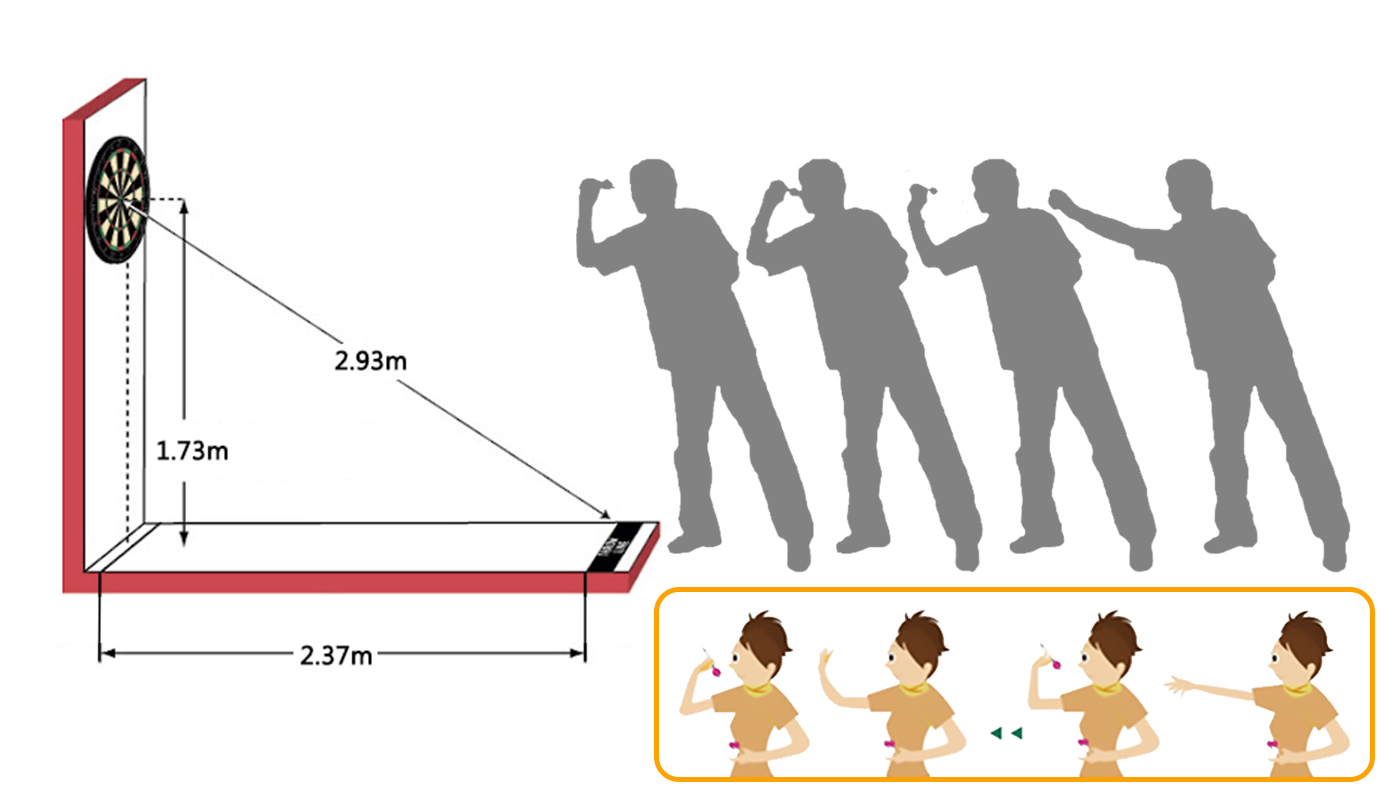
- Distance from the front of the dart board to the throwing line (oche): 7 feet 9.25 inches (2.37 meters)
- Height from floor to center bullseye: 5 feet 8 inches (1.73 meters)
For soft-tip dart boards (used in electronic darts), the distance is slightly longer:
- Distance from board to oche: 8 feet (2.44 meters)
- Height: Same, 5 feet 8 inches
These measurements come from international tournament rules. They keep games consistent, but they’re also designed for safety and comfort.
Why These Distances Matter
The throwing distance and height aren’t random. They match the average reach, allow proper dart flight, and prevent players from getting too close. Following them means you can join competitions — or simply play at home without bad habits.
Calculating Total Space Needed
The minimum space isn’t just the throwing distance. You need extra room for movement, safety, and protecting your walls. Let’s break it down.
Space Behind The Throw Line
Players need room to stand, step back, and move without bumping into things. Ideally, you want at least 2 feet (60 cm) behind the oche for comfort.
Width Around The Dart Board
Darts sometimes bounce out, and players move side to side. A safe width is about 5 feet (1. 5 meters) to each side of the board, but you can play with less if your room is tight.
Ceiling Height
The dart board is set at 5 feet 8 inches, but consider the dart’s flight arc and players’ height. A ceiling height of at least 7. 5 feet (2. 3 meters) is comfortable for most people.
Putting It Together
For a standard steel-tip dart board, your minimum space should look like this:
| Area | Minimum Distance |
|---|---|
| Throwing Distance | 7 ft 9.25 in |
| Space Behind Throw Line | 2 ft |
| Width Around Board | 5 ft each side |
| Ceiling Height | 7.5 ft |
So, your ideal playing area is about 13 feet long (board to wall behind player) and 10 feet wide (side to side). If your room is smaller, you can adjust, but safety and comfort may suffer.

Dart Board Types And Space Impacts
The type of dart board you choose affects your space needs. Let’s compare some common options.
Steel-tip Vs Soft-tip
Steel-tip boards are heavier and often used in bars or tournaments. They require a solid wall and standard distances.
Soft-tip boards are lighter, often electronic, and sometimes used in apartments or places with limited space.
| Dart Board Type | Throwing Distance | Wall Protection Needed | Noise Level |
|---|---|---|---|
| Steel-tip | 7 ft 9.25 in | High (darts can damage wall) | Moderate to high |
| Soft-tip | 8 ft | Medium (plastic tips less damaging) | Low |
Cabinet Dart Boards
Some dart boards come in cabinets. Cabinets add a few inches to the board’s width, and they help protect walls. Make sure your space allows for opening doors and swinging them freely.
Portable And Magnetic Dart Boards
For kids or casual play, portable or magnetic dart boards need less space. They’re lightweight and can be moved around, but you still need to follow basic throwing distances for safety.
Wall Protection And Safety Considerations
Dart boards can damage walls, especially when darts miss. Protecting your wall is easy and smart.
Backboard And Surrounds
A backboard or surround is a panel or ring placed behind the dart board. It catches stray darts and keeps the wall safe.
- Backboards are usually made of wood, cork, or foam.
- Surrounds are thick rings of foam or rubber.
A backboard should be at least 3 feet wide, giving you extra space for misses.
Dart Mats
A dart mat protects your floor and marks the throwing line. Mats are usually 2–3 feet wide and 8 feet long. They’re useful for marking the oche and stopping darts from damaging floors.
Safety Tips
- Keep furniture and breakables away from the dart board area.
- Don’t let children play unsupervised.
- Use proper lighting to avoid shadows and missed throws.
Measuring And Installing Your Dart Board
Getting your dart board in the right spot is important. Here’s how to do it:
Steps For Installation
- Find a Suitable Wall: Choose a solid wall with enough space. Avoid windows, doors, or fragile items nearby.
- Measure the Height: Mark 5 feet 8 inches from the floor for the center of the bullseye.
- Mount the Dart Board: Use the mounting bracket provided. Make sure the board is flush and doesn’t wobble.
- Mark the Throwing Line: Measure 7 ft 9.25 in (steel-tip) or 8 ft (soft-tip) from the face of the board to the floor. Use tape or a dart mat to mark the oche.
- Add Wall Protection: Install a backboard or surround for safety.
- Check Lighting: Make sure the board is well-lit with no shadows. LED spotlights work well.
Common Mistakes
- Measuring from the wall instead of the front of the dart board (always measure from the face).
- Setting the board too high or low.
- Not marking the throwing line accurately.
- Ignoring wall or floor protection.
Room Layout Examples
Dart boards can fit into many spaces: basements, garages, living rooms, even bedrooms. Here are some real-life layout examples:
Small Apartment Setup
In a small apartment, space is tight. Use a soft-tip board with a foam surround and a dart mat. The minimum space is 8 feet long by 6 feet wide. Consider mounting the board on a closet door or movable stand.
Garage Or Basement Game Room
Garages and basements are popular for dart boards. You can use a steel-tip board, a large backboard, and plenty of space. 13 feet by 10 feet is comfortable, and you can add seating, scoreboards, and storage.
Outdoor Dart Board
Outdoor setups need weather protection. Use a portable stand and make sure there’s enough space around. Avoid wind and rain, and always use a backboard.
Advanced Tips For Creating The Perfect Dart Area
Once you have the basic space set up, a few advanced tips can make your dart board area even better.
Lighting Matters
Good lighting is essential. Shadows can ruin your aim and make it hard to see scores. Use LED spotlights or directional lamps placed above and slightly in front of the board.
Storage And Accessories
Add shelves or hooks for darts, flights, and scoreboards. Keep the area tidy to avoid accidents.
Noise And Vibration
Steel-tip boards can be noisy, especially on thin walls. Use foam or cork behind the board to reduce sound and vibration. This is especially useful in apartments.
Extra Comfort
Add a small rug or mat behind the oche for comfort. Seating nearby lets people watch and wait their turn.
Comparing Dart Board Space Needs To Other Games
You might wonder how dart board space compares to other popular games. Let’s look at a quick comparison.
| Game | Minimum Length | Minimum Width | Ceiling Height |
|---|---|---|---|
| Dart Board | 13 ft | 10 ft | 7.5 ft |
| Pool Table (7 ft) | 17 ft | 13.5 ft | 8 ft |
| Foosball Table | 8 ft | 6 ft | 7 ft |
| Table Tennis | 19 ft | 11 ft | 8 ft |
As you can see, dart boards require less space than pool or table tennis, making them ideal for smaller rooms.
Non-obvious Insights Most Beginners Miss
- Wall Material Matters: Not all walls are equal. Drywall is easy to damage; brick or solid wood is better for mounting steel-tip boards. If you have only drywall, use extra-thick backboards or choose soft-tip boards.
- Floor Level Is Important: Uneven floors can make the dart board height inaccurate. Always measure from the exact point where the player stands — not where the floor rises or falls.
Dart Board Space For Kids And Beginners
If you’re setting up a dart board for children or absolute beginners, safety is even more important.
- Use magnetic or soft-tip boards for young kids.
- Lower the board height if needed, but always mark it clearly so you can reset for adult play.
- Make sure there’s extra space for kids to move and play safely.
Frequently Asked Questions
What Is The Minimum Space Needed For A Dart Board?
The absolute minimum is the throwing distance (7 ft 9. 25 in for steel-tip, 8 ft for soft-tip) and enough room to stand behind the oche. Ideally, you want 13 ft by 10 ft for comfort and safety.
Can I Install A Dart Board In A Small Apartment?
Yes, but you may need to use a soft-tip board, a foam surround, and a dart mat. You can get away with 8 ft by 6 ft, but be careful about wall and floor damage.
Do I Need A Backboard Or Surround?
It’s highly recommended. Backboards and surrounds protect your wall from missed darts. They also make your setup look professional and reduce noise.
How Do I Mark The Throwing Line (oche)?
You can use tape, paint, or a dart mat. Always measure from the front of the dart board, not the wall. For steel-tip, mark at 7 ft 9. 25 in; for soft-tip, mark at 8 ft.
Is Lighting Important For Dart Board Setup?
Absolutely. Good lighting reduces shadows and helps you see the board clearly. Use LED spotlights or directional lamps placed above and in front of the board.
Setting up a dart board is simple if you follow these guidelines. Proper space, accurate measurements, and a few safety precautions will let you enjoy darts anywhere — from a small apartment to a full game room. If you want more official details, visit the Wikipedia Darts page for tournament standards and history. With the right space and setup, your dart board will be a fun, safe part of your home for years to come.

